


Blogs Book An Apppointment Intoxicating Drinks: Effects on Kidney and Urinary Health Intoxicating drinks, particularly alcoholic beverages, can affect more than just mood and behaviour. Regular or excessive alcohol consumption may influence hydration, blood pressure, sleep, liver function and several aspects of urinary health. Because the kidneys and urinary system play an important role in maintaining fluid and electrolyte balance, habits that affect hydration and blood pressure can also influence kidney function. The effect varies depending on the type and amount consumed, frequency of use, overall health and whether a person already has kidney, bladder or urinary problems. Understanding these effects can help people make healthier choices and recognise when medical attention may be appropriate. What Are Intoxicating Drinks? The term refers to beverages containing substances that can alter the central nervous system, causing changes in alertness, coordination, judgement or behaviour. Alcoholic beverages are the most common example. Alcohol is processed primarily by the liver, but its effects extend throughout the body. It can increase urine production, affect fluid balance and contribute to dehydration. Long-term excessive alcohol consumption can also contribute to health conditions such as high blood pressure, which is an important risk factor for kidney disease. How Can Alcohol Affect the Kidneys? The kidneys continuously filter blood and regulate fluid, minerals and waste products. Excessive alcohol intake can interfere with some of these processes indirectly and may place additional stress on the body. Dehydration Alcohol can suppress the release of antidiuretic hormone, which normally helps the kidneys retain water. As a result, more water may be lost through urine after drinking alcohol. Dehydration can cause thirst, dry mouth, headache, dizziness and dark-coloured urine. Repeated dehydration can be particularly concerning for people who already have kidney or urinary problems. Blood Pressure Heavy alcohol consumption can contribute to high blood pressure. Persistently elevated blood pressure can damage blood vessels in the kidneys and increase the risk of kidney disease over time. Reducing excessive alcohol intake is therefore one part of maintaining cardiovascular and kidney health. Kidney Function Long-term heavy drinking has been associated with an increased risk of several health problems that can affect kidney function. Alcohol-related liver disease can also have serious consequences for the body’s fluid balance and circulation. People with existing kidney disease should discuss alcohol consumption with their healthcare provider because individual recommendations can vary. Consult Urology Navi Mumbai for personalised evaluation of urinary, kidney and male reproductive health concerns. Book An Apppointment Can Intoxicating Drinks Affect the Bladder? Alcohol can affect bladder-related symptoms as well. Because it can increase urine production, a person may need to urinate more frequently after drinking. Frequent Urination Increased urine production can lead to more frequent trips to the bathroom. This effect can be more noticeable when alcohol is combined with large amounts of other fluids. For someone who already has an overactive bladder, frequent urination or nighttime urination, alcohol may make symptoms more noticeable. Urgency and Bladder Irritation Some people may experience increased urinary urgency after consuming alcohol. Alcohol can also affect sleep, which may make nighttime bathroom visits more disruptive. Persistent urgency, burning during urination, blood in the urine or pelvic pain should not automatically be attributed to drinking. These symptoms can indicate a urinary tract or bladder condition and should be medically evaluated. Can Alcohol Increase the Risk of Kidney Stones? Kidney stones develop when certain substances in urine become concentrated and form crystals. Hydration plays an important role in reducing the concentration of these substances. Because alcohol can contribute to dehydration, excessive consumption may make maintaining adequate hydration more difficult. However, kidney stones have multiple causes, including diet, genetics, metabolic factors and previous stone formation. For people who have had kidney stones, drinking enough water throughout the day is generally an important part of prevention. Specific dietary advice depends on the type of stone. Does Alcohol Affect Male Urinary and Reproductive Health? Alcohol can affect male health in several ways. Long-term heavy drinking may contribute to hormonal changes and sexual problems, including erectile dysfunction. Excessive alcohol consumption can also affect sperm production and overall reproductive health. The extent of the effect depends on factors such as drinking pattern, overall health and other lifestyle habits. Men experiencing erectile dysfunction, reduced sexual desire, fertility difficulties or persistent urinary symptoms should consider a medical evaluation rather than assuming alcohol is the only cause. How Much Alcohol Can Affect Kidney Health? The effect of alcohol depends on the amount and frequency of consumption, but there is no need to drink alcohol for health benefits. Excessive or heavy drinking carries established health risks. People with kidney disease, high blood pressure, liver disease or certain medications may need to avoid alcohol or significantly limit it. A healthcare professional can provide individual guidance based on medical history and current treatment. What Happens When You Stop Drinking Alcohol? Reducing or stopping alcohol consumption can support overall health, although the experience varies between individuals. Hydration, sleep and blood pressure may improve with healthier drinking habits. However, people who drink heavily or regularly should not always stop suddenly without medical advice. Alcohol withdrawal can be serious and may cause symptoms such as tremors, sweating, anxiety, seizures or severe confusion. Medical support may be necessary for people at risk of withdrawal. How Can You Protect Your Kidney and Urinary Health? Good hydration, regular physical activity, a balanced diet and appropriate management of blood pressure and diabetes can support kidney health. Drinking sufficient water is particularly important for maintaining healthy urine concentration. Avoiding excessive alcohol and tobacco use can also contribute to better overall health. Regular medical check-ups may be appropriate for people with risk factors for kidney disease, such as diabetes, high blood pressure, a family history of kidney disease or previous kidney problems. When Should You See a Urologist? Urinary symptoms that persist or repeatedly interfere with daily life should be evaluated. These may include frequent urination, difficulty starting urination, weak urine flow, blood in the urine, painful urination, recurrent urinary infections or pelvic discomfort.
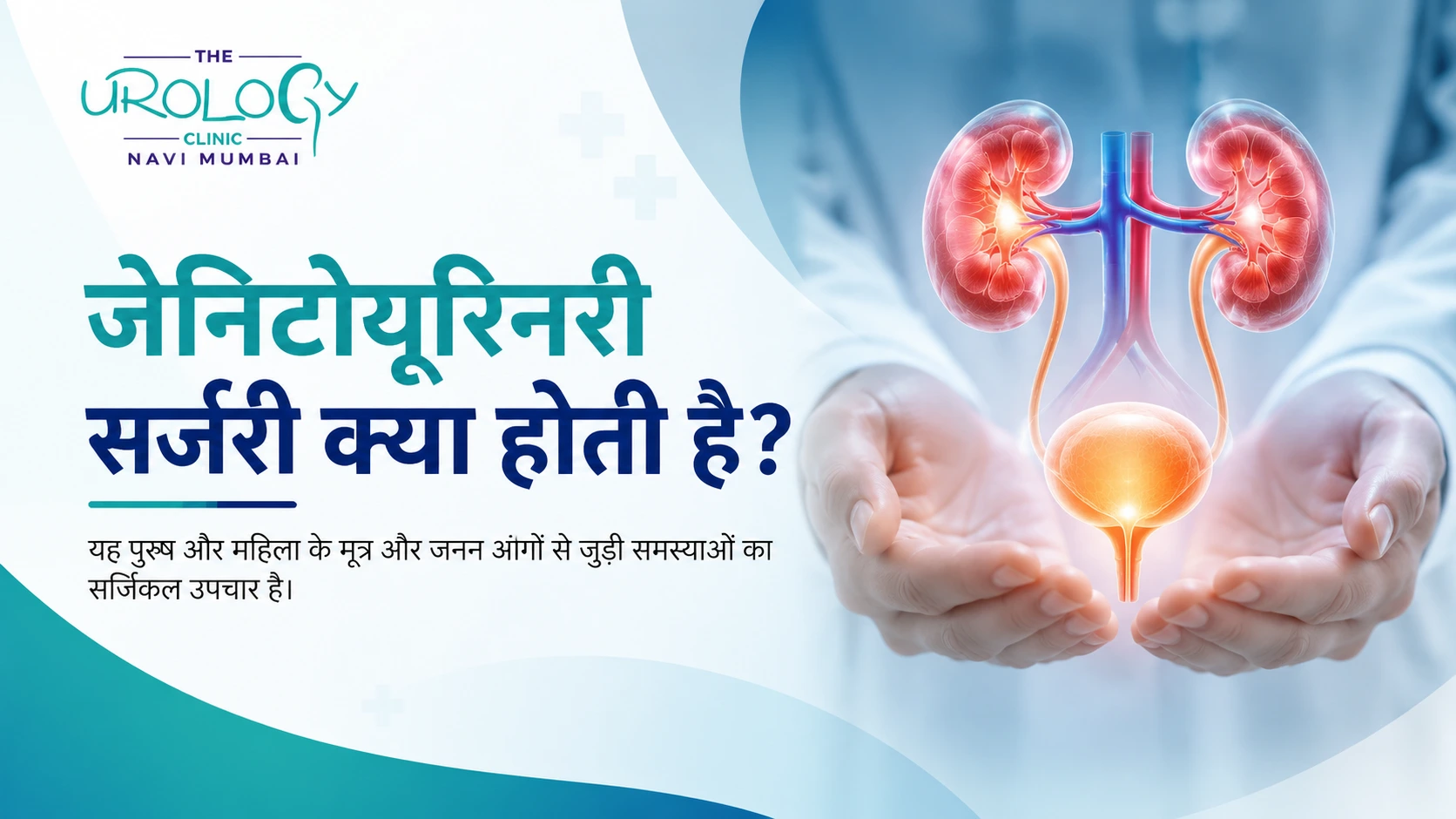
जेनिटोयूरिनरी सर्जरी क्या होती है?
Blogs Book An Apppointment जेनिटोयूरिनरी सर्जरी क्या होती है?– अर्थ, प्रकार और उपचार जेनिटोयूरिनरी सर्जरी एक ऐसी सर्जिकल प्रक्रिया है, जिसमें Urinary System और Male Reproductive System से जुड़ी विभिन्न समस्याओं का इलाज किया जाता है। किडनी में स्टोन, प्रोस्टेट की समस्या, मूत्राशय में रुकावट या मूत्रमार्ग से जुड़ी कुछ गंभीर समस्याओं में डॉक्टर सर्जरी की सलाह दे सकते हैं। समस्या की गंभीरता और मरीज की स्थिति के आधार पर सर्जरी का तरीका अलग-अलग हो सकता है। जेनिटोयूरिनरी सर्जरी क्या होती है? जेनिटोयूरिनरी सर्जरी का मतलब ऐसी सर्जरी से है, जो Urinary System और Genital/Reproductive System से जुड़े अंगों और उनकी बीमारियों के इलाज के लिए की जाती है। इसमें किडनी, मूत्रवाहिनी, मूत्राशय, मूत्रमार्ग और पुरुषों में प्रोस्टेट जैसे अंगों से संबंधित सर्जिकल उपचार शामिल हो सकते हैं। हर Urinary Problem के लिए सर्जरी की जरूरत नहीं होती। कई समस्याओं का इलाज दवाओं, खान-पान में बदलाव या अन्य उपचारों से किया जा सकता है। लेकिन जब समस्या ज्यादा गंभीर हो, बार-बार हो रही हो या सामान्य उपचार से ठीक न हो, तब डॉक्टर Surgery का विकल्प चुन सकते हैं। जेनिटोयूरिनरी सर्जरी में कौन से अंग शामिल होते हैं? जेनिटोयूरिनरी सर्जरीमें मुख्य रूप से Urinary System के अंग शामिल होते हैं। इनमें Kidneys (किडनी), Ureters (मूत्रवाहिनी), Urinary Bladder (मूत्राशय) और Urethra (मूत्रमार्ग) आते हैं। पुरुषों में Prostate Gland और Male Reproductive System से जुड़े कुछ अंग भी Genitourinary System का हिस्सा माने जाते हैं। किडनी शरीर से अतिरिक्त पानी और अपशिष्ट पदार्थों को बाहर निकालने में मदद करती है। Ureters किडनी से पेशाब को Bladder तक पहुंचाते हैं, जबकि Bladder पेशाब को कुछ समय के लिए जमा करता है। Urethra के जरिए पेशाब शरीर से बाहर निकलता है। जेनिटोयूरिनरी सर्जरी की जरूरत कब पड़ सकती है? जेनिटोयूरिनरी सर्जरी की आवश्यकता समस्या के प्रकार और उसकी गंभीरता पर निर्भर करती है। कुछ सामान्य स्थितियां हैं जिनमें सर्जरी की जरूरत पड़ सकती है। किडनी स्टोन किडनी स्टोन छोटे होने पर कई बार पर्याप्त पानी, दवाओं और डॉक्टर की सलाह से अपने आप निकल सकता है। लेकिन अगर स्टोन बड़ा हो, पेशाब के रास्ते में रुकावट पैदा कर रहा हो, लगातार दर्द या संक्रमण हो रहा हो या स्टोन अपने आप बाहर न निकल रहा हो, तो Surgery या किसी Procedure की जरूरत पड़ सकती है। Genitourinary समस्याओं के लिए Urology Navi Mumbai से परामर्श लें। Book An Apppointment प्रोस्टेट की समस्या उम्र बढ़ने के साथ पुरुषों में Prostate Gland बढ़ने की समस्या हो सकती है। इससे पेशाब करने में परेशानी, बार-बार पेशाब आना, पेशाब की धार कमजोर होना या Bladder पूरी तरह खाली न होने जैसी समस्याएं हो सकती हैं। कुछ मामलों में दवाओं से आराम नहीं मिलने पर प्रोस्टेट की सर्जरी की आवश्यकता हो सकती है। मूत्रमार्ग या मूत्राशय की रुकावट Urethra में संकुचन, Bladder में रुकावट या अन्य कारणों से पेशाब का रास्ता बाधित हो सकता है। ऐसी स्थिति में पेशाब करने में परेशानी या पेशाब रुकने जैसी समस्या हो सकती है। कारण के आधार पर डॉक्टर Surgical Procedure की सलाह दे सकते हैं। जेनिटोयूरिनरी सर्जरीके प्रमुख प्रकार जेनिटोयूरिनरी सर्जरी कई प्रकार की हो सकती है। कौन-सी सर्जरी की जाएगी, यह बीमारी, उसकी गंभीरता और मरीज की स्वास्थ्य स्थिति पर निर्भर करता है। Kidney Stone Surgery Kidney Stone के इलाज के लिए अलग-अलग Procedures उपलब्ध हैं। इनमें Laser Lithotripsy, Ureteroscopy और कुछ मामलों में अन्य Stone Removal Procedures शामिल हो सकते हैं। Procedure का चुनाव स्टोन के आकार, स्थान और संख्या के आधार पर किया जाता है। Prostate Surgery Prostate की समस्या में जरूरत पड़ने पर प्रोस्टेट के बढ़े हुए हिस्से को हटाने या पेशाब के रास्ते में रुकावट कम करने के लिए सर्जरी की जा सकती है। कुछ मामलों में TURP या Laser-based procedures का उपयोग किया जाता है। Bladder Surgery Urinary Bladder से जुड़ी कुछ समस्याओं, जैसे ब्लैडर में ट्यूमर, गंभीर रुकावट या अन्य स्थितियों में Bladder Surgery की आवश्यकता हो सकती है। सर्जरी का प्रकार बीमारी और उसके स्तर के अनुसार तय किया जाता है। Urethral Surgery Urethra में संकुचन या अन्य समस्या होने पर पेशाब का प्रवाह प्रभावित हो सकता है। ऐसी स्थिति में समस्या के कारण और गंभीरता के अनुसार Urethral Surgery या अन्य Procedure किया जा सकता है। जेनिटोयूरिनरी सर्जरी कैसे की जाती है? जेनिटोयूरिनरी सर्जरी का तरीका बीमारी और सर्जरी के प्रकार पर निर्भर करता है। मुख्य रूप से इसे Minimally Invasive Surgery और Traditional Surgery के माध्यम से किया जा सकता है। Minimally Invasive Surgery Minimally Invasive Surgery में शरीर पर अपेक्षाकृत छोटे चीरे लगाए जाते हैं या प्राकृतिक मार्गों से विशेष उपकरणों का उपयोग किया जाता है। कई Urological Procedures में Endoscope, Camera और Laser जैसे उपकरणों का इस्तेमाल किया जा सकता है। इस तरह की Surgery में कई मामलों में दर्द और Recovery Time कम हो सकता है, लेकिन यह हर मरीज या हर समस्या के लिए उपयुक्त हो, ऐसा जरूरी नहीं है। Traditional Surgery कुछ जटिल या गंभीर स्थितियों में Traditional या Open Surgery की आवश्यकता पड़ सकती है। इसमें समस्या वाले अंग तक पहुंचने के लिए अपेक्षाकृत बड़ा चीरा लगाया जाता है। डॉक्टर मरीज की स्थिति देखकर तय करते हैं कि कौन-सा Surgical Approach सुरक्षित और प्रभावी रहेगा। जेनिटोयूरिनरी सर्जरी से पहले कौन-सी जांच होती है? सर्जरी से पहले डॉक्टर मरीज की Medical History और वर्तमान लक्षणों के बारे में जानकारी लेते हैं। इसके बाद आवश्यकता के अनुसार Blood Tests, Urine Test, Ultrasound, CT Scan, MRI या अन्य Imaging Tests किए जा सकते हैं। कुछ मरीजों में ECG और अन्य Pre-operative Tests भी किए जा सकते हैं, खासकर जब Surgery के लिए Anesthesia की आवश्यकता हो। जांच क्यों जरूरी होती है? इन जांचों से डॉक्टर को बीमारी की सही स्थिति, उसकी गंभीरता और प्रभावित अंग के बारे में जानकारी मिलती है। इससे Surgery का सही तरीका चुनने और संभावित जोखिमों को समझने में मदद मिलती है। मरीज की उम्र और अन्य स्वास्थ्य स्थितियों के आधार पर भी कुछ अतिरिक्त जांच की जा सकती हैं। जेनिटोयूरिनरी सर्जरी के बाद रिकवरी सर्जरी के बाद Recovery का समय हर मरीज में अलग हो सकता है। यह Surgery के प्रकार, बीमारी की गंभीरता, मरीज की उम्र और सामान्य स्वास्थ्य पर निर्भर करता
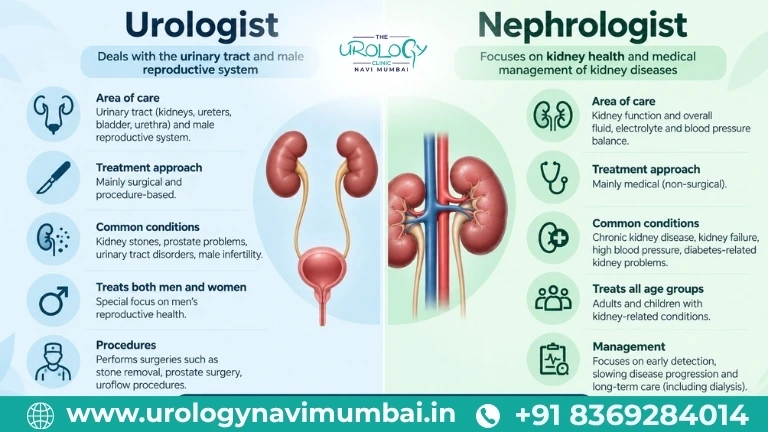
Comparison of Urologist vs Nephrologist
Comparison of Urologist vs Nephrologist Book An Apppointment Both deal with kidney health, but they’re coming at it from different angles entirely. A urologist handles the urinary tract and male reproductive system think kidney stones, an enlarged prostate, UTIs, bladder issues, male infertility, and urinary cancers and they can offer both medication and surgery, including minimally invasive and robotic options. A nephrologist, on the other hand, is focused on the medical side of kidney disease: chronic kidney disease, acute kidney injury, kidney-related high blood pressure, electrolyte imbalances, and dialysis care. Rather than operating, they lean on medication, lifestyle changes, and ongoing monitoring to protect kidney function over time. So if you’re dealing with urinary symptoms, stones, or prostate trouble, a urologist’s your first call. If it’s declining kidney function, protein showing up in urine, or hard-to-control blood pressure, that’s nephrologist territory. And often enough, the two end up working side by side on the same patient. Feature Urologist Nephrologist Definition A medical doctor who diagnoses and treats diseases of the urinary tract and the male reproductive system, including surgical conditions. A medical doctor who diagnoses and manages kidney diseases using medicines and non-surgical treatments. Specialization Urinary tract disorders and male reproductive health. Kidney function, kidney diseases, and blood pressure related to kidney health. Organs Treated Kidneys, ureters, bladder, urethra, prostate, penis, testes, and male reproductive organs. Kidneys and conditions affecting kidney function. Treatment Approach Medical management and surgical procedures. Medical treatment, lifestyle changes, medications, and dialysis management. Performs Surgery Performs minimally invasive, endoscopic, robotic, and open surgeries. Does not perform kidney or urinary tract surgeries. Kidney Stones Diagnoses and removes kidney stones using procedures such as URS, PCNL, RIRS, or laser treatment. Evaluates kidney function and helps prevent stone recurrence through medical management. Urinary Tract Infections (UTIs) Treats recurrent, complicated, or structural urinary tract infections. Treats kidney infections affecting kidney function and complications related to chronic kidney disease. Blood in Urine (Hematuria) Investigates urinary tract causes such as stones, tumors, enlarged prostate, or bladder disorders. Evaluates kidney-related causes such as glomerular diseases or kidney inflammation. Kidney Disease Treats kidney conditions requiring surgical intervention, including obstruction, tumors, or stones. Manages chronic kidney disease, acute kidney injury, and kidney failure. Dialysis Care Refers patients when dialysis is required and may create surgical access in some cases. Plans, monitors, and manages dialysis treatment. Kidney Transplant Performs or assists in kidney transplant surgery at specialized centers. Refers patients when dialysis is required and may create surgical access in some cases. High Blood Pressure Treats hypertension caused by urinary tract obstruction or urological conditions. Performs or assists in kidney transplant surgery at specialized centers. Urinary Problems Treats frequent urination, urinary retention, urinary incontinence, painful urination, and blocked urine flow. Evaluates urinary changes related to reduced kidney function. Male Infertility Evaluates and treats male infertility and reproductive disorders. Does not treat male infertility. Erectile Dysfunction Diagnoses and treats erectile dysfunction and related male sexual health conditions. Not a routine area of treatment. Bladder Disorders Treats bladder stones, bladder cancer, overactive bladder, and urinary incontinence. Does not manage bladder diseases unless caused by kidney disorders. Trusted Solutions for every Urological Concern Call Now

7 Day Kidney Stone Diet Chart in Hindi: 7 दिनों का डाइट प्लान
Blogs Book An Apppointment 7 Day Kidney Stone Diet Chart in Hindi: 7 दिनों का डाइट प्लान और क्या खाएं? किडनी स्टोन यानी गुर्दे की पथरी एक आम समस्या है, जिसमें गुर्दे में छोटे या बड़े कठोर कण बन जाते हैं। खान-पान और पानी की सही आदतें किडनी स्टोन के जोखिम को कम करने में मदद कर सकती हैं। हालांकि, केवल डाइट से हर प्रकार की पथरी का इलाज संभव नहीं होता। पथरी का प्रकार, उसका आकार और व्यक्ति की स्वास्थ्य स्थिति के अनुसार उपचार अलग हो सकता है। इसलिए सही डाइट के साथ डॉक्टर की सलाह लेना भी जरूरी है। किडनी स्टोन में डाइट क्यों महत्वपूर्ण है? किडनी स्टोन में डाइट महत्वपूर्ण होती है क्योंकि कुछ खाद्य पदार्थ और कम पानी पीने की आदत पथरी बनने के जोखिम को बढ़ा सकती है। पर्याप्त मात्रा में पानी पीने से पेशाब पतला रहता है और पथरी बनाने वाले खनिजों के जमा होने की संभावना कम हो सकती है। इसके अलावा, भोजन में नमक, पशु प्रोटीन और कुछ विशेष पोषक तत्वों की मात्रा को नियंत्रित करना भी महत्वपूर्ण हो सकता है। हर व्यक्ति में बनने वाली पथरी एक जैसी नहीं होती। कैल्शियम ऑक्सालेट, यूरिक एसिड और अन्य प्रकार की पथरी के लिए डाइट संबंधी सलाह अलग हो सकती है। इसलिए अगर पहले भी किडनी स्टोन हो चुका है, तो डॉक्टर से पथरी के प्रकार के बारे में जानकारी लेकर उसी के अनुसार डाइट में बदलाव करना बेहतर होता है। 7 Day Kidney Stone Diet Chart Overactive Bladder के लक्षण व्यक्ति की स्थिति और उसके कारण के अनुसार अलग-अलग हो सकते हैं। इसका सबसे सामान्य लक्षण अचानक और तेज पेशाब लगना है, जिसे कुछ समय के लिए रोकना मुश्किल हो सकता है। इसके साथ बार-बार पेशाब आने की समस्या भी हो सकती है। कई लोगों को दिन में सामान्य से अधिक बार पेशाब करने की जरूरत महसूस होती है। कुछ लोगों में रात के समय बार-बार पेशाब आने की समस्या होती है, जिसे Nocturia कहा जाता है। कभी-कभी तेज पेशाब लगने के कारण शौचालय पहुंचने से पहले ही पेशाब निकल सकता है। हालांकि, हर व्यक्ति में पेशाब का रिसाव हो, यह जरूरी नहीं है। दिन सुबह का नाश्ता दोपहर का भोजन शाम का स्नैक रात का खाना Day 1 दलिया + कम वसा वाला दूध मूंग दाल + चपाती + लौकी की सब्जी सेब/नाशपाती सब्जियों वाली खिचड़ी Day 2 पोहा + एक फल चावल + मूंग दाल + फूलगोभी की सब्जी सादा दही 2 चपाती + सब्जी Day 3 ओट्स + दूध + कम-ऑक्सलेट वाला फल चपाती + दाल + पत्तागोभी/लौकी तरबूज या खरबूजा मूंग दाल खिचड़ी Day 4 वेजिटेबल उपमा चावल + दाल + सब्जी सेब चपाती + हल्की सब्जी + दही Day 5 इडली + हल्की चटनी चपाती + मूंग दाल + सब्जी नाशपाती/अंगूर वेजिटेबल दलिया Day 6 दलिया या पोहा + फल चावल + दाल + लौकी/फूलगोभी सादा दही 2 चपाती + हल्की सब्जी Day 7 ओट्स/उपमा + फल मूंग दाल खिचड़ी + सब्जी तरबूज/सेब हल्की सब्जियों वाली खिचड़ी किडनी स्टोन से परेशान हैं? सही इलाज के लिए आज ही यूरोलॉजिस्ट से सलाह लें। Book An Apppointment Kidney Stone में कौन से Foods खा सकते हैं और किनसे बचना चाहिए? किडनी स्टोन में ताजे फल, कई प्रकार की सब्जियां, साबुत अनाज और संतुलित मात्रा में प्रोटीन को डाइट में शामिल किया जा सकता है। नींबू जैसे खट्टे फलों में मौजूद साइट्रेट कुछ लोगों में पथरी बनने के जोखिम को कम करने में मदद कर सकता है। हालांकि, किसी भी एक खाद्य पदार्थ को पथरी का इलाज मानना सही नहीं है। वहीं, बहुत अधिक नमक वाला भोजन, पैकेज्ड और प्रोसेस्ड फूड, अत्यधिक मीट या अन्य पशु प्रोटीन और जरूरत से ज्यादा मीठे पेय पदार्थों का सेवन सीमित करना बेहतर होता है। यदि किसी व्यक्ति को कैल्शियम ऑक्सालेट स्टोन की समस्या है, तो पालक, चुकंदर, कुछ नट्स और अन्य अधिक ऑक्सालेट वाले खाद्य पदार्थों की मात्रा डॉक्टर या डाइटिशियन की सलाह के अनुसार नियंत्रित करनी पड़ सकती है। ध्यान रखें कि हर व्यक्ति को सभी ऑक्सालेट वाले खाद्य पदार्थ पूरी तरह बंद करने की जरूरत नहीं होती। Kidney Stone में पानी कितना पीना चाहिए? किडनी स्टोन से बचाव में पर्याप्त पानी पीना सबसे महत्वपूर्ण आदतों में से एक है। सामान्य तौर पर डॉक्टर अक्सर इतना तरल लेने की सलाह देते हैं कि दिनभर पर्याप्त मात्रा में पेशाब बनता रहे। कई लोगों के लिए लगभग 2 से 3 लीटर तरल प्रतिदिन उपयोगी हो सकता है, लेकिन वास्तविक जरूरत मौसम, शारीरिक गतिविधि, पसीना आने और स्वास्थ्य स्थिति के अनुसार अलग हो सकती है। पानी को पूरे दिन थोड़ी-थोड़ी मात्रा में पीना बेहतर होता है, बजाय इसके कि एक साथ बहुत अधिक पानी पिया जाए। गर्म मौसम या अधिक पसीना आने पर शरीर को अधिक तरल की जरूरत हो सकती है। हालांकि, जिन लोगों को किडनी, हृदय या अन्य स्वास्थ्य समस्याओं के कारण डॉक्टर ने तरल पदार्थ सीमित करने को कहा है, उन्हें अपनी ओर से पानी की मात्रा नहीं बढ़ानी चाहिए। Kidney Stone Diet में कौन सी गलतियां नहीं करनी चाहिए? किडनी स्टोन में सबसे आम गलती पर्याप्त पानी न पीना है। इसके अलावा बहुत अधिक नमक वाला भोजन, फास्ट फूड और पैकेज्ड स्नैक्स का बार-बार सेवन भी समस्या बढ़ा सकता है। कुछ लोग पथरी के डर से कैल्शियम वाले सभी खाद्य पदार्थ खाना बंद कर देते हैं, लेकिन ऐसा करना हमेशा सही नहीं होता। भोजन से मिलने वाला सामान्य कैल्शियम कुछ प्रकार की पथरी में लाभकारी भूमिका निभा सकता है। दूसरी गलती इंटरनेट पर मिलने वाली किसी भी “स्टोन निकालने वाली डाइट” या घरेलू नुस्खे को बिना डॉक्टर की सलाह के अपनाना है। केवल डाइट के भरोसे रहकर दर्द, पेशाब में खून, बुखार या पेशाब रुकने जैसे लक्षणों को नजरअंदाज नहीं करना चाहिए। ऐसी स्थिति में समय पर मेडिकल जांच जरूरी हो सकती है। 7 Day Diet के बाद Kidney Stone दोबारा बनने से कैसे बचें? 7 दिन का डाइट प्लान केवल शुरुआत करने का एक तरीका है। किडनी स्टोन दोबारा न बने, इसके लिए लंबे समय तक स्वस्थ खान-पान और पर्याप्त पानी पीने की आदत बनाए रखना जरूरी है। रोजाना पर्याप्त तरल लेना, नमक की मात्रा कम रखना और अत्यधिक प्रोसेस्ड

ओवरएक्टिव ब्लैडर का इलाज
Blogs Book An Apppointment ओवरएक्टिव ब्लैडर का इलाज, लक्षण और कारण बार-बार पेशाब आने की इच्छा होना, पेशाब को रोक न पाना या रात में कई बार पेशाब के लिए उठना रोजमर्रा की जिंदगी को काफी प्रभावित कर सकता है। कई बार लोग इन लक्षणों को सामान्य मानकर लंबे समय तक नजरअंदाज करते रहते हैं। लेकिन इनके पीछे Overactive Bladder (ओवरएक्टिव ब्लैडर) जैसी समस्या हो सकती है। सही समय पर कारण की पहचान और उचित उपचार मिलने से इसके लक्षणों को काफी हद तक नियंत्रित किया जा सकता है। Overactive Bladder क्या है? Overactive Bladder एक ऐसी स्थिति है जिसमें मूत्राशय पेशाब से पर्याप्त रूप से भरने से पहले ही सिकुड़ने लगता है। इसके कारण व्यक्ति को अचानक और तेज पेशाब लगने की इच्छा महसूस हो सकती है। इस स्थिति को केवल बार-बार पेशाब आने की समस्या नहीं माना जाता, बल्कि इसमें Urgency यानी तुरंत पेशाब करने की तीव्र इच्छा प्रमुख लक्षण होती है। कुछ लोगों में पेशाब की यह तेज इच्छा इतनी अचानक आती है कि उन्हें शौचालय तक पहुंचने में परेशानी हो सकती है। रात में बार-बार पेशाब के लिए उठना भी Overactive Bladder से जुड़ा हो सकता है। यह समस्या महिलाओं और पुरुषों दोनों में हो सकती है और उम्र बढ़ने के साथ इसकी संभावना बढ़ सकती है। Overactive Bladder के मुख्य लक्षण क्या हैं? Overactive Bladder के लक्षण व्यक्ति की स्थिति और उसके कारण के अनुसार अलग-अलग हो सकते हैं। इसका सबसे सामान्य लक्षण अचानक और तेज पेशाब लगना है, जिसे कुछ समय के लिए रोकना मुश्किल हो सकता है। इसके साथ बार-बार पेशाब आने की समस्या भी हो सकती है। कई लोगों को दिन में सामान्य से अधिक बार पेशाब करने की जरूरत महसूस होती है। कुछ लोगों में रात के समय बार-बार पेशाब आने की समस्या होती है, जिसे Nocturia कहा जाता है। कभी-कभी तेज पेशाब लगने के कारण शौचालय पहुंचने से पहले ही पेशाब निकल सकता है। हालांकि, हर व्यक्ति में पेशाब का रिसाव हो, यह जरूरी नहीं है। Get timely care for kidney stone symptoms, schedule a consultation with Urology Navi Mumbai today. Book An Apppointment Overactive Bladder होने के कारण क्या हैं? Overactive Bladder के पीछे कई अलग-अलग कारण हो सकते हैं। कुछ मामलों में मूत्राशय की मांसपेशियों की अनैच्छिक गतिविधि इसके लिए जिम्मेदार होती है। उम्र बढ़ने, तंत्रिका तंत्र से जुड़ी कुछ समस्याओं या मूत्राशय में होने वाले बदलावों के कारण भी इसके लक्षण दिखाई दे सकते हैं। Urinary Tract Infection (UTI), कब्ज, अधिक मात्रा में चाय-कॉफी या अन्य कैफीन युक्त पेय लेना भी पेशाब की समस्या को बढ़ा सकता है। कुछ दवाएं, डायबिटीज और पुरुषों में प्रोस्टेट से जुड़ी समस्याएं भी बार-बार पेशाब आने का कारण बन सकती हैं। इसलिए केवल लक्षणों के आधार पर खुद से Overactive Bladder का इलाज शुरू करने के बजाय डॉक्टर से जांच करवाना जरूरी है। इसका इलाज कैसे किया जाता है? Overactive Bladder का इलाज हर व्यक्ति के लिए एक जैसा नहीं होता। डॉक्टर सबसे पहले लक्षणों, मेडिकल हिस्ट्री और संभावित कारणों को समझते हैं। इसके बाद समस्या की गंभीरता और कारण के अनुसार उपचार की योजना बनाई जाती है। शुरुआती स्तर पर Lifestyle Changes और Bladder Training की सलाह दी जा सकती है। जरूरत पड़ने पर Pelvic Floor Exercises और दवाओं का इस्तेमाल किया जाता है। यदि इन उपचारों से पर्याप्त लाभ न मिले या समस्या अधिक गंभीर हो, तो डॉक्टर कुछ Advanced Treatment विकल्पों पर विचार कर सकते हैं। Lifestyle और Bladder Training Overactive Bladder को नियंत्रित करने में रोजमर्रा की आदतों में बदलाव महत्वपूर्ण भूमिका निभा सकता है। कैफीन और अन्य ऐसे पेय पदार्थों का सेवन कम करना उपयोगी हो सकता है जो पेशाब की इच्छा बढ़ाते हैं। पानी की मात्रा बहुत अधिक या बहुत कम करने के बजाय डॉक्टर की सलाह के अनुसार पर्याप्त मात्रा में तरल पदार्थ लेना चाहिए। Bladder Training में पेशाब लगते ही तुरंत शौचालय जाने के बजाय धीरे-धीरे पेशाब के बीच का अंतर बढ़ाने का प्रयास किया जाता है। यह प्रक्रिया व्यक्ति की क्षमता के अनुसार की जाती है। नियमित रूप से Bladder Training करने से कुछ लोगों में पेशाब की तीव्र इच्छा को नियंत्रित करने में मदद मिल सकती है। Pelvic Floor Exercises और Medicines Pelvic Floor Exercises, जिन्हें Kegel Exercises भी कहा जाता है, पेल्विक क्षेत्र की मांसपेशियों को मजबूत करने में मदद कर सकती हैं। इन मांसपेशियों की सही पहचान और व्यायाम करने की तकनीक डॉक्टर या प्रशिक्षित फिजियोथेरेपिस्ट से सीखना बेहतर होता है। यदि Lifestyle Changes और Exercises से पर्याप्त राहत न मिले, तो डॉक्टर कुछ दवाएं लिख सकते हैं। ये दवाएं मूत्राशय की गतिविधि को नियंत्रित करने और पेशाब की अचानक आने वाली इच्छा को कम करने में मदद कर सकती हैं। दवाओं का चुनाव व्यक्ति की उम्र, अन्य स्वास्थ्य समस्याओं और संभावित Side Effects को ध्यान में रखकर किया जाता है। इसलिए इन्हें डॉक्टर की सलाह के बिना शुरू या बंद नहीं करना चाहिए। Advanced Treatment कब जरूरी हो सकता है? यदि सामान्य उपचारों के बावजूद Overactive Bladder के लक्षण लगातार बने रहते हैं, तो डॉक्टर Advanced Treatment की सलाह दे सकते हैं। कुछ मामलों में मूत्राशय की मांसपेशियों में Botulinum Toxin यानी Botox के इंजेक्शन का इस्तेमाल किया जा सकता है। कुछ चुनिंदा मरीजों में Nerve Stimulation जैसी तकनीकों पर भी विचार किया जा सकता है। इन उपचारों की आवश्यकता हर व्यक्ति को नहीं होती। डॉक्टर जांच के परिणाम, लक्षणों की गंभीरता और पहले किए गए उपचारों के असर के आधार पर उचित विकल्प चुनते हैं। Overactive Bladder की जांच कैसे की जाती है? Overactive Bladder की जांच के लिए डॉक्टर सबसे पहले मरीज से पेशाब से जुड़े लक्षणों, उनकी अवधि और रोजाना की आदतों के बारे में जानकारी लेते हैं। कई बार Bladder Diary रखने को कहा जाता है, जिसमें पेशाब करने का समय, तरल पदार्थों का सेवन और पेशाब की मात्रा जैसी जानकारी दर्ज की जाती है। Urine Test से Urinary Tract Infection जैसी समस्याओं का पता लगाने में मदद मिल सकती है। जरूरत पड़ने पर Ultrasound या अन्य जांच भी की जा सकती हैं। पुरुषों में प्रोस्टेट से जुड़ी समस्या का संदेह होने पर संबंधित जांच की जा सकती है। जांच का उद्देश्य केवल
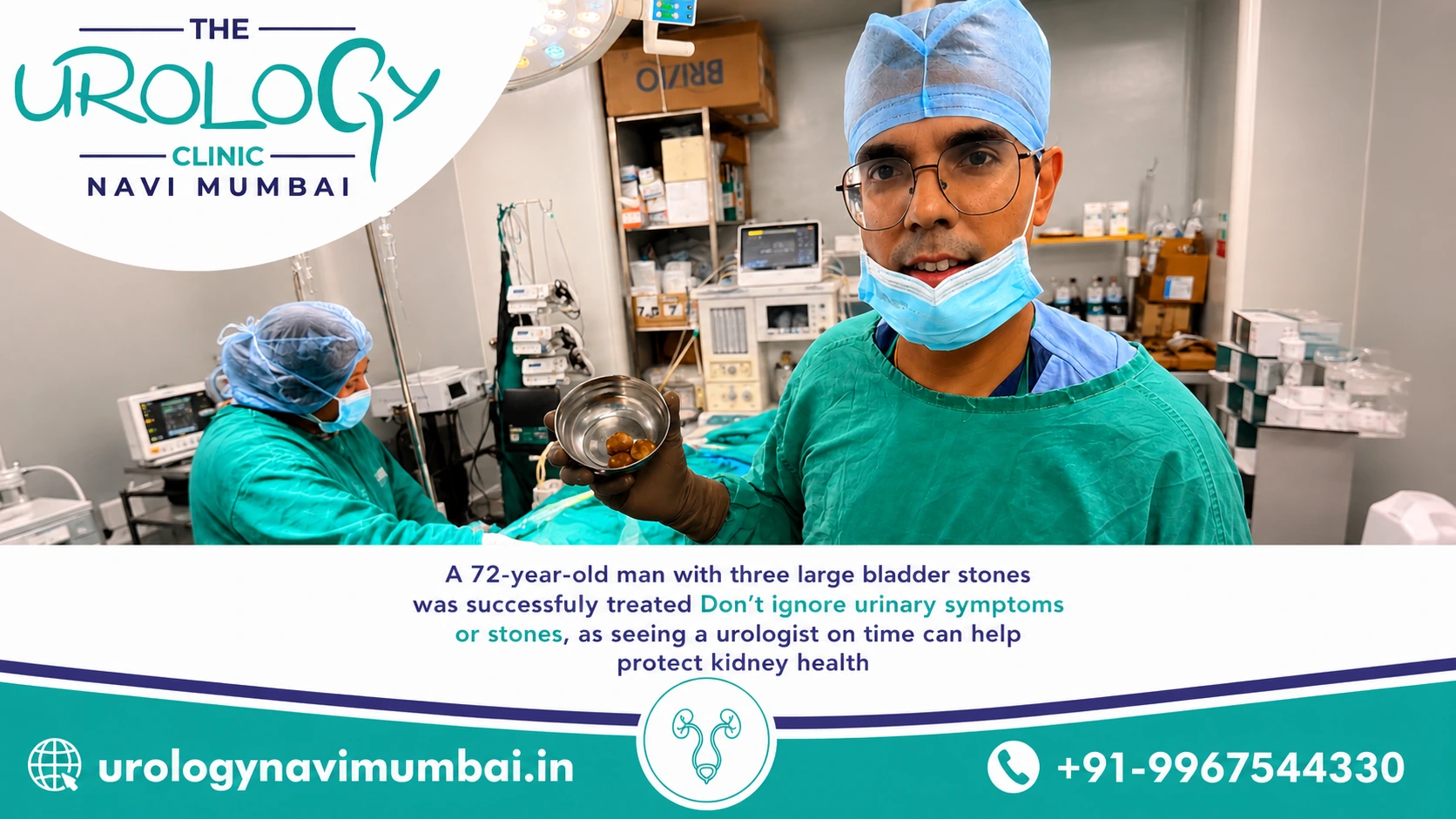
72-Year-Old Man Successfully Treated for 3 Large Bladder Stones
Blogs Book An Apppointment 72-Year-Old Man Successfully Treated for 3 Large Bladder Stones Urinary symptoms should never be ignored, especially when they continue for months. Increased urinary frequency, difficulty passing urine, a weak urine stream, or a feeling that the bladder is not emptying properly may appear to be routine problems with age, but they can sometimes indicate an underlying urinary condition that requires medical attention. A recent case highlights why timely urological evaluation is important. A 72-year-old man presented with increased urinary frequency and difficulty passing urine that had continued for approximately one year. Further evaluation with sonography revealed three large stones in the urinary bladder. The stones were subsequently removed successfully through appropriate surgical treatment. This case is a reminder that persistent urinary symptoms can have an underlying cause. Bladder stones, prostate enlargement, urinary obstruction, infections and other urinary tract conditions can produce similar symptoms. Getting the right diagnosis helps determine the appropriate treatment. What Are Bladder Stones? Bladder stones are hard masses that develop when minerals in urine crystallize and accumulate inside the urinary bladder. They are different from kidney stones, although stones that form in the kidneys can travel through the urinary tract. Bladder stones commonly develop when the bladder does not empty completely, allowing concentrated urine and mineral deposits to remain inside the bladder for longer periods. When urine remains in the bladder instead of being completely passed, minerals can gradually form crystals. Over time, these crystals may combine and grow into stones. Some bladder stones are small and may pass naturally, while larger stones generally require medical treatment and removal. In older men, one important underlying cause can be an enlarged prostate. An enlarged prostate may narrow the urinary passage and make it difficult for the bladder to empty completely. This can create conditions in which bladder stones develop. Other causes include urinary tract infections, nerve-related bladder problems, bladder diverticula and certain medical devices such as catheters. How the Diagnosis Came Together The patient had been dealing with frequency and difficulty passing urine for about a year. It’s easy to mistake symptoms like these for normal aging, which is exactly why persistent urinary problems deserve a proper look rather than being ignored. Sonography was the piece that cracked it open, showing three large stones inside the bladder. Ultrasound is one of the more common tools used to spot them, though depending on findings, a urologist might also order urine tests, blood tests, CT scans, or a cystoscopy. Why does the diagnosis matter so much? Because frequent urination and difficulty passing urine don’t automatically mean bladder stones. The same symptoms can show up with an enlarged prostate, an infection, or other bladder conditions entirely. Which is exactly why a proper exam and the right tests aren’t optional, they’re the whole point. Don’t ignore persistent urinary symptoms- consult Dr. Ninad Tamboli, Urologist in Vashi Book An Apppointment Symptoms Worth Paying Attention To Small stones sometimes cause almost nothing. But as a stone grows, or starts irritating the bladder lining, symptoms tend to become harder to ignore: frequent urination, pain or burning while urinating, trouble starting or keeping a steady stream, discomfort low in the abdomen, blood in the urine, and infections that keep coming back. Difficulty passing urine deserves particular attention in older men. It can signal that urine isn’t flowing the way it should, and if the bladder keeps failing to empty completely, that retained urine is exactly what feeds new stones. So if someone finds themselves dealing with this persistently, the answer isn’t to assume it’s just age. A proper urological assessment gets to the bottom of it. Why Bladder Stones Form The biggest factor behind most bladder stones is incomplete emptying of the bladder. When urine lingers instead of leaving fully, it becomes concentrated, and that’s when minerals start crystallizing into stones. In older men, an enlarged prostate is one of the most frequent culprits. Other contributors include nerve issues affecting bladder function, recurring infections, structural abnormalities, and certain urinary devices. This is exactly why removing a stone isn’t always the end of the story. The underlying reason it formed also needs to be worked out, or there’s a real chance the stones come back. How They’re Diagnosed and Treated Diagnosis usually starts with a detailed look at symptoms and history: how often someone urinates, whether starting is difficult, whether the stream has weakened, whether there’s pain or blood. From there, urine tests, ultrasound, CT scans, or cystoscopy help confirm what’s going on and, just as important, why. Treatment depends on the size and number of stones, their location, and the underlying cause. Small stones sometimes pass naturally. Larger ones usually need removal, often through a procedure called cystolitholapaxy, where a thin, camera equipped instrument is passed through the urinary passage, the stone is broken into smaller pieces using a laser or similar technique, and the fragments are removed or flushed out. Particularly large or hard stones sometimes call for a different surgical approach, decided case by case. In this instance, the three stones found on sonography were removed successfully through surgery. That solved the immediate problem, but follow up is still what helps manage whatever caused the stones to form in the first place. Bladder Stones, Kidney Health, and Prevention Bladder stones mostly stay contained to the bladder, but untreated urinary problems shouldn’t be taken lightly. They can lead to ongoing irritation, blocked urine flow, and recurring infections, all of which put extra strain on the urinary system. Worth clarifying: bladder stones aren’t the same as kidney stones, though both involve the urinary system and are worth having checked. Preventing future stones starts with addressing whatever caused them. Staying adequately hydrated helps keep urine less concentrated, though the right amount varies by individual health. It also helps to avoid regularly holding urine for long stretches, and to check in with a doctor if the bladder ever feels like it isn’t emptying fully. If an enlarged prostate or another condition is behind

Kidney Stone Symptoms in Women
Blogs Book An Apppointment Kidney Stone Symptoms in Women Kidney stones can affect anyone, but the symptoms may sometimes be confused with urinary tract infections, menstrual discomfort, or other urinary problems in women. A kidney stone forms when certain minerals and salts in urine become concentrated and form hard crystals. A small stone may pass without causing noticeable symptoms, while a larger stone can cause significant pain when it moves through the urinary tract. Recognising the symptoms early can help women seek appropriate medical care before complications develop. The location and size of the stone often determine how symptoms appear. What Are the Common Kidney Stone Symptoms in Women? The symptoms can vary depending on whether the stone is still inside the kidney or has moved into the ureter. One of the most noticeable symptoms is sudden, intense pain in the side or back. The pain may come in waves and can shift toward the lower abdomen or groin as the stone moves. Some women experience a burning sensation while urinating. There may also be a frequent or urgent need to urinate, particularly when the stone is located close to the bladder. These urinary symptoms can resemble a UTI, which is why proper evaluation is important. Blood in the urine is another possible sign. Urine may appear pink, red, or brown, although blood may sometimes only be detected through a urine test. Nausea and vomiting can occur when severe kidney stone pain affects the body. Kidney Stone Pain in Women: Where Does It Occur? Kidney stone pain is often felt in the back or side, usually below the ribs. It may begin suddenly and become severe. Unlike ordinary muscle pain, renal colic caused by a moving stone can come and go in waves. As the stone travels down the ureter, the pain may move toward the lower abdomen, pelvis, or groin. Some women may also experience discomfort around the vaginal or pelvic region, depending on where the stone is located. The intensity of pain does not necessarily indicate the size of the stone. Even a relatively small stone can cause severe pain if it becomes lodged in a narrow part of the urinary tract. Get timely care for kidney stone symptoms, schedule a consultation with Urology Navi Mumbai today. Book An Apppointment Urinary Symptoms Associated With Kidney Stones When a stone moves toward the lower urinary tract, it can cause changes in urination. A woman may feel an urgent need to urinate or need to visit the bathroom more frequently than usual. Pain or burning while urinating can also occur. In some cases, urine may appear cloudy or have an unusual smell, particularly if an infection is also present. These symptoms can overlap with a urinary tract infection, so it is not advisable to assume that every episode of painful urination is caused by a UTI. A doctor may recommend urine testing and imaging to determine the actual cause. Can Kidney Stones Cause Nausea and Vomiting? Yes. Severe kidney stone pain can be accompanied by nausea and vomiting. The nerves supplying the kidneys and gastrointestinal tract are connected, and intense pain can trigger digestive symptoms. Nausea may occur alongside waves of back or abdominal pain. Vomiting can become concerning if it prevents a woman from drinking enough fluids, particularly when the urinary tract is already obstructed. If severe pain is accompanied by repeated vomiting, medical evaluation is important to prevent dehydration and assess whether the stone is blocking urine flow. How Are Kidney Stones Diagnosed in Women? Diagnosis usually starts with a review of symptoms and a physical examination. A doctor may ask about the location and pattern of pain, urinary symptoms, previous kidney stones, fluid intake, and other relevant health factors. A urine test can check for blood, signs of infection, and substances associated with stone formation. Blood tests may also be recommended to assess kidney function and identify certain metabolic abnormalities. Imaging tests such as ultrasound or CT scans can help identify the location and size of a kidney stone and determine whether it is causing an obstruction. The choice of imaging depends on the individual situation. What Causes Kidney Stones in Women? Kidney stones develop when substances in urine become concentrated enough to form crystals. Several factors can increase the likelihood of stone formation. Not Drinking Enough Water Low fluid intake makes urine more concentrated, increasing the chance that minerals will form crystals. Regular hydration is an important part of kidney stone prevention. High Salt Intake A diet high in sodium can increase the amount of calcium released into urine, which may contribute to certain types of kidney stones. Limiting excess salt can therefore be helpful for people who are prone to stones. Certain Dietary Factors Depending on the type of stone, high intake of certain foods or excessive animal protein may contribute to stone formation. Dietary recommendations should ideally be based on the type of stone and individual risk factors. Family History and Previous Stones Women who have previously developed kidney stones may have a greater risk of developing them again. A family history of kidney stones can also increase susceptibility. Certain Medical Conditions Some medical conditions can alter the balance of minerals and chemicals in urine, increasing the risk of stones. Recurrent stones may therefore require evaluation for underlying causes. When Should a Woman See a Doctor for Kidney Stone Symptoms? Mild symptoms may sometimes occur with a small stone that can pass naturally, but severe or persistent symptoms should be medically assessed. Immediate attention is particularly important when intense pain occurs with fever or chills. Fever and chills can indicate a urinary infection. When infection occurs alongside urinary obstruction, it can become a serious medical problem requiring urgent treatment. Medical evaluation is also recommended if there is persistent vomiting, difficulty passing urine, significant blood in the urine, worsening pain, or symptoms that do not improve. How Are Kidney Stones Treated in Women? Treatment depends on the stone’s size, location, composition, symptoms, and whether
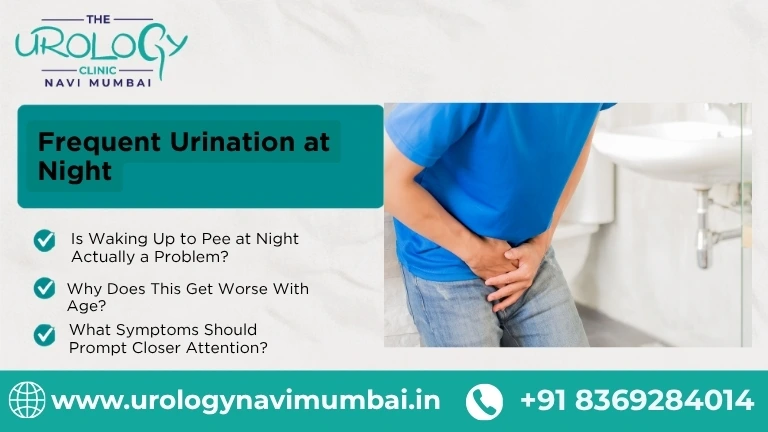
Frequent Urination at Night
Blogs Book An Apppointment Frequent Urination at Night If you’ve woken up three times tonight to use the bathroom, you’ve probably already Googled it half-asleep, phone light burning your eyes, half-convinced something’s seriously wrong. It’s more common than most people admit a lot of people quietly rearrange their entire evening routine around a bladder that won’t cooperate, and stay too embarrassed to bring it up for months. Frequent urination at night nocturia, if you want the clinical term, though we’ll keep this mostly jargon-free means waking up one or more times specifically to pass urine. Once, occasionally, especially after a big glass of water before bed? Normal. Two or three times, night after night, leaving you groggy and short-tempered the next day? That’s worth looking at. Is Waking Up to Pee at Night Actually a Problem? Here’s the thing nobody tells you: the bladder isn’t supposed to need attention at 2 AM. During sleep, the body naturally produces less urine and concentrates what it does make it’s one of those quiet biological arrangements that lets people actually rest. When that stops happening, something’s interrupting the arrangement. A single wake-up most nights isn’t usually cause for alarm. But two or more? That’s when it’s worth paying attention. Is it disrupting deep, restorative sleep? Is it happening alongside urgency, or a weak stream, or discomfort? Those details change everything about where to look next. What’s Actually Causing This? The obvious one first fluid intake. Coffee in the evening, a nightcap, a big dinner with soup. Caffeine and alcohol both interfere with the bladder’s usual signals, and they’re diuretics on top of that, so more urine gets produced right when someone wants to be asleep. Easy enough to fix, at least in theory. Harder in practice, because who wants to give up their evening chai? Then there’s the bladder itself. An overactive bladder sends urgent “go now” signals even when there’s barely anything in there it’s not about volume, it’s about a bladder that’s become a little too enthusiastic about alerting its owner. Urinary tract infections do something similar, except usually with burning or discomfort thrown in for good measure. In men, nighttime urination almost always circles back to the prostate at some point. An enlarged prostate physically narrows the passage urine has to travel through think of a hose with something pressing on it partway along. The bladder has to work harder, doesn’t fully empty, and refills faster than it should. That accounts for a large share of the men who bring this up past fifty. And then there are causes that have nothing to do with the urinary system at all diabetes, kidney function, heart conditions where fluid pools in the legs during the day and gets reabsorbed once someone lies flat at night. Certain medications, particularly diuretics, depending on when they’re taken. It’s genuinely a long list, which is exactly why guessing at home rarely gets anyone very far. Waking up often at night to urinate? Consult Urology Navi Mumbai for personalised care. Book An Apppointment What Can Someone Try Before Seeing a Doctor? A few things genuinely help, and they cost nothing. Cutting back on fluids in the two to three hours before bed not eliminating them, just shifting the bulk of drinking earlier in the day. Easing off caffeine and alcohol in the evening, even just for a trial week, to see if it makes a difference. Fully emptying the bladder right before lying down, rather than a quick, distracted trip. For anyone who notices ankle swelling during the day, propping the legs up for twenty minutes or so in the late afternoon can, in some cases, reduce how much of that fluid ends up redistributing into the bladder overnight worth mentioning to a doctor rather than trying to self-diagnose the swelling itself. What’s worth pushing back on, though, is the instinct to simply drink less water overall. The logic seems sound less in, less out but under hydrating through the day doesn’t fix nighttime urination and can create its own problems: irritation, concentrated urine, even kidney strain over time. This isn’t a “drink less” situation. It’s a “drink smarter, at better times” situation. What Symptoms Should Prompt Closer Attention? Not all night time urination looks the same, and the differences matter more than people realise. A sudden, hard-to-ignore urge that comes out of nowhere points one direction. A weak stream, or that frustrating feeling of straining to start, points somewhere else entirely often the prostate. Burning while urinating, especially with fever or lower back pain, suggests an infection until proven otherwise, and that needs prompt treatment rather than a wait-and-see approach. Excessive thirst alongside daytime and night time urination is a combination worth taking seriously, since it can be an early flag for undiagnosed diabetes. And blood in the urine, at any point, isn’t something to sit on that calls for a call to a doctor, not a wait for the next scheduled check-up. And If Lifestyle Changes Aren’t Enough? Then the actual cause gets treated, not just the symptom. An infection responds to antibiotics and clears up. An enlarged prostate might call for medication to relax the muscle tissue around it, or in more significant cases, a procedure the right level of intervention depends on how much it’s actually affecting someone’s life, since not every enlarged prostate needs the same approach. Overactive bladder often responds well, sometimes surprisingly well, to bladder training and pelvic floor work before medication even enters the conversation. And when diabetes or a heart or kidney issue turns out to be the underlying driver, managing that condition properly tends to improve the nighttime urination as a side effect oddly satisfying to see happen. About Urology Navi Mumbai Urology Navi Mumbai treats nocturia regularly partly because it’s common, and partly because so many people wait years before mentioning it. The approach here starts with actually understanding what a person’s nights look like, not just running a standard panel of tests and hoping

Overactive Bladder Treatment
Blogs Book An Apppointment Overactive Bladder Treatment Overactive bladder (OAB) is a condition that causes a sudden, difficult-to-control urge to urinate, often with frequent trips to the bathroom or waking up several times at night. For some people, the urgency may also lead to urine leakage before reaching the toilet. Although OAB can interfere with sleep, work, travel and daily activities, appropriate treatment can help control symptoms and improve quality of life. What Is an Overactive Bladder? An overactive bladder occurs when the bladder contracts involuntarily, even when it is not completely full. This can create a strong and sudden urge to urinate. A person may need to urinate more frequently during the day or wake up at night to pass urine. In some cases, urgency is accompanied by urge incontinence, where urine leaks before reaching the bathroom. OAB is not simply a normal part of aging. It can affect adults of different ages and may be linked to bladder-related conditions, urinary infections, neurological problems, certain medicines or lifestyle factors. A urologist can assess the symptoms and identify the most suitable approach. What Are the Symptoms of an Overactive Bladder? The main symptom is a sudden and frequent urge to urinate that can be difficult to postpone. Other symptoms may include urinating more often than usual during the day, waking during the night to urinate and accidental urine leakage following a strong urge. Symptoms can vary from person to person. Some may experience urgency without leakage, while others may have frequent urination and nighttime symptoms that affect their sleep. Keeping a bladder diary can help record how often you urinate, how much fluid you consume and when urgency or leakage occurs. Struggling with frequent urination or sudden bladder urges? Book a urology consultation at Urology Navi Mumbai for personalised care. Book An Apppointment What Causes an Overactive Bladder? Several factors can contribute to bladder overactivity. Urinary tract infections, bladder stones, constipation and uncontrolled diabetes can sometimes cause symptoms that resemble OAB. In some individuals, changes affecting the nerves that control the bladder may also play a role. Certain drinks can make symptoms worse, particularly caffeine-containing beverages, alcohol and large amounts of fluid consumed within a short period. Some medicines and medical conditions may also affect bladder function. Because similar symptoms can have different causes, persistent urinary urgency should be evaluated rather than self-treated for a long period. How Is an Overactive Bladder Diagnosed? Diagnosis usually begins with a discussion about urinary symptoms, their duration and how they affect daily life. The doctor may ask about daytime and nighttime urination, urgency, leakage, fluid intake, previous urinary problems and current medicines. A urine test may be recommended to check for infection or blood in the urine. Depending on the symptoms, additional tests may be considered to assess bladder emptying or urinary tract function. A bladder diary can also provide useful information about urinary frequency, fluid intake and episodes of urgency or leakage. What Are the Treatment Options for Overactive Bladder? The right overactive bladder treatment depends on the severity of symptoms, the underlying cause and the individual’s overall health. Treatment often begins with simple behavioural and lifestyle measures before medicines or procedures are considered. Bladder Training Bladder training involves gradually increasing the time between bathroom visits rather than immediately responding to every urge. Over time, this may help improve bladder control. A planned toilet schedule can also reduce frequent, unnecessary bathroom trips. Pelvic Floor Exercises Pelvic floor exercises, also called Kegel exercises, strengthen the muscles involved in controlling urination. Regular and correctly performed exercises may help reduce urgency and urine leakage. A physiotherapist or healthcare professional can guide patients who are unsure how to perform them properly. Lifestyle Changes Small changes in daily habits can make a noticeable difference. Reducing caffeine and alcohol may help decrease urgency in some people. Managing fluid intake is also important, although drinking too little water can irritate the bladder and contribute to other urinary problems. Maintaining a healthy weight, treating constipation and avoiding habits that worsen urinary symptoms can also support bladder control. It is useful to identify personal triggers rather than unnecessarily restricting all fluids or foods. Medicines When lifestyle measures do not provide enough relief, medicines may be prescribed. Depending on the patient’s condition, doctors may use medicines that relax the bladder muscle or reduce unwanted bladder contractions. Some medicines work through different mechanisms to improve bladder storage and reduce urgency. Medicines are not suitable for everyone and can have side effects or interact with other treatments. They should therefore be taken only after medical evaluation and according to the prescribed dosage. Advanced Treatment Options For people with persistent symptoms despite conservative treatment and medicines, a urologist may consider advanced options. These can include injections of botulinum toxin into the bladder muscle or certain nerve stimulation treatments. Botulinum toxin can reduce involuntary bladder contractions and may provide symptom relief for selected patients. Nerve stimulation therapies work by influencing the nerve signals involved in bladder control. The suitability of these treatments depends on individual symptoms, previous treatment response and medical history. Can an Overactive Bladder Be Cured Permanently? There is no single treatment that permanently cures OAB in every person because the condition can have different causes. However, symptoms can often be managed effectively with the right combination of lifestyle changes, bladder training, pelvic floor exercises, medicines or advanced therapies. If symptoms are caused by another condition, treating that underlying problem may also improve bladder function. Regular follow-up can help adjust treatment when symptoms change. When Should You See a Urologist? You should consider a urological evaluation if urinary urgency, frequent urination, nighttime urination or urine leakage is affecting your daily routine or sleep. Medical attention is particularly important if symptoms are new, persistent or becoming worse. Blood in the urine, painful urination, fever, difficulty passing urine or sudden changes in bladder habits should not automatically be assumed to be OAB. These symptoms may indicate another urinary condition that requires timely assessment. Why Choose
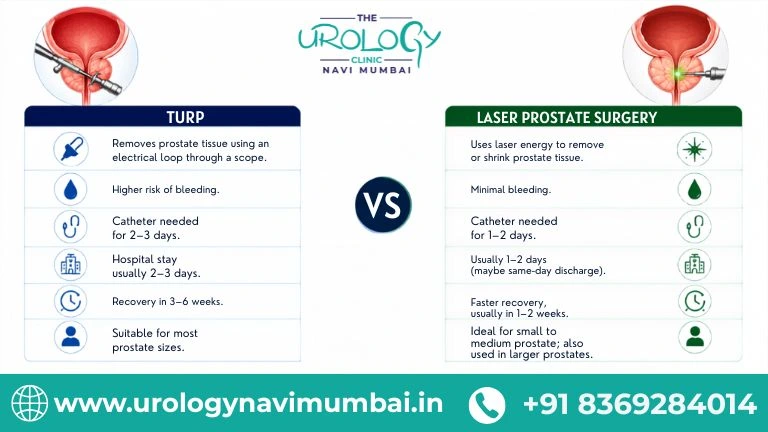
Comparison of TURP vs Laser Prostate Surgery
Comparison of TURP vs Laser Prostate Surgery Book An Apppointment For men dealing with an enlarged prostate, or BPH, these are two of the go-to surgical options and both work through the urethra, so there’s no external cutting involved. The goal is the same either way: clearing out the tissue that’s blocking urine flow. TURP has been around a long time and comes with a solid, well-documented track record of lasting results. Laser prostate surgery is a newer technique, using laser energy to remove or vaporise tissue, with low blood loss and a quicker recovery time. It tends to be the preferred pick for men with larger prostates or a higher bleeding risk, including some patients already on blood thinners. Both procedures offer relief that actually lasts, with a low chance of needing to go back for more treatment. Which one makes sense really comes down to prostate size, overall health, bleeding risk, and what the urologist recommends after a proper evaluation. Feature TURP (Transurethral Resection of the Prostate) Laser Prostate Surgery Best For Moderate–Severe BPH All BPH sizes Technology Used Electric loop (electrocautery). Holmium, GreenLight, or Thulium laser technology. How It Works Removes prostate tissue to improve urine flow. Uses focused laser energy to remove tissue. Procedure Type Endoscopic surgery without external cuts Endoscopic laser procedure without external cuts. Incision No external incision. No external incision. Anesthesia Spinal or general anesthesia. Spinal or general anesthesia. Treatment Duration About 60–90 minutes. About 45–90 minutes, depending on prostate size and laser type. Blood Loss Moderate compared to laser procedures. Minimal due to laser sealing blood vessels during treatment. Risk of Bleeding Higher in patients taking blood thinners. Lower, making it suitable for many high-risk patients. Risk of Bleeding Higher in patients taking blood thinners. Higher in patients taking blood thinners. Hospital Stay Usually 2–3 days. Often 1 day or same-day discharge in selected cases. Catheter Duration Typically 2–3 days. Usually 12–24 hours; sometimes slightly longer depending on the procedure Return to Daily Activities Usually after 2–4 weeks. Often within 1–2 weeks. Pain After Surgery Mild burning or discomfort during urination for a short period. Usually mild discomfort with quicker symptom improvement. Trusted Solutions for every Urological Concern Call Now