


Blogs Book An Apppointment Circumcision surgery – simple talk for parents and men who are thinking about it Circumcision is one of those topics people hear about but don’t always fully understand. Some parents are told about it after a baby is born. Some older boys or men hear about it only when there’s a medical issue. And naturally the first question that comes up is — is it necessary, is it painful, and is it safe? So let’s just talk about circumcision surgery in a very normal, human way. Not like a textbook. Just like someone explaining calmly in a clinic or at home. The idea is to make it easy to understand, even if someone young is reading this to help their parents. What is circumcision in simple words? Circumcision is a small surgery where the foreskin is removed. The foreskin is the skin covering the tip of the penis. Once it’s removed, the head of the penis stays visible all the time. This is usually done in newborn baby boys within the first few days or weeks after birth. But it can also be done later in life if there are health problems with the foreskin. Some men even choose it as adults for personal or hygiene reasons. It sounds like a big thing, but medically it’s considered a fairly small and common procedure when done by trained doctors. Why do people get circumcision done? People assume there’s always a big medical reason. Sometimes there is, sometimes not. It really depends on the situation. Medical reasons Doctors sometimes suggest circumcision if the foreskin causes problems. For example: Foreskin too tight and won’t pull back (phimosis) Repeated infections Pain while cleaning or urinating Foreskin stuck behind the tip (paraphimosis) In these cases, circumcision helps avoid repeated discomfort. Hygiene reasons Some families choose circumcision because it can make cleaning easier. Without the foreskin, there’s less chance of buildup that might lead to irritation or infection. Not everyone needs it for hygiene, but some prefer it for that reason. Preventive health There’s also some evidence that circumcision slightly lowers the risk of certain infections. It can reduce chances of urinary infections in infancy and some sexually transmitted infections later in life. These risks are already low, but some people consider this factor. So when people ask “do we really need circumcision?” the answer is — it depends. On health, comfort, and sometimes personal choice. How is circumcision actually done? People imagine it to be very complicated, but usually it’s quite straightforward. For newborn babies In babies, it’s done pretty quickly. The baby is placed on a small table A numbing cream or injection is used A special clamp or ring helps remove the foreskin safely It usually takes around 10–15 minutes Babies usually recover fast. Within a week or so, it heals. For older boys or men For older children or adults, it’s slightly more involved. Local or general anesthesia is given The foreskin is removed carefully Stitches are placed Healing takes a few weeks It’s still considered a minor surgery, but recovery takes longer compared to newborns. Recovery – what it’s usually like Healing time depends on age. For newborns, it’s quick. Usually around a week or 10 days. Parents just need to keep the area clean, change diapers regularly, and apply ointment if advised. For adults, there may be mild pain or discomfort for a few days. Doctors usually suggest: Taking medicines as advised Wearing loose clothing Avoiding heavy activity for some time Keeping the area clean Most people recover without major problems. What does it look like after circumcision? After healing, the foreskin is gone and the head of the penis stays visible. In babies, the tip may look a bit red or swollen at first, but that settles as it heals. In adults, the appearance changes slightly. Some men notice sensitivity changes at first, but most adjust over time. Benefits people talk about Circumcision can have some benefits, though not everyone needs it. Slightly lower risk of infections Easier hygiene Prevents foreskin-related problems Slightly reduced risk of some STDs These benefits vary from person to person. For some families, they matter. For others, they don’t. Are there any risks? Like any surgery, there are some risks. But serious complications are rare when it’s done by an experienced doctor. Possible issues include: Mild pain Small amount of bleeding Temporary swelling Infection (rare with proper care) Most of these are minor and settle with proper aftercare. Choosing a trained doctor makes a big difference. When should someone consider circumcision? Circumcision might be considered if: A doctor recommends it for foreskin problems There are repeated infections Foreskin is too tight Hygiene is difficult Personal or family preference Every case is different. It’s always better to talk to a doctor and understand the situation instead of deciding only based on online information. Why choose The Urology Clinic? Many families feel comfortable visiting The Urology Clinic Navi Mumbai because the doctors there explain things in a very calm and simple way instead of making it sound complicated or scary, they take time to listen to concerns and answer questions about the procedure and recovery, and they focus on making patients and parents feel relaxed and informed before taking any decision about circumcision. A small note before deciding Circumcision is a common procedure and generally safe when done properly. But it’s still a personal decision in many cases. Some choose it for medical reasons, some for hygiene, some for preference. If you’re thinking about it for your child or yourself, the best step is just to talk to a specialist, ask questions, and understand clearly what’s needed and what’s not. Once you have the right information, the decision becomes much easier and less stressful. Not Sure If You Need Circumcision or Facing Foreskin Problems? Speak to a Urology Specialist Book An Apppointment Conclusion Circumcision is a common and generally safe procedure when it’s done for the right reasons and by an

Can Gall Bladder Stone Be Removed Without Surgery
Blogs Book An Apppointment Can gall bladder stone be removed without surgery – what people really want to know Most people don’t even think about their gall bladder until something starts hurting badly on the right side of the stomach. Suddenly there’s pain after eating oily food, maybe nausea, and then a scan shows… gall bladder stones. And the very first question almost everyone asks is: can gall bladder stone be removed without surgery? It’s a very normal question. Surgery sounds scary. People wonder if medicines can dissolve the stones or if diet changes will fix everything. Some people even hope the stones will just disappear on their own. So let’s talk about this in a very real, simple way. No heavy medical words. Just clear explanation like a doctor might calmly explain in a clinic. What exactly are gall bladder stones? The gall bladder is a small pouch under your liver. It stores bile, which helps digest fatty foods. Sometimes the bile becomes thick and forms hard particles. These are gall stones. Some people have stones and don’t even know. No pain, no symptoms. They find out by accident during a scan. Others get sudden pain that can be quite sharp, especially after eating heavy or oily food. Once the report says “gall stones”, people immediately start searching: can gall bladder stone be removed without surgery. Because naturally, nobody wants surgery unless absolutely needed. Do all gall stones need treatment? Actually, no. This part surprises many people. If the stones are small and not causing pain or infection, doctors sometimes just observe. These are called silent stones. They may stay quiet for years. But if stones start causing symptoms like repeated pain, vomiting, or infection, then treatment becomes necessary. That’s when doctors start discussing options seriously. So whether stones need treatment or not depends on symptoms, not just their presence. Can medicines remove gall stones? This is where things get a little tricky. In some very specific cases, medicines can help dissolve small cholesterol stones. But this doesn’t work for everyone. Medicines work slowly Even when medicines are used, they take months or even longer. And they only work on certain types of stones. Stones may come back Sometimes stones dissolve but return later once medicine stops. So it’s not always a permanent solution. Not for large stones If stones are big or causing strong symptoms, medicines usually don’t help much. So when asking can gall bladder stone be removed without surgery, the honest answer is: sometimes yes, but not always. It depends on size, type, and symptoms. Can diet remove gall stones? Many people try home remedies or special diets. Eating less oily food definitely helps reduce pain and discomfort. Drinking water, eating light meals, and avoiding heavy fats can make you feel better. But diet alone usually doesn’t remove stones completely. It may control symptoms but not eliminate the stones entirely. That’s something many people misunderstand. Still, a healthy diet is always recommended whether you choose surgery or not. When do doctors suggest surgery? If gall stones keep causing pain again and again, doctors usually suggest removing the gall bladder. This surgery is very common and done through small cuts (laparoscopic surgery). Recovery is usually quick. Doctors suggest surgery when: Pain happens frequently Stones block bile flow Infection occurs Pancreas gets affected Nausea and vomiting keep happening At that stage, surgery is often the safest long-term solution. Many people worry about life without a gall bladder, but most live completely normal lives after removal. Non-surgical options – when possible? There are some situations where non-surgical options may be considered. Small stones with mild symptoms If stones are tiny and symptoms are not severe, doctors may try medicines first. Monitoring If stones are silent and not causing trouble, doctors may just monitor through regular check-ups. Lifestyle adjustments Eating balanced meals and avoiding heavy fatty foods can reduce discomfort. But again, these don’t always remove stones permanently. So when people ask can gall bladder stone be removed without surgery, it depends a lot on individual condition. Signs you shouldn’t ignore Some symptoms mean it’s time to see a doctor instead of waiting. Sharp pain in upper right abdomen Pain after eating fatty food Nausea or vomiting Fever Yellowing of skin or eyes If these happen repeatedly, it’s better to consult a specialist rather than trying only home remedies. What happens after gall bladder treatment? Many people worry that life will be difficult after gall bladder removal. But most adjust quickly. The liver still produces bile. The body learns to digest food normally over time. Doctors usually suggest eating lighter meals for a few weeks. Slowly, normal diet can return. Many people feel better after surgery because the pain stops. Why choose The Urology Clinic? Many patients feel more relaxed visiting The Urology Clinic Navi Mumbai because the doctors take time to explain things in a very straightforward, honest way instead of rushing into decisions, they help patients understand whether surgery is really needed or if monitoring is possible, and they try to create an environment where people can ask questions freely and clear their doubts without feeling pressured, which makes it easier for families to decide calmly about treatment. Things you can do if you have gall bladder stones If you’ve been told you have gall stones and they aren’t causing major trouble yet, there are still some simple things you can do to manage symptoms and avoid sudden attacks. These don’t always remove the stones, but they can help you stay more comfortable. Try eating lighter meals instead of very heavy or oily food. Many people notice pain after fried or fatty meals, so reducing that can make a difference. Drinking enough water during the day helps digestion too. Skipping meals or eating very late at night sometimes triggers discomfort, so regular meal timing can help. It’s also important not to ignore repeated pain. Some people try to adjust their diet and avoid check-ups, thinking the problem
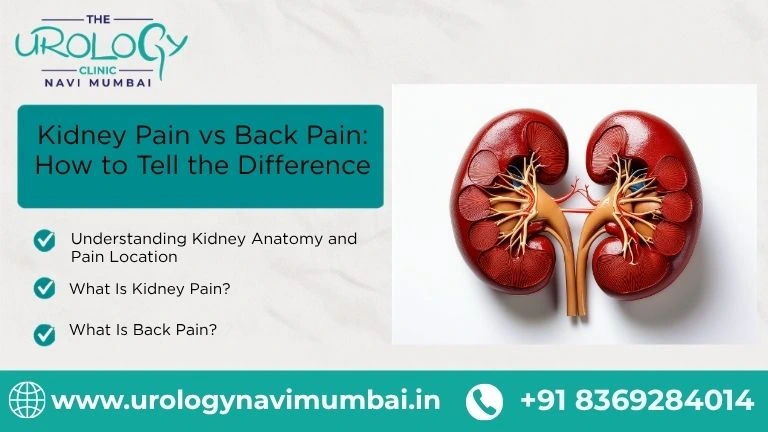
Kidney Pain vs Back Pain: How to Tell the Difference
Blogs Book An Apppointment Kidney Pain vs Back Pain: How to Tell the Difference Pain in the back or flank area is a frequent clinical complaint, but not all pain in this region originates from the musculoskeletal system. In some cases, discomfort may reflect an underlying renal issue. Distinguishing kidney pain vs back pain is critical for accurate diagnosis and effective management, especially when care is coordinated by specialists at Urology Navi Mumbai. Because kidney pain and back pain may present with overlapping symptoms, patients often misinterpret the source of their condition. Understanding differences in location, character, associated symptoms, and underlying medical causes helps guide evaluation and treatment decisions. This article offers medically sound, patient-focused insight into differentiating kidney pain from back pain, diagnostic approaches, and practical guidance on when to seek professional care at Urology Navi Mumbai or with your healthcare provider. Understanding Kidney Anatomy and Pain Location The kidneys are bean-shaped organs situated in the posterior abdomen, just below the rib cage on either side of the spine. This anatomical position means kidney pain is typically felt in the flank region the area between the ribs and the pelvis. In contrast, musculoskeletal back pain usually centers in the lower back, along the spine or in the muscles supporting the spinal column. Because the kidneys lie more laterally, pain from renal pathology is typically felt more toward the sides of the back, not centrally over the spine. What Is Kidney Pain? Kidney pain occurs when structures within or around the kidneys are inflamed, infected, obstructed, or injured. Common conditions responsible for kidney pain include: Kidney stones,(h3) which can cause sudden, intense flank pain that often radiates to the groin. Pyelonephritis,(h3) a bacterial infection of the kidneys that produces pain along with fever and urinary symptoms. Urinary obstruction,(h3) which may be due to anatomical narrowing or prostate enlargement. Renal cysts or tumours,(h3) which can create pressure and discomfort as they enlarge. Patients often describe kidney pain as a deep, constant ache or a sharp, severe cramping sensation. Unlike musculoskeletal back pain, kidney pain typically does not improve significantly with changes in posture or rest a key distinguishing feature. Specialists at Urology Navi Mumbai emphasize these clinical patterns when evaluating patients with suspected renal pain to ensure prompt and appropriate management. What Is Back Pain? Back pain encompasses discomfort originating from the bones, muscles, ligaments, discs, or joints of the spine. Common causes include: Muscle strain due to lifting or overuse Disc herniation or degeneration Poor posture Arthritis or age-related changes Spinal injuries or fractures Musculoskeletal back pain often presents as an aching, tightening, or sharp pain that is directly influenced by movement, position, and physical activity. Pain may worsen with bending, lifting, or prolonged standing, and generally improves with rest or targeted therapy. Unlike kidney pain, back pain rarely causes urinary symptoms or fever, making the pattern of associated features an important factor in clinical differentiation. Kidney Pain vs Back Pain: Key Differences Although kidney pain and back pain may feel similar to patients initially, clinicians at Urology Navi Mumbai use several key differences to guide diagnosis: Location: Kidney pain is typically in the flanks (sides) below the ribs, whereas back pain is usually in the lower back or along the spine. Response to Movement: Back pain often changes with posture and movement; kidney pain remains constant regardless of activity. Associated Symptoms: Fever, urinary symptoms (e.g., burning, urgency, blood in urine), and nausea are more characteristic of kidney pathology. Radiation Pattern:Kidney stone pain may travel from the flank toward the groin. Back pain may radiate down the legs if nerves are involved. These distinctions form the initial clinical basis for investigation and are reinforced by diagnostic testing. Common Causes of Kidney Pain Kidney Stones Kidney stones are crystalline deposits that form in the renal collecting system. They may cause severe, intermittent pain known as renal colic. Kidney Infection (Pyelonephritis) Ascending bacterial infections of the urinary tract may reach the kidneys, causing flank pain, fever, chills, and urinary discomfort. Obstruction Blockage of urine flow from prostate issues, strictures, or congenital anomalies can create back pressure and pain. Obstruction Fluid-filled cysts or neoplastic growths can exert pressure on renal tissue and surrounding structures. Each of these conditions requires specific evaluation and management strategies, often involving imaging and laboratory tests performed routinely at Urology Navi Mumbai. Common Causes of Back Pain Musculoskeletal back pain typically originates from: Muscle or ligament strain Herniated discs Degenerative joint disease Scoliosis or spinal deformities Trauma or repetitive stress injuries Back pain may also stem from nerve compression or irritation. Unlike kidney pain, musculoskeletal pain usually responds to rest, physical therapy, activity modification, or pain management. Associated Symptoms That Suggest Kidney Pain Symptoms that support a kidney origin include: Fever and chills Burning or painful urination Frequent urination Cloudy or foul-smelling urine Hematuria (blood in the urine) Nausea or vomiting Such symptoms, especially when paired with flank pain, should prompt timely medical evaluation at centres like Urology Navi Mumbai. When to See a Doctor Immediate medical assessment is recommended if you experience: Severe flank pain with nausea or vomiting Fever with chills Blood in the urine Pain not improving with rest Urinary changes Persistent or worsening symptoms warrant a professional evaluation, including physical examination and diagnostic testing. Diagnostic Methods At Urology Navi Mumbai, diagnosis begins with: Detailed medical history and physical examination Laboratory tests (urinalysis, blood tests) Imaging studies (ultrasound, CT scans, MRI) These investigations help distinguish kidney-related pain from musculoskeletal back pain and identify underlying pathology. Preventive Measures Maintaining healthy hydration, balanced nutrition, regular physical activity, and proper lifting techniques supports both back and kidney health. Regular medical checkups, especially for individuals with risk factors (e.g., diabetes, hypertension), help detect problems early. Book Your Kidney Health Consultation Today in Navi Mumbai. Schedule your consultation with Dr. Ninad Tamboli. Book An Apppointment Why choose Urology Navi Mumbai? Urology Navi Mumbai provides comprehensive evaluation and management of kidney-related conditions. The focus is on early diagnosis, targeted treatment, and long-term monitoring tailored

What Happens if Urine Blockage is Untreated? Risks, Symptoms & Treatment
Blogs Book An Apppointment What Happens if Urine Blockage is Untreated? Urine blockage, also known as urinary obstruction, is a serious medical condition in which the normal flow of urine is partially or completely stopped. While some cases may begin with mild symptoms, untreated urine blockage can lead to severe complications affecting the kidneys, bladder, and overall health. Early diagnosis and timely treatment are essential because prolonged blockage can result in permanent organ damage. What Is Urine Blockage? Urine blockage occurs when urine cannot flow normally through the urinary tract. This obstruction may occur at different levels: Kidney (renal pelvis) Ureter (tube connecting kidney to bladder) Bladder outlet Urethra Blockage may be sudden (acute) or develop slowly over time (chronic). Regardless of how it begins, urinary obstruction requires timely medical evaluation. Common Causes of Urinary Obstruction Several conditions can lead to urine blockage, including: Kidney Stones Stones can lodge in the ureter, causing severe pain and preventing urine passage. Enlarged Prostate (BPH) In men, prostate enlargement can compress the urethra and restrict urine flow. Urethral Strictures Scar tissue or narrowing in the urethra may block urine output. Tumours or Growths Masses in the bladder, pelvis, or abdomen may press against urinary structures. Congenital Abnormalities Some individuals are born with structural urinary tract problems that predispose them to obstruction. What Happens if Urine Blockage is Untreated? Untreated urinary obstruction can cause progressive and serious damage. The longer urine remains blocked, the higher the risk of complications. Increased Pressure on the Kidneys When urine cannot drain properly, it backs up into the kidneys, creating pressure. This condition is known as hydronephrosis. Over time, the kidney tissue becomes stretched and damaged, reducing its ability to filter waste effectively. Kidney Damage and Kidney Failure Persistent obstruction may lead to: Reduced kidney function Permanent scarring Chronic kidney disease Kidney failure in severe cases Early intervention is critical to prevent irreversible renal damage. Urinary Tract Infections (UTIs) Stagnant urine provides an ideal environment for bacterial growth. Untreated blockage often results in infections such as: Bladder infection (cystitis) Kidney infection (pyelonephritis) Kidney infections can become severe and require urgent treatment. Sepsis: A Life-Threatening Emergency In some cases, infection from urinary obstruction can spread into the bloodstream, leading to sepsis. Symptoms of sepsis may include: High fever Rapid heartbeat Confusion Low blood pressure Sepsis is a medical emergency and can be fatal without immediate care. Bladder Damage If urine remains trapped in the bladder, it can overstretch the bladder wall, causing: Loss of bladder tone Difficulty emptying urine even after blockage removal Long-term urinary dysfunction Severe Pain and Discomfort Urine blockage often causes: Lower abdominal pain Flank pain Burning sensation Urgency with inability to urinate Pain can become unbearable, especially in acute obstruction caused by stones. Symptoms That Should Not Be Ignored Seek immediate medical evaluation if you experience: Difficulty passing urine Weak urine stream Complete inability to urinate Blood in the urine Severe flank or abdominal pain Fever and chills Nausea or vomiting Prompt diagnostic testing helps prevent complications. Diagnostic Methods Specialists may use: Urinalysis and blood tests Ultrasound of kidneys and bladder CT scan for kidney stones Cystoscopy to examine urethra and bladder Accurate diagnosis ensures the correct treatment approach. Treatment Options Treatment depends on the cause and severity of blockage: Catheter placement for immediate relief Medications for prostate enlargement Removal of kidney stones Endoscopic procedures for strictures Surgery in complex obstructions Timely treatment helps restore urine flow and protect kidney function. Preventive Measures To reduce the risk of urinary obstruction: Stay well hydrated Treat UTIs early Manage prostate health with regular checkups Avoid delaying urination Monitor recurrent kidney stones Routine urological evaluation helps detect problems early. Facing Difficulty Urinating? Consult a Urology Specialist in Navi Mumbai Today. Book An Apppointment Why choose Urology Navi Mumbai? Urology Navi Mumbai offers comprehensive diagnosis and advanced treatment for urinary obstruction and kidney-related conditions. With expert care from Dr. Ninad Tamboli, patients receive personalized treatment supported by modern diagnostic facilities and minimally invasive solutions. Timely intervention provided here helps prevent serious complications and ensures long-term urinary and kidney health. Conclusion Urine blockage is not a condition that should be ignored. If left untreated, it can lead to kidney damage, infections, bladder dysfunction, and even life-threatening sepsis. Early diagnosis and timely treatment are essential for preserving kidney function and preventing long-term complications. If you experience urinary symptoms, pain, or reduced urine flow, consult a qualified urology specialist for evaluation and care. FAQs Can urine blockage resolve on its own? Mild cases may improve temporarily, but most obstructions require medical evaluation and treatment. How quickly can kidney damage occur from blockage? Kidney damage may begin within days or weeks depending on severity. Is urinary obstruction an emergency? Yes. Complete inability to urinate or fever with obstruction requires immediate attention. Can enlarged prostate cause urine blockage? Yes. Benign prostate enlargement is a common cause in older men What tests confirm urine blockage? Ultrasound, CT scan, and cystoscopy are commonly used. Mild cases may improve temporarily, but most obstructions require medical evaluation and treatment. Kidney damage may begin within days or weeks depending on severity. Yes. Complete inability to urinate or fever with obstruction requires immediate attention. Yes. Benign prostate enlargement is a common cause in older men Ultrasound, CT scan, and cystoscopy are commonly used. Free Consultation Book Now Call Now Dr. Ninad Tamboli Author

Can you have kidney disease and not know it
Blogs Book An Apppointment Can You Have Kidney Disease and Not Know It? Yes, Can you have kidney disease and not know it is a question many people unknowingly live with every day. Kidney disease is often called a silent condition because it may progress for years without causing obvious symptoms. Many individuals feel completely healthy until routine blood or urine tests unexpectedly show kidney damage. The kidneys perform essential tasks like filtering waste, balancing fluids, and regulating blood pressure. When these functions begin to decline gradually, the body adapts making it easy to miss early warning signs. Can You Have Kidney Disease and Not Know It in the Early Stages? Yes, especially during the early stages. Can you have kidney disease and not know it is most relevant when kidney damage is mild to moderate. At this point, the kidneys can still compensate for reduced function, preventing noticeable symptoms. Most people do not experience pain, discomfort, or changes in daily routine. This silent progression is why kidney disease is often diagnosed incidentally during routine health checkups. Why Does Kidney Disease Often Go Unnoticed? Kidney disease remains unnoticed because the body does not immediately react to gradual kidney damage. Unlike sudden illnesses, chronic kidney disease develops slowly, allowing the body to adjust without triggering alarm signals. Why Is Pain Not an Early Symptom? Chronic kidney disease usually does not cause pain. Pain typically occurs only when there is infection, obstruction, or kidney stones. Without pain, people assume their kidneys are healthy. What Are the Three Early Warning Signs of a Kidney? Although early kidney disease may be silent, some subtle signs can appear. Changes in urination are often the earliest indicator. This may include increased frequency, especially at night, foamy urine due to protein leakage, or darker urine. Swelling in the ankles, feet, hands, or around the eyes can occur when the kidneys fail to remove excess fluid and sodium effectively. Persistent fatigue and weakness may develop when waste products accumulate in the blood due to reduced kidney filtration. These symptoms are often mistaken for everyday health issues, reinforcing why Can you have kidney disease and not know it remains a valid concern. Who Is Most at Risk of Silent Kidney Disease? Certain groups are more vulnerable to developing kidney disease without symptoms. These include people with diabetes, high blood pressure, or a family history of kidney problems. Older adults and individuals using painkillers regularly are also at increased risk. For these individuals, absence of symptoms does not mean absence of disease. How Is Kidney Disease Diagnosed Without Symptoms? Kidney disease is primarily diagnosed through medical tests rather than symptoms. Blood tests measure creatinine levels and calculate the estimated glomerular filtration rate (eGFR), which reflects kidney function. Urine tests detect protein, blood, or abnormalities that signal kidney damage. Imaging tests like ultrasound help assess kidney structure, size, and possible blockages. Testing is essential because Can you have kidney disease and not know it cannot be answered accurately without medical evaluation. What Is the Life Expectancy of a Person With Kidney Disease? Life expectancy varies widely depending on the stage of kidney disease, age, overall health, and how well the condition is managed. Does Early Detection Improve Life Expectancy? Yes. When kidney disease is diagnosed early, treatment can slow progression and reduce complications. Many people with early-stage kidney disease live normal, active lives. What Happens in Advanced Kidney Disease? In advanced stages, kidney disease may lead to complications affecting the heart, bones, and blood. Treatments such as kidney dialysis or kidney transplantation significantly improve survival and quality of life. Protect Your Kidney Health with Expert Urology Care in Navi Mumbai Book An Apppointment Can Kidney Disease Be Prevented From Progressing? While kidney damage is usually permanent, progression can often be slowed. Controlling blood pressure, managing blood sugar, reducing salt intake, staying hydrated, and following medical advice help preserve kidney function. Early intervention matters most when Can you have kidney disease and not know it is identified before severe damage occurs. While kidney damage is usually permanent, progression can often be slowed. Controlling blood pressure, managing blood sugar, reducing salt intake, staying hydrated, and following medical advice help preserve kidney function. Early intervention matters most when Can you have kidney disease and not know it is identified before severe damage occurs. When Should You Consult a Urologist for Kidney Concerns? You should seek medical evaluation if routine tests show abnormal kidney results, if swelling or urinary changes persist, or if you have diabetes or high blood pressure with declining kidney function. Early consultation helps prevent irreversible damage. Why Choose Urology Navi Mumbai for Kidney Disease Care? Urology Navi Mumbai provides comprehensive care focused on early diagnosis and long-term kidney health. The approach includes accurate testing, personalized treatment plans, and continuous monitoring. Special attention is given to identifying kidney disease at stages where symptoms may not yet be noticeable. This proactive care model is crucial for patients where Can you have kidney disease and not know it applies. Conclusion So, Can you have kidney disease and not know it? Yes—and this silent nature makes kidney disease particularly dangerous. Many people feel perfectly fine until significant damage has already occurred. Routine screening, awareness of subtle signs, and timely medical consultation are the most effective ways to protect kidney health and improve long-term outcomes. FAQs Can kidney disease exist without any symptoms? Yes, especially in the early stages. Which test confirms kidney disease? Blood tests measuring creatinine and eGFR, along with urine tests. At what stage do kidney disease symptoms usually appear? Symptoms often appear in moderate to advanced stages Symptoms often appear in moderate to advanced stages Symptoms often appear in moderate to advanced stages High-risk individuals should test at least once a year. High-risk individuals should test at least once a year. Yes, especially in the early stages. Blood tests measuring creatinine and eGFR, along with urine tests. Symptoms often appear in moderate to advanced stages Symptoms often appear in moderate to

Is Kidney Disease a Silent Killer?
Blogs Book An Apppointment Is Kidney Disease a Silent Killer? Many people ask a worrying but valid question: Is kidney disease a silent killer? In most cases, the answer is yes. Kidney disease often develops slowly and without pain, which means damage can occur for years before a person realizes something is wrong. Because early symptoms are mild or absent, the condition is frequently detected only after significant kidney function has already been lost. Is Kidney Disease a Silent Killer? The reason people commonly ask is kidney disease a silent killer is because kidney damage does not usually cause discomfort in the beginning. Unlike infections or injuries, kidney disease progresses quietly while the body adapts to reduced kidney function. Does early diagnosis improve quality of life? Absolutely. People who receive early care can manage their condition with medications, dietary changes, and routine monitoring. This allows them to continue working, traveling, and maintaining daily routines with minimal disruption. What Are the First Signs of Kidney Disease? Yes, many people live long and active lives after being diagnosed with kidney disease. Early detection and consistent management make a significant difference in outcomes. When kidney disease is identified in its early stages, progression can often be slowed effectively. Which early symptoms should raise concern? Persistent fatigue, swelling in the feet or face, changes in urine color or frequency, foamy urine, nausea, muscle cramps, and difficulty concentrating are common early indicators. While these symptoms are not specific, ignoring them may delay diagnosis. Why Does Kidney Disease Often Show No Symptoms Early? Kidneys are highly adaptable organs. When some filtering units are damaged, others work harder to maintain balance in the body. This compensation delays symptom onset. How does this compensation delay diagnosis? Because the body continues functioning normally for a long time, people feel healthy even as kidney function declines. This silent progression explains why kidney disease is often diagnosed late. Who Is at Higher Risk of Silent Kidney Disease? Certain individuals are more vulnerable to kidney disease that develops without early warning signs. For them, routine screening is essential. Which groups should monitor kidney health closely? People with diabetes, high blood pressure, obesity, family history of kidney disease, long-term painkiller use, smoking habits, and adults over 60 years of age face a higher risk and should undergo regular kidney tests. How Is Kidney Disease Detected in the Early Stages? Since symptoms cannot be relied upon, early detection depends on medical testing rather than physical discomfort. What tests help identify early kidney damage? Blood tests measuring creatinine and estimated glomerular filtration rate, urine tests checking for protein leakage, and regular blood pressure monitoring help identify kidney problems before complications develop. Protect Your Kidney Health with Expert Urology Care in Navi Mumbai Book An Apppointment Can Kidney Disease Be Prevented or Slowed Down? Not all kidney conditions can be prevented, but progression can often be delayed with timely intervention. What habits support long-term kidney health? Maintaining healthy blood sugar and blood pressure levels, limiting salt intake, staying physically active, avoiding unnecessary medications, and following medical advice can help protect kidney function. What Happens If Kidney Disease Is Left Untreated? Without treatment, kidney disease may worsen steadily and affect other organs. The consequences can be serious and long-term. What complications occur in advanced kidney disease? Advanced kidney disease can lead to kidney failure, dialysis dependence, cardiovascular disease, fluid retention, anemia, and bone disorders. Early care reduces these risks significantly. When Should You Consult a Urologist for Kidney Problems? Early specialist consultation improves outcomes and prevents irreversible damage. What complications occur in advanced kidney disease? Persistent urinary changes, unexplained swelling, abnormal kidney test results, uncontrolled blood pressure, or a familQy history of kidney disease are strong reasons to seek urological evaluation. Why Choose The Urology Clinic Navi Mumbai? The Urology Clinic Navi Mumbai offers advanced diagnostic and treatment facilities, personalized and discreet care, and high success rates with the latest erectile dysfunction treatments. Trusted by patients across Navi Mumbai and beyond, the clinic provides comprehensive support from accurate diagnosis to long-term recovery, ensuring a comfortable and results-driven experience. Conclusion So, is kidney disease a silent killer? In many cases, yes. Its ability to progress without obvious symptoms makes early screening and timely medical care essential. With awareness, regular testing, and appropriate treatment, kidney disease can be detected early and managed effectively. FAQs Is kidney disease always silent in the early stages? In many cases, early kidney disease causes few or no noticeable symptoms. Can early kidney disease be managed without dialysis? Yes, early stages are often controlled with medication and lifestyle changes. How often should kidney function be tested? High-risk individuals should test annually; others can include it in routine health check-ups. Does kidney disease affect heart health? Yes, untreated kidney disease increases cardiovascular risk. Can younger adults develop kidney disease? Yes, especially if risk factors like diabetes or hypertension are present. In many cases, early kidney disease causes few or no noticeable symptoms. Yes, early stages are often controlled with medication and lifestyle changes. High-risk individuals should test annually; others can include it in routine health check-ups. Yes, untreated kidney disease increases cardiovascular risk. Yes, especially if risk factors like diabetes or hypertension are present. Free Consultation Book Now Call Now Dr. Ninad Tamboli Author

What Are the Early Symptoms of Kidney Disease?
Blogs Book An Apppointment What Are the Early Symptoms of Kidney Disease Kidney disease is a progressive medical condition that can significantly impact overall health if left undiagnosed or untreated. Because early-stage kidney disease often presents with minimal or nonspecific symptoms, many individuals remain unaware of declining kidney function until advanced stages develop. Understanding what are the early symptoms of kidney disease is therefore essential for timely diagnosis and appropriate medical intervention. The kidneys perform vital physiological functions, including filtration of metabolic waste, regulation of fluid and electrolyte balance, control of blood pressure, and production of hormones involved in red blood cell formation and bone metabolism. When kidney function is impaired, systemic complications may arise. Early recognition of symptoms and routine kidney health screening are critical components of preventive healthcare. How Common Is Kidney Disease Worldwide? Chronic kidney disease is recognized as a major non-communicable disease worldwide. Epidemiological data indicate that approximately 10–15% of the adult population has some degree of kidney impairment. A substantial proportion of affected individuals remain undiagnosed, particularly during early disease stages when symptoms are absent or mild. The global burden of kidney disease contributes significantly to cardiovascular complications, reduced quality of life, and increased healthcare expenditure. These trends underscore the importance of routine kidney function tests and public awareness initiatives. What Is Kidney Disease? Kidney disease encompasses conditions that result in structural or functional impairment of the kidneys. It may present as acute kidney injury, characterized by sudden loss of kidney function, or as chronic kidney disease, which involves gradual and irreversible decline in renal performance over time. In chronic kidney disease, nephrons the functional filtration units of the kidney progressively lose their ability to filter blood efficiently. As renal function declines, waste products and excess fluids accumulate in the body, leading to metabolic disturbances and systemic complications. Chronic kidney disease is most commonly associated with diabetes mellitus, hypertension, and glomerular disorders. Early identification and targeted management are essential to slow disease progression. How Do Kidneys Function in the Human Body? The kidneys filter approximately 120 to 150 liters of blood daily, removing metabolic waste and maintaining fluid and electrolyte equilibrium. They regulate sodium, potassium, calcium, and phosphate balance, contributing to cardiovascular stability and neuromuscular function. In addition, kidneys produce erythropoietin, a hormone essential for red blood cell production, and activate vitamin D to support bone health. Disruption of these processes due to kidney disease can lead to anemia, mineral-bone disorders, and cardiovascular complications. What Are the Symptoms of Kidney Disease? Early kidney disease symptoms are often subtle and easily mistaken for everyday fatigue or minor health issues. However, persistent or combined symptoms should never be ignored. One of the first warning signs is changes in urination patterns. This may include urinating more frequently, especially at night, producing foamy or bubbly urine, or noticing dark-colored urine. Some people may experience difficulty urinating or reduced urine output. Early vs. Advanced Kidney Disease Symptoms In early-stage chronic kidney disease, clinical manifestations are often mild or absent. Patients may remain asymptomatic despite measurable reductions in kidney function. This silent progression highlights the value of routine kidney health screening in at-risk populations. In advanced disease stages, symptoms become more pronounced and may include marked fatigue, confusion, chest discomfort, significant edema, persistent nausea, and oliguria. At this stage, renal replacement therapy may be required. Early detection remains critical to prevent progression to advanced kidney failure. Why Is Early Detection of Kidney Disease Important? Early detection enables timely medical intervention aimed at preserving residual kidney function and recognizing the Early Warning Signs of Kidney Disease. Although chronic kidney disease is not fully reversible, identifying these early indicators and initiating appropriate treatment can significantly delay disease progression and reduce the risk of complications. Management strategies may include glycemic control in diabetic patients, antihypertensive therapy, dietary modifications, and avoidance of nephrotoxic medications. Monitoring the Early Warning Signs of Kidney Disease during routine health evaluations helps physicians intervene at the right time and prevent further kidney damage. Routine kidney function tests also help identify the Early Warning Signs of Kidney Disease, facilitating early diagnosis and enabling healthcare providers to implement individualized treatment plans that improve long-term outcomes and overall kidney health. Protect Your Kidney Health with Expert Urology Care in Navi Mumbai Book An Apppointment Can Kidney Disease Be Prevented From Progressing? While kidney damage is usually permanent, progression can often be slowed. Controlling blood pressure, managing blood sugar, reducing salt intake, staying hydrated, and following medical advice help preserve kidney function. Early intervention matters most when Can you have kidney disease and not know it is identified before severe damage occurs. While kidney damage is usually permanent, progression can often be slowed. Controlling blood pressure, managing blood sugar, reducing salt intake, staying hydrated, and following medical advice help preserve kidney function. Early intervention matters most when Can you have kidney disease and not know it is identified before severe damage occurs. What Is Kidney Disease? Kidney disease encompasses conditions that result in structural or functional impairment of the kidneys. It may present as acute kidney injury, characterized by sudden loss of kidney function, or as chronic kidney disease, which involves gradual and irreversible decline in renal performance over time. In chronic kidney disease, nephrons the functional filtration units of the kidney progressively lose their ability to filter blood efficiently. As What Are the Symptoms of Kidney Disease? Early kidney disease symptoms are often subtle and easily mistaken for everyday fatigue or minor health issues. However, persistent or combined symptoms should never be ignored. One of the first warning signs is changes in urination patterns. This may include urinating more frequently, especially at night, producing foamy or bubbly urine, or noticing dark-colored urine. Some people may experience difficulty urinating or reduced urine output. Fatigue and weakness are also common. When kidneys fail to remove waste efficiently, toxins accumulate in the blood, leading to constant tiredness and difficulty concentrating. Swelling in the ankles, feet, hands, or face is another early symptom. This occurs when
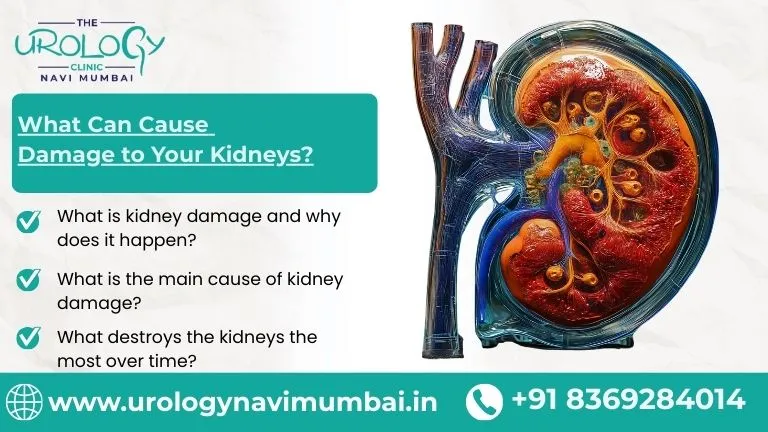
What Can Cause Damage to Your Kidneys?
Blogs Book An Apppointment What Can Cause Damage to Your Kidneys? Kidneys play a silent yet critical role in keeping the body healthy. They filter waste, regulate fluids, balance minerals, and help control blood pressure. When kidney function starts declining, the damage often progresses quietly without obvious warning signs. This makes it important to understand what can cause damage to your kidneys and how everyday health choices and medical conditions influence long-term kidney health. Kidney damage can be temporary or permanent depending on the cause, how early it is detected, and how well it is managed. In many cases, timely intervention can slow or even stop further deterioration. What is kidney damage and why does it happen? Kidney damage occurs when the filtering units of the kidneys, known as nephrons, stop working efficiently. This leads to a buildup of waste products and excess fluid in the body. Over time, damaged kidneys struggle to maintain balance, affecting multiple organ systems. Damage may occur suddenly, known as acute kidney injury, or develop gradually over months or years, referred to as chronic kidney disease. While some causes are unavoidable, many are linked to long-term lifestyle and medical factors. What is the main cause of kidney damage? The most common causes of kidney damage worldwide are diabetes and high blood pressure. These conditions gradually injure the delicate blood vessels inside the kidneys and may eventually lead to kidney damage symptoms such as fatigue, swelling, and changes in urination. Persistently high blood sugar damages the kidney’s filtration system, allowing protein to leak into the urine. As the condition progresses, individuals may begin to notice kidney damage symptoms including foamy urine, frequent urination, or unexplained weakness. Similarly, uncontrolled blood pressure increases pressure inside kidney blood vessels, reducing their ability to filter blood properly. Over time, this leads to scarring and permanent loss of kidney function. If left untreated, worsening kidney function can cause more noticeable kidney damage symptoms, making early diagnosis and management essential for protecting long-term kidney health. What destroys the kidneys the most over time? Long-term exposure to uncontrolled medical conditions causes the most harm. Diabetes and hypertension remain the biggest contributors, but they are not the only ones. Repeated kidney infections, untreated urinary blockages, autoimmune disorders, and prolonged misuse of painkillers can steadily destroy kidney tissue. In many cases, damage happens silently until a significant portion of kidney function is already lost. Can diabetes cause kidney damage? Yes, diabetes is one of the strongest risk factors for kidney disease. High blood sugar levels damage the tiny blood vessels responsible for filtering waste. This condition, known as diabetic nephropathy, often develops slowly and may not cause symptoms in the early stages. Without proper sugar control, kidney damage continues to progress, eventually leading to advanced kidney disease or kidney failure. Regular monitoring of urine protein and kidney function tests plays a crucial role in early detection. Can high blood pressure damage your kidneys? High blood pressure and kidney damage are closely connected. Elevated blood pressure damages kidney blood vessels, while damaged kidneys further raise blood pressure, creating a harmful cycle. Even mildly elevated blood pressure, when sustained for years, can reduce kidney efficiency. Controlling blood pressure is one of the most effective ways to slow kidney disease progression. Can kidney stones cause permanent kidney damage? Kidney stones do not always cause lasting damage, but repeated or untreated stones can be harmful. Stones may block urine flow, increase pressure inside the kidneys, and lead to infections. When obstruction or infection persists for a long time, kidney tissue can become permanently damaged. Early evaluation and timely treatment significantly reduce this risk. Can your kidneys cause a rash or skin problems? Kidney problems can sometimes show signs on the skin. When kidneys fail to remove waste efficiently, toxins build up in the bloodstream. This can cause itching, dryness, and rashes. In advanced stages, people may experience persistent itching without an obvious skin condition. Certain autoimmune kidney disorders may also cause rashes due to immune system involvement rather than kidney function alone. What are the early signs of kidney damage? Early kidney damage often goes unnoticed, but subtle changes may occur. These can include fatigue, swelling in the feet or face, changes in urination, foamy urine, or unexplained high blood pressure. Because these symptoms are common to many conditions, kidney disease may remain undiagnosed unless routine tests are performed. Blood and urine tests are essential for early detection. How do you know if your kidneys are failing? As kidney function declines, symptoms become more noticeable. Reduced urine output, persistent nausea, muscle cramps, breathlessness, and difficulty concentrating may develop. Advanced kidney failure affects nearly every system in the body. At this stage, medical care becomes urgent, and treatment focuses on preserving remaining kidney function and managing complications. Can damaged kidneys heal? Whether kidneys can recover depends on the type and extent of damage. Acute kidney injury caused by dehydration, infection, or medication toxicity may improve if treated early. Chronic kidney disease, however, usually involves permanent damage. While lost kidney function cannot be restored, proper management can slow progression and help maintain quality of life for many years. How fast does kidney damage progress? The rate of progression varies from person to person. Factors such as underlying cause, blood pressure control, blood sugar levels, lifestyle habits, and timely medical care influence how quickly kidney function declines. Some people remain stable for years, while others may experience rapid deterioration if risk factors are poorly controlled. How to stop kidney damage from getting worse? Slowing kidney damage requires consistent long-term care. Controlling blood pressure and blood sugar is essential. Dietary changes, including reducing salt and avoiding excessive protein intake, also help reduce kidney strain. Avoiding unnecessary painkillers, staying hydrated, maintaining a healthy weight, and attending regular follow-ups significantly contribute to preserving kidney function. Book Your Kidney Health Consultation Today in Navi Mumbai. Schedule your consultation with Dr. Ninad Tamboli. Book An Apppointment When should you see a kidney specialist? Medical evaluation becomes

What Are the 3 Early Warning Signs of Kidney Disease?
Blogs Book An Apppointment What Are the 3 Early Warning Signs of Kidney Disease? Kidney disease often develops silently, which makes early symptoms easy to miss. Many people continue their daily routine without realizing that their kidneys may already be under stress. This is why people frequently ask what are the 3 early warning signs of kidney disease, especially when subtle changes start appearing in the body. The kidneys play a vital role in filtering waste, balancing fluids, and supporting overall health. When their function begins to decline, the body usually sends early signals that should not be ignored. Why early kidney symptoms are commonly missed In the early stages, kidney problems rarely cause sharp pain or sudden illness. Symptoms tend to be mild, gradual, and easy to dismiss as routine fatigue or lifestyle-related issues. Because the kidneys can compensate for damage over time, warning signs often go unnoticed. Ignoring these early symptoms can allow kidney disease to progress quietly. Paying attention to small but persistent changes can help prevent long-term complications. The 3 early warning signs of kidney disease Medical professionals often identify three common symptoms that appear before kidney disease becomes advanced. These signs may occur individually or together and deserve medical attention when persistent. 1. Changes in urination Changes in urination are often the earliest indicator of kidney problems. Since the kidneys are responsible for urine formation, even minor damage can affect urinary patterns. People may notice frequent urination, especially during the night, or a reduced amount of urine. Urine may appear foamy, darker than usual, or unusually pale. Some individuals experience discomfort or a feeling that the bladder is not fully emptied. Persistent changes in urination can signal that the kidneys are struggling to filter waste effectively. 2. Persistent fatigue and low energy Unusual tiredness that does not improve with rest can be another early sign of kidney dysfunction. This type of fatigue often affects concentration, productivity, and overall quality of life. When kidneys are not working efficiently, waste products accumulate in the blood, leading to weakness and low energy levels. In some cases, reduced red blood cell production may contribute to ongoing fatigue. If tiredness becomes constant without a clear reason, it should be medically evaluated. 3. Swelling in the feet, ankles, hands, or face Swelling, also known as edema, occurs when excess fluid builds up in body tissues. Healthy kidneys remove extra salt and water, but impaired kidneys may fail to do so effectively. As a result, swelling commonly appears in the feet, ankles, hands, or around the eyes. It may start mildly and gradually worsen over time. Unexplained swelling should never be ignored, especially when accompanied by other symptoms. Are there other early signs linked to kidney problems? Some individuals may experience additional symptoms such as loss of appetite, nausea, headaches, difficulty concentrating, or rising blood pressure. These symptoms often appear as kidney function declines further. This is why recognizing the earliest warning signs is essential for timely diagnosis and care. Who should be more cautious about kidney health? People with diabetes, high blood pressure, heart disease, or a family history of kidney conditions are at higher risk. Age, dehydration, frequent use of painkillers, and recurrent infections can also increase the likelihood of kidney-related issues. For individuals in high-risk groups, regular health check-ups and symptom awareness are especially important. How is kidney disease detected early? Early detection usually involves blood tests to assess kidney filtration and urine tests to check for protein or blood. Blood pressure monitoring also plays an important role, as kidney disease and hypertension often influence each other. Early testing helps identify kidney issues before irreversible damage occurs. Book Your Kidney Health Consultation Today in Navi Mumbai. Schedule your consultation with Dr. Ninad Tamboli. Book An Apppointment Why choose Urology Navi Mumbai? Urology Navi Mumbai focuses on early evaluation and patient-focused care for kidney-related conditions. The clinic emphasizes accurate diagnosis, preventive screening, and personalized treatment planning based on individual health needs. With structured monitoring and timely medical guidance, patients receive care aimed at preserving kidney function and preventing complications. Conclusion Kidney disease rarely causes obvious symptoms in its early stages, which makes awareness crucial. Changes in urination, ongoing fatigue, and unexplained swelling are among the earliest indicators that should not be ignored. Recognizing these symptoms early and knowing what are the 3 early warning signs of kidney disease can encourage timely medical consultation and help protect long-term kidney health. FAQs Can kidney disease begin without pain? Yes, early kidney disease often develops without pain or severe discomfort. Can early kidney disease be managed? Early stages can often be managed effectively to slow progression with proper medical care and lifestyle changes. Is swelling always related to kidney disease? Not always, but persistent or unexplained swelling should be medically evaluated. When should someone consult a doctor? Medical advice is recommended if symptoms persist or worsen, especially in individuals with risk factors. Yes, early kidney disease often develops without pain or severe discomfort. Early stages can often be managed effectively to slow progression with proper medical care and lifestyle changes. Not always, but persistent or unexplained swelling should be medically evaluated. Medical advice is recommended if symptoms persist or worsen, especially in individuals with risk factors. Free Consultation Book Now Call Now Dr. Ninad Tamboli Author

Enlarged Prostate in Hindi: बढ़ा हुआ प्रोस्टेट, लक्षण, कारण और इलाज
Blogs Book An Apppointment Enlarged prostate in hindi: बढ़ा हुआ प्रोस्टेट क्या है? लक्षण, कारण और इलाज प्रोस्टेट ग्रंथि क्या होती है? प्रोस्टेट ग्रंथि वह ग्रंथि है जो वीर्यपात के दौरान शुक्राणुओं को ले जाने वाले द्रव का उत्पादन करती है। प्रोस्टेट ग्रंथि मूत्रमार्ग को घेरे रहती है, जो वह नली है जिसके माध्यम से मूत्र शरीर से बाहर निकलता है। प्रोस्टेट ग्रंथि का स्थान मूत्राशय के नीचे स्थित प्रोस्टेट ग्रंथि मूत्रमार्ग को घेरे रहती है। यह प्रजनन कार्यों के लिए जिम्मेदार होती है क्योंकि यह वीर्य द्रव का उत्पादन करती है जो शुक्राणुओं को पोषण देता है और उनका परिवहन करता है। पुरुष शरीर में प्रोस्टेट की भूमिका अखरोट के आकार की छोटी प्रोस्टेट ग्रंथि पुरुषों के प्रजनन स्वास्थ्य में महत्वपूर्ण भूमिका निभाती है, क्योंकि यह शुक्राणुओं को ले जाने में सहायक द्रव का उत्पादन करती है। बढ़ा हुआ प्रोस्टेट क्या होता है? मेडिकल दृष्टि से इसकी परिभाषा सौम्य प्रोस्टेटिक हाइपरप्लासिया, जिसे संक्षेप में बीपीएच कहते हैं, प्रोस्टेट ग्रंथि का गैर-कैंसरयुक्त फैलाव है। यह बढ़ती उम्र के पुरुषों में एक आम समस्या है। उम्र के साथ होने वाले शारीरिक बदलाव विशेषज्ञों के अनुसार, टेस्टोस्टेरोन का एक हार्मोनल उप-उत्पाद, डायहाइड्रोटेस्टोस्टेरोन (डीएचटी), प्रोस्टेट ग्रंथि के विकास के लिए महत्वपूर्ण है। शोध के अनुसार, वृद्ध पुरुषों में टेस्टोस्टेरोन का स्तर घटने के बावजूद भी डीएचटी का उत्पादन होता रहता है, और डीएचटी में यह वृद्धि प्रोस्टेट कोशिकाओं के विकास को बढ़ावा दे सकती है। प्रोस्टेट बढ़ने के मुख्य कारण हार्मोनल परिवर्तन उम्र बढ़ने के साथ पुरुषों में सक्रिय टेस्टोस्टेरोन का स्तर कम हो जाता है, जिससे प्रोस्टेट के आकार पर असर पड़ सकता है। विशेष रूप से प्रभावशाली हार्मोन डायहाइड्रोटेस्टोस्टेरोन (डीएचटी) है। डीएचटी का उच्च स्तर प्रोस्टेट के विकास में योगदान कर सकता है। यह हार्मोन टेस्टोस्टेरोन का एक उप-उत्पाद है, जो प्रोस्टेट ग्रंथि में ही स्थित एक एंजाइम द्वारा परिवर्तित होता है। बढ़ती उम्र का प्रभाव उम्र बढ़ने के साथ-साथ पुरुषों में प्रोस्टेट ग्रंथि का बढ़ना सामान्य बात है। सौम्य प्रोस्टेटिक हाइपरप्लासिया (बीपीएच) मुख्य रूप से 50 वर्ष से अधिक उम्र के पुरुषों को प्रभावित करता है। 60 वर्ष और उससे अधिक उम्र तक पहुँचने पर पुरुषों में प्रोस्टेट का आकार कुछ हद तक बढ़ सकता है। पारिवारिक इतिहास बीपीएच होने की संभावना निर्धारित करने में आनुवंशिकी की महत्वपूर्ण भूमिका होती है। यदि यह समस्या आपके परिवार में पीढ़ी दर पीढ़ी चली आ रही है, और विशेष रूप से यदि परिवार के किसी सदस्य को प्रोस्टेट संबंधी कोई समस्या है, तो आपको भी यह समस्या होने की संभावना अधिक होती है। जीवनशैली से जुड़े कारण अन्य कई दीर्घकालिक बीमारियों की तरह, गतिहीन जीवनशैली भी प्रोस्टेट प्रोस्टेट कैंसर (बीपीएच) के लिए एक जोखिम कारक है। शारीरिक निष्क्रियता से कई तरह की स्वास्थ्य समस्याएं हो सकती हैं और प्रोस्टेट स्वास्थ्य पर भी असर पड़ता है। इसलिए, प्रोस्टेट संबंधी विकारों से निपटने के लिए नियमित व्यायाम और आहार नियंत्रण अनिवार्य हैं। प्रोस्टेट बढ़ने के लक्षण पेशाब से जुड़ी शुरुआती समस्याएं पेशाब शुरू करने में कठिनाई पेशाब की धार कमजोर होती है पेशाब करने के लिए जोर लगाना पेशाब करते समय रुक-रुक कर पेशाब आना रात में बार-बार पेशाब आना बार-बार पेशाब करने की आवश्यकता, विशेषकर रात में पेशाब करने की अचानक और तीव्र इच्छा मूत्राशय को पूरी तरह से खाली करने में असमर्थता काम खत्म करने के तुरंत बाद फिर से पेशाब करने की जरूरत महसूस होना पेशाब करते समय रुकावट पेशाब करने के बाद बूंद-बूंद पेशाब आना शौचालय तक पहुँचने से पहले ही रिसाव होना खांसने या छींकने पर अनियंत्रित रूप से छींक आना गंभीर लक्षणों की पहचान पेशाब करने में पूरी तरह असमर्थता मूत्र में रक्त या वीर्य पेशाब करते समय तेज दर्द या जलन होना बुखार और सर्दी के साथ मूत्र संबंधी लक्षण श्रोणि क्षेत्र या निचले पेट में लगातार दर्द और बेचैनी बार-बार होने वाले मूत्र मार्ग संक्रमण जांच की प्रक्रिया डॉक्टर द्वारा शारीरिक परीक्षण प्रोस्टेट के आकार में वृद्धि का पता शुरुआती अवस्था में ही लगाया जा सकता है। यदि कोई लक्षण दिखाई दें तो डॉक्टर से परामर्श लें। आगे की जांच के लिए शारीरिक परीक्षण किया जाएगा। यूरिन जांच किसी भी चिकित्सीय स्थिति के लिए मूत्र परीक्षण को सबसे आम परीक्षण माना जाता है। मूत्र के नमूने का विश्लेषण करने के बाद, डॉक्टर किसी भी संक्रमण की उपस्थिति की जांच करते हैं। अल्ट्रासाउंड जांच यह एक इमेजिंग परीक्षण है जो प्रोस्टेट की छवियां बनाने के लिए ध्वनि तरंगों का उपयोग करता है। यह प्रोस्टेट के आकार का आकलन करने, बायोप्सी में मार्गदर्शन करने और डीआरई के दौरान पाई गई किसी भी असामान्यता या बढ़े हुए पीएसए स्तर का मूल्यांकन करने में सहायक होता है। प्रोस्टेट बढ़ने के लक्षण दिखें तो तुरंत विशेषज्ञ से मिलें Book An Apppointment PSA टेस्ट की जानकारी इस प्रकार का रक्त परीक्षण यह देखने के लिए किया जाता है कि क्या रोगी के प्रोस्टेट में कोई असामान्य पदार्थ उत्पन्न हो रहा है। यदि पीएसए का स्तर असामान्य है, तो इससे प्रोस्टेट का आकार बढ़ जाता है। पीएसए का स्तर बढ़ने का मुख्य कारण संक्रमण, सर्जरी या प्रोस्टेट कैंसर का इतिहास हो सकता है। इलाज के उपलब्ध विकल्प दवाओं द्वारा उपचार सबसे अधिक निर्धारित की जाने वाली दवाएं प्रोस्टेट ग्रंथि की मांसपेशियों को शिथिल करती हैं, जिससे मूत्रमार्ग पर तनाव कम होता है। कुछ दवाएं डीएचटी हार्मोन के उत्पादन को कम करती हैं, जिससे प्रोस्टेट ग्रंथि की वृद्धि धीमी हो सकती है। ये दवाएं बड़े प्रोस्टेट वाले लोगों के लिए सबसे अधिक लाभदायक होती हैं। जीवनशैली में जरूरी बदलाव कैफीन, अल्कोहल, कृत्रिम मिठास और फ़िज़ी ड्रिंक्स का सेवन कम करें क्योंकि ये मूत्राशय में जलन पैदा कर सकते हैं, जिससे मूत्र संबंधी लक्षण और भी बदतर हो सकते हैं। अपनी दवाओं की जांच अवश्य करवा लें क्योंकि कुछ एंटीडिप्रेसेंट दवाएं आपके मूत्र संबंधी लक्षणों को और खराब कर सकती हैं। अधिक फल और फाइबर खाने से कब्ज से बचाव होता है, जिससे मूत्राशय पर दबाव पड़ता है और मूत्र संबंधी लक्षण और भी बदतर हो जाते हैं। नियमित व्यायाम से लक्षणों को कम करने में मदद मिलती है। सर्जरी की आवश्यकता कब होती है यदि जीवनशैली में बदलाव या दवाओं से आपके लक्षणों में सुधार नहीं होता है, या यदि आपके लक्षण गंभीर हैं,