


Blogs Book An Apppointment Urologist Kya Hota Hai: यूरोलॉजिस्ट क्या करते हैं और कब मिलना चाहिए यूरोलॉजिस्ट क्या होता है? मूत्र तंत्र (Urinary System) और पुरुषों के प्रजनन तंत्र से जुड़ी बीमारियों का इलाज करने वाले विशेषज्ञ डॉक्टर को यूरोलॉजिस्ट कहा जाता है। यूरोलॉजिस्ट किडनी, मूत्राशय, मूत्रमार्ग और पुरुषों के प्रजनन अंगों से संबंधित समस्याओं की जांच, उपचार और जरूरत पड़ने पर सर्जरी भी करते हैं। अगर किसी व्यक्ति को पेशाब में जलन, बार-बार पेशाब आना, किडनी स्टोन या प्रोस्टेट से जुड़ी समस्या हो, तो उसे आमतौर पर यूरोलॉजिस्ट से सलाह लेने की जरूरत होती है। यूरोलॉजिस्ट का सरल अर्थ सरल शब्दों में कहें तो यूरोलॉजिस्ट वह विशेषज्ञ डॉक्टर होता है जो किडनी, मूत्राशय और पेशाब से जुड़ी समस्याओं का इलाज करता है। इसके अलावा यह डॉक्टर पुरुषों के प्रजनन अंगों से जुड़ी बीमारियों का भी इलाज करते हैं। यूरोलॉजी क्या है? यूरोलॉजी चिकित्सा विज्ञान की एक विशेष शाखा है, जिसमें मूत्र तंत्र और पुरुषों के प्रजनन तंत्र से जुड़ी बीमारियों का अध्ययन और इलाज किया जाता है। इस क्षेत्र में डॉक्टर किडनी, मूत्राशय, मूत्रमार्ग और प्रोस्टेट जैसी अंगों से जुड़ी समस्याओं की पहचान करते हैं और उनका इलाज करते हैं। आजकल यूरोलॉजी में कई आधुनिक तकनीकों और सर्जरी की मदद से किडनी स्टोन जैसी समस्याओं का इलाज काफी आसान और प्रभावी हो गया है। यूरोलॉजिस्ट किस प्रकार की बीमारियों का इलाज करते हैं किडनी स्टोन (पथरी): किडनी में पथरी बनने से तेज दर्द, उल्टी या पेशाब में जलन जैसी समस्या हो सकती है। इसका इलाज यूरोलॉजिस्ट दवा या सर्जरी से करते हैं। मूत्र संक्रमण (यूटीआई): पेशाब के रास्ते में संक्रमण होने पर जलन, दर्द या बार-बार पेशाब आने की समस्या हो सकती है। प्रोस्टेट से जुड़ी समस्या: उम्र बढ़ने के साथ कई पुरुषों में प्रोस्टेट ग्रंथि बढ़ने लगती है, जिससे पेशाब करने में परेशानी हो सकती है। पेशाब से जुड़ी अन्य समस्याएं: जैसे पेशाब रुक-रुक कर आना, पेशाब पर नियंत्रण न रहना या पेशाब करते समय दर्द होना। पुरुषों की प्रजनन संबंधी समस्याएं: जैसे इरेक्टाइल डिसफंक्शन या पुरुष बांझपन जैसी समस्याओं का इलाज भी यूरोलॉजिस्ट करते हैं। यूरोलॉजिस्ट किन अंगों का इलाज करते हैं किडनी (Kidney) किडनी हमारे शरीर का एक बहुत महत्वपूर्ण अंग है। यह खून को फिल्टर करके शरीर के अपशिष्ट पदार्थों और अतिरिक्त पानी को मूत्र के रूप में बाहर निकालने का काम करती है। अगर किडनी में पथरी बन जाए, संक्रमण हो जाए या किडनी ठीक से काम न करे, तो ऐसी समस्याओं का इलाज यूरोलॉजिस्ट करते हैं। मूत्राशय (Bladder) मूत्राशय वह अंग है जहां किडनी से बना हुआ मूत्र जमा होता है। जब मूत्राशय भर जाता है, तब हमें पेशाब करने की जरूरत महसूस होती है। मूत्राशय से जुड़ी समस्याओं में संक्रमण, बार-बार पेशाब आना, पेशाब पर नियंत्रण न रहना या मूत्राशय में पथरी जैसी समस्याएं शामिल हो सकती हैं। इन स्थितियों में यूरोलॉजिस्ट सही जांच और इलाज करते हैं। यूरेटर और यूरेथ्रा यूरेटर वह नलियां होती हैं जो किडनी से मूत्र को मूत्राशय तक पहुंचाने का काम करती हैं। वहीं यूरेथ्रा वह रास्ता है जिसके माध्यम से मूत्र शरीर से बाहर निकलता है। इन दोनों हिस्सों में संक्रमण, रुकावट या पथरी की समस्या हो सकती है, जिससे पेशाब करने में दर्द या परेशानी महसूस हो सकती है। ऐसी समस्याओं का इलाज भी यूरोलॉजिस्ट करते हैं। पुरुष प्रजनन अंग यूरोलॉजिस्ट पुरुषों के प्रजनन अंगों से जुड़ी समस्याओं का इलाज भी करते हैं। इसमें मुख्य रूप से प्रोस्टेट ग्रंथि, अंडकोष और अन्य प्रजनन अंग शामिल होते हैं। इन अंगों से जुड़ी समस्याओं में प्रोस्टेट का बढ़ना, संक्रमण, पुरुष बांझपन या यौन स्वास्थ्य से संबंधित कुछ समस्याएं शामिल हो सकती हैं। इन स्थितियों में यूरोलॉजिस्ट जांच करके उचित उपचार की सलाह देते हैं। किडनी स्टोन का दर्द सहने की जरूरत नहीं है। आधुनिक जांच और उन्नत लेजर उपचार के साथ The Urology Clinic Navi Mumbai में किडनी स्टोन का सुरक्षित इलाज उपलब्ध है। Book An Apppointment किन समस्याओं के लिए यूरोलॉजिस्ट से मिलना चाहिए किडनी स्टोन की समस्या किडनी में पथरी होने पर अक्सर कमर या पेट के एक तरफ तेज दर्द महसूस होता है। इसके साथ उल्टी, बेचैनी या पेशाब करते समय दर्द भी हो सकता है। ऐसी स्थिति में यूरोलॉजिस्ट से जांच करवाना जरूरी होता है, ताकि सही इलाज किया जा सके। पेशाब में जलन या दर्द अगर पेशाब करते समय जलन, दर्द या असहजता महसूस हो रही हो, तो यह मूत्र संक्रमण या किसी अन्य समस्या का संकेत हो सकता है। ऐसे लक्षण लंबे समय तक बने रहें तो यूरोलॉजिस्ट से सलाह लेना बेहतर होता है। पेशाब में खून आना पेशाब में खून आना एक गंभीर संकेत हो सकता है। यह किडनी स्टोन, संक्रमण या अन्य किसी समस्या की वजह से भी हो सकता है। अगर ऐसा लक्षण दिखाई दे तो तुरंत यूरोलॉजिस्ट से संपर्क करना चाहिए। पुरुषों में प्रजनन संबंधी समस्याएं पुरुषों में प्रजनन से जुड़ी कुछ समस्याएं भी यूरोलॉजिस्ट के दायरे में आती हैं। जैसे बांझपन, प्रोस्टेट से जुड़ी समस्या या यौन स्वास्थ्य से संबंधित परेशानियां। इन मामलों में सही जांच और इलाज के लिए यूरोलॉजिस्ट की सलाह ली जाती है। यूरोलॉजिस्ट द्वारा इलाज की जाने वाली सामान्य बीमारियां किडनी स्टोन किडनी स्टोन यानी किडनी में पथरी बनना एक आम समस्या है। इसमें किडनी के अंदर छोटे-छोटे कठोर कण बन जाते हैं, जो कभी-कभी मूत्र के रास्ते में फंसकर तेज दर्द पैदा कर सकते हैं। कमर या पेट के एक तरफ दर्द, उल्टी, बेचैनी या पेशाब में जलन जैसे लक्षण दिखाई दे सकते हैं। यूरोलॉजिस्ट दवाइयों या जरूरत पड़ने पर सर्जरी के माध्यम से इसका इलाज करते हैं। यूरिन इन्फेक्शन (UTI) मूत्र मार्ग में संक्रमण होने पर पेशाब करते समय जलन, दर्द या बार-बार पेशाब आने जैसी समस्या हो सकती है। कई बार पेशाब में बदबू या हल्का दर्द भी महसूस होता है। ऐसी स्थिति में डॉक्टर जांच करके दवाइयों के जरिए संक्रमण का इलाज करते हैं। प्रोस्टेट की समस्या प्रोस्टेट पुरुषों में पाई जाने वाली एक ग्रंथि है। उम्र बढ़ने के साथ कई पुरुषों में प्रोस्टेट का आकार बढ़ने लगता है, जिससे पेशाब करने में कठिनाई हो सकती है। जैसे पेशाब का धीमे आना, बार-बार पेशाब लगना या पेशाब पूरी तरह से न

Kidney Stone Operation Cost in Navi Mumbai
Blogs Book An Apppointment Kidney Stone Operation Cost in Navi Mumbai – What Should You Expect? If you or someone in your family is dealing with kidney stones, you already know how painful it can get. That sharp pain in the back or side, sudden discomfort while passing urine, sometimes even vomiting… it’s not easy. And when doctor says surgery might be needed, the next thought that immediately comes is about the kidney stone operation cost. It’s normal to feel worried about expenses. Medical treatments are not something we plan in advance, right? So let’s talk openly about what you can expect in Navi Mumbai, without making it too technical. What Is the Average Kidney Stone Operation Cost in Navi Mumbai? In Navi Mumbai, the cost usually starts around ₹30,000 and can go up to ₹1,50,000 or sometimes more. Yes, that’s a big difference. But it depends on many things. Not every kidney stone case is same. Some stones are small and can be removed with simpler procedures. Some are large, stuck deep inside kidney, and need advanced surgery like PCNL or laser treatment. So the final amount varies case by case. That’s why doctors don’t give exact numbers on phone. They need to see your reports first. Why Is There So Much Difference in Cost? Many patients compare hospitals and get confused why one is charging 40,000 and another is quoting 1 lakh. It’s not always about “cheap” or “expensive”. There are real reasons behind it. Type of Procedure There are different ways to remove kidney stones: Shockwave treatment URS (Ureteroscopy) RIRS (laser surgery) PCNL for large stones Laser and PCNL procedures usually cost more because they use advanced equipment and take more operation time. Stone Size and Position A small stone in the ureter is easier to remove. A big stone inside kidney is more complicated. Complicated surgery means higher cost. Hospital Setup Big hospitals with modern operation theatre, advanced machines and 24/7 monitoring may charge higher. Smaller centers may cost less but facilities can differ. Get expert evaluation for kidney stones and discuss surgery options and treatment costs with a urology specialist. Book An Apppointment Room You Choose This is something many people forget. If you select a private room or deluxe room, your bill increases. General ward is cheaper. It’s totally your choice. Tests and Medicines Before surgery, you will need blood tests, urine tests, maybe CT scan. After surgery, medicines and follow-up visits are also included in total expense. So when we talk about kidney stone operation cost, it includes all these small things combined together. Is Laser Kidney Stone Surgery Costly? Laser surgery (RIRS) is quite common nowadays because recovery is faster and there is no big cut. In Navi Mumbai, laser surgery may cost somewhere between ₹60,000 to ₹1,20,000. Some people feel it’s expensive. But if hospital stay is shorter and recovery is quick, sometimes it balances out. Also, less pain and faster return to work is something patients really value. Does Health Insurance Cover Kidney Stone Surgery? In most cases, yes it does. Many insurance policies in India cover kidney stone operations. But you need to check few things: Is there any waiting period? Is the hospital in your network list? What is your coverage limit? If hospital offers cashless facility and your insurance is accepted there, billing becomes easier. Still, it’s better to confirm everything before admission to avoid stress later. Are There Any Extra or Hidden Charges? Hospitals usually provide an estimate before surgery. But sometimes final bill can increase due to: Extra day stay in hospital Additional medicines Rare complications ICU care (if needed) It doesn’t happen in every case, but it’s good to ask for detailed cost breakup in advance. That gives peace of mind. How Long Do You Stay in Hospital? Most kidney stone surgeries today are minimally invasive. So hospital stay is usually short. 1–2 days for simple procedures 2–3 days for PCNL Rest at home for about 1–2 weeks There may be mild pain or discomfort after surgery, but medicines manage it well. Many patients go back to routine work within a week or so. Who Should Be EIs Kidney Stone Surgery Safe? xtra Careful? Yes, generally it is safe. Technology has improved a lot in recent years. Surgeries are less invasive and recovery is faster compared to old open surgeries. Like any surgery, small risks are there. Mild bleeding, infection or burning sensation can happen sometimes. But serious problems are uncommon, especially when done by experienced urologist. Can Early Treatment Reduce the Overall Cost? Honestly, yes. When people ignore symptoms and delay treatment, stones can grow bigger. Bigger stones mean more complex surgery. More complex surgery means higher kidney stone operation cost. So if you feel symptoms like severe back pain, blood in urine or repeated urinary infections, don’t wait too long. Early consultation can actually save money and pain both. Why Choose Urology Navi Mumbai? When it comes to surgery, choosing Urology Navi Mumbai matters a lot. A reliable urology center usually provides: Modern equipment Skilled doctors Clear billing Insurance assistance Proper follow-up care Sometimes people focus only on price and forget about safety. It’s better to balance both. Good treatment with proper hygiene and experienced surgeon reduces complications and stress. Can Kidney Stones Come Again After Surgery? Yes, they can. Surgery removes current stone, but new stones can form if precautions are not taken. Drinking enough water is very important. Doctors usually suggest 2.5 to 3 liters daily. Diet control also matters. Depending on stone type, some foods may need to be reduced. Regular checkups help catch problems early. Conclusion Kidney stones are painful, no doubt about that. But treatment options today are safe and effective. The kidney stone operation cost in Navi Mumbai depends on surgery type, hospital facilities, doctor’s experience and insurance coverage. Instead of worrying only about numbers, it’s better to consult a urologist and get proper evaluation. Once you have clear idea of treatment plan and

Occult Blood in Urine
Blogs Book An Apppointment Occult Blood in Urine – Should You Be Worried? When you get your urine test report and suddenly see the words occult blood in urine, it can honestly make your heart skip a beat. The strange part is, you don’t even see any blood. The urine looks normal. No red color, no pink shade, nothing unusual. Still the report says blood is present. That’s where the confusion starts. So first thing first — occult blood simply means microscopic blood. It’s there, but you can’t see it with your eyes. It shows up only in lab testing. Sometimes it’s temporary and nothing serious. But sometimes, it can be a sign that something in the urinary system needs attention. The important thing is not to panic… and also not to ignore it. What Does Occult Blood in Urine Actually Mean? In simple words, it means red blood cells are found in your urine under a microscope. Doctors also call it microscopic hematuria. It’s not a disease by itself. It’s more like a signal that something might be going on inside the kidneys, bladder or urinary tract. For many people, it gets detected during a routine health checkup. They go for a normal test and suddenly this shows up. No pain, no symptoms, nothing. That’s why it feels more scary. But not every case of occult blood in urine is dangerous. The reason behind it is what really matters. Is It Always Something Serious? No, not always. In fact, many times it turns out to be something simple like a urinary tract infection. Once treated, the urine becomes normal again. Even mild dehydration or heavy exercise can sometimes cause temporary microscopic bleeding. But if the same finding appears again and again in repeat tests, then it shouldn’t be taken lightly. Especially if you are above 40, or you smoke, or you have had kidney stones before. In such cases, doctors usually advise proper evaluation just to be safe. It’s better to check early than regret later. What Are the Common Reasons Behind It? There isn’t just one cause. There can be many. Let’s go through some of the common ones. Urinary Tract Infection (UTI) This is probably the most frequent reason. Infection can irritate the bladder lining and cause tiny amounts of bleeding. You may feel burning while urinating or the urge to go again and again. Kidney Stones Stones can rub against the urinary tract and cause small bleeding. Sometimes stones cause severe pain, but sometimes they stay silent and still cause microscopic blood. Consult a urology specialist for evaluation of occult blood in urine and the right diagnostic tests. Book An Apppointment Enlarged Prostate In men, especially as age increases, prostate enlargement becomes common. It can lead to urinary symptoms and occasionally microscopic bleeding. Kidney Related Conditions Certain kidney diseases can cause inflammation and result in blood leakage into urine. These conditions usually need blood tests and imaging for confirmation. Intense Exercise Yes, even that. Very heavy workouts or long-distance running may cause temporary occult blood in urine. It usually settles within a few days of rest. Tumors (Rare but Important) Though not common, persistent microscopic blood can sometimes be an early sign of bladder or kidney tumors. This is why doctors don’t ignore repeated abnormal reports. What Tests Are Usually Needed? If the lab report shows microscopic blood, your doctor might first repeat the urine test. Sometimes one abnormal report doesn’t mean much. If it continues, further evaluation may include: Urine culture to check for infection Blood tests for kidney function Ultrasound of kidney and bladder CT scan if required Cystoscopy, where a small camera checks the bladder internally Not everyone needs all these tests. It depends on age, symptoms and medical history. What Is the Difference Between Visible and Occult Blood? Visible blood in urine changes its color. It may look red, pink or brownish. That’s called gross hematuria and usually people rush to a doctor immediately. But occult blood in urine is silent. You can’t see it. It’s picked up only in reports. That’s why many people feel confused whether to worry or not. Both conditions require medical attention, but microscopic findings are often detected earlier because of routine checkups. How Is It Treated? Treatment depends completely on the cause. If it’s infection, antibiotics usually solve the problem. If kidney stones are found, treatment may include medicines or minor procedures. Prostate issues are managed with medication or surgery if needed. In rare situations where tumors are detected, early stage treatment offers better results. That’s why doctors stress on proper evaluation when occult blood in urine keeps appearing in reports. There’s no single treatment for everyone. It varies person to person. Can It Just Go Away? Sometimes yes. If it’s due to mild irritation, dehydration or heavy exercise, it may disappear in the next test. But assuming it will automatically go away without follow-up testing is not a good idea. A simple repeat urine test can give clarity. Who Should Be Extra Careful? Certain people should take this more seriously: Individuals above 40 years Smokers People with repeated urinary infections Those who had kidney stones earlier Patients with chronic kidney problems For them, detailed screening is usually recommended. Why Choose Urology Navi Mumbai? When it comes to urinary health, proper diagnosis is very important. A specialized urology center has the right equipment and experience to evaluate microscopic blood properly. Choosing Urology Navi Mumbai, a trusted clinic means you get: Advanced imaging facilities Accurate diagnosis Clear guidance about required tests Personalized treatment plan Proper follow-up care Instead of guessing what the report means, it’s better to get a clear medical opinion. Conclusion Seeing occult blood in urine on a report can definitely make you anxious. But in many cases, it turns out to be manageable and treatable. The key is not to ignore repeated findings. A proper check-up helps rule out serious causes and gives peace of mind. Most urinary conditions, when detected early,

Urethroplasty Surgery
Blogs Book An Apppointment Urethroplasty Surgery: A Reliable Treatment for Urethral Stricture Dealing with urine problems is honestly frustrating. A weak flow, taking too long in the washroom, that constant feeling that bladder is not empty properly — many people ignore these signs in the beginning. But when it keeps happening again and again, it may be because of something called urethral stricture. And in many long-term or severe cases, doctors suggest urethroplasty surgery as a proper solution. If you are thinking about getting treated in Navi Mumbai, you probably have a lot of doubts. Is the surgery safe? How long will it take to recover? Will the problem come back? Let’s talk about all of that in simple words. What is Urethroplasty Surgery Actually? In simple terms, urethroplasty surgery is done to repair a narrowed urethra. The urethra is the tube that carries urine from the bladder outside the body. When scar tissue forms inside it — because of infection, injury, previous surgery, or long-term catheter use — the passage becomes tight. When that narrowing becomes serious, urine doesn’t pass smoothly. Some people feel pain, some strain a lot, and some even get repeated urinary infections. Unlike temporary treatments that stretch the passage for short time, this surgery fixes the damaged part properly. That’s why it’s often considered a more permanent treatment option. When Do Doctors Recommend This Surgery? Not everyone with urethral stricture needs open surgery. If the narrowing is small and detected early, minor procedures might work. But urethroplasty surgery is usually advised when: The stricture keeps coming back The narrowing is long Urine flow is severely weak Previous treatments failed There is almost complete blockage Many patients actually come after trying dilation multiple times and getting only temporary relief. At some point, a long-term fix becomes necessary. How is the Procedure Done? The surgery method depends on how long and where the narrowing is located. Removal and Reconnection If the stricture is short, the surgeon removes the scarred section and joins the healthy ends together. This technique often gives very good results. Tissue Grafting For longer strictures, surgeons may take a small tissue graft from inside the cheek. Yes, from the mouth. It sounds scary but it heals quickly and works very well inside the urinary tract. The surgery usually takes around 2 to 4 hours. After that, a catheter is placed to help healing. Get guidance on urethroplasty surgery, treatment options, and recovery from a urology specialist. Book An Apppointment What Happens After Surgery? Most patients stay in hospital for about 1 to 3 days. It depends on overall health and how the body responds. The catheter usually stays for 2 to 3 weeks. That part can feel slightly uncomfortable, but it’s important for proper healing. Doctors will guide you about cleaning and care. Light walking is usually allowed within few days, but heavy lifting and strenuous activities should be avoided for some weeks. Full recovery can take around 4 to 6 weeks, though many people feel much better earlier. Once the catheter is removed, patients often notice strong and smooth urine flow. That relief is something many describe as life-changing. Is the Surgery Successful? One of the biggest advantages of urethroplasty surgery is its high success rate. In most cases, success ranges between 85% to 95%. That means the majority of patients get long-term relief. Of course, no surgery can give 100% guarantee. Sometimes recurrence can happen, especially in complex cases. But compared to repeated minor procedures, this option usually works better in long run. Are There Risks? Like any surgery, there are some risks. But serious complications are not very common. Possible issues may include: Infection Bleeding Temporary swelling Rare chance of recurrence Choosing a skilled urologist and following instructions properly reduces risks a lot. Post-surgery follow-up visits are also important to monitor healing. Why Not Just Keep Doing Dilation? This is something many patients ask. Dilation or laser procedures may give temporary relief, but they don’t remove scar tissue completely. Over time, repeated procedures can even increase scar formation. Urethroplasty surgery addresses the root cause by removing or reconstructing the damaged section. That’s why doctors usually suggest it for long or recurring strictures. In many cases, it saves patients from repeated hospital visits and ongoing discomfort. Life After Recovery After complete healing, most people return to normal life without the constant worry about urine blockage. Daily activities become easier, and confidence improves too. Doctors may advise: Drinking enough water Avoiding unnecessary catheter use Attending regular follow-ups Small lifestyle adjustments can help maintain long-term results. Why Choose Urology Navi Mumbai? When planning urethroplasty surgery, hospital and surgeon experience really matters. Urology Navi Mumbai usually offers: Advanced reconstructive techniques Proper operation theatre setup Experienced surgical team Clear communication before and after surgery Structured follow-up care Comfort, hygiene and safety standards are equally important along with surgical skill. Choosing the right center makes the entire process smoother. Conclusion Living with urethral stricture can quietly affect daily routine and overall comfort. Ignoring symptoms like weak urine flow or repeated infections may only make things worse. Urethroplasty surgery provides a reliable and long-term solution for patients dealing with recurrent or complex narrowing. With proper surgical care and follow-up, most patients experience significant improvement and return to normal life. If symptoms are persistent, consulting a qualified urologist in Navi Mumbai at the right time can prevent bigger complications later. FAQs Is urethroplasty surgery very painful? The procedure is done under anesthesia, so there is no pain during surgery. Afterward, mild discomfort is normal and manageable with medicines. How long will I need to keep the catheter? Usually for about 2 to 3 weeks, depending on how well healing is progressing. Can the stricture return after surgery? There is a small chance, but recurrence is much lower compared to minor treatments. When can I go back to work? Light work can often resume in about two weeks. Heavy physical work may need 4 to 6 weeks. Is urethroplasty

PCNL Surgery Cost in Navi Mumbai
Blogs Book An Apppointment PCNL Surgery Cost in Navi Mumbai – What Should You Expect? Kidney stone pain is something most people don’t even imagine until they go through it. It can be sharp, sudden and honestly, very disturbing. When medicines don’t help and the stone is too big to pass naturally, doctors usually suggest PCNL surgery. And the very first thing that comes to mind for most families is — what will be the pcnl surgery cost? If you are staying in Navi Mumbai or nearby areas and planning treatment, this blog will give you a clear picture. No complicated medical language, just simple information that helps you prepare better. What Exactly is PCNL Surgery? PCNL (Percutaneous Nephrolithotomy) is a procedure done to remove large kidney stones. Instead of a big cut like traditional surgery, the doctor makes a small incision on the back and removes the stone using special instruments. Usually, it is recommended when: The stone size is more than 2 cm There are multiple stones Other treatments have failed The stone is stuck in a difficult position It’s considered minimally invasive, so recovery is faster compared to open surgery. That’s one big reason many patients prefer it. So, What is the Average PCNL Surgery Cost in Navi Mumbai? Now coming to the part most people are worried about. The pcnl surgery cost in Navi Mumbai generally ranges between ₹45,000 to ₹1,20,000. Yes, that’s a wide range, but the exact amount depends on several things. Some hospitals may charge on the lower side, especially government or smaller centers. On the other hand, big private hospitals with advanced facilities may charge more. It’s not just about the surgery itself — there are other components included in the bill. It’s always better to consult a urologist first and get a personalized estimate. Every patient’s case is slightly different. Why Does the Cost Differ So Much? Many patients feel confused when they hear different figures from different hospitals. Let’s break it down in simple words. Hospital Type Matters Multi-speciality hospitals with modern operation theatres and advanced imaging systems usually charge higher. But they also provide better comfort and safety standards. Doctor’s Experience An experienced urologist may charge more for performing the surgery. But with surgical procedures, experience really does matter. Tests Before Surgery Before PCNL, you will need blood tests, urine tests, maybe a CT scan. These investigations add to the overall expense. Room Category If you choose a general ward, it costs less. A private or deluxe room increases the total bill. This choice alone can change the final amount significantly. Why choose our urine infection specialist in Navi Mumbai? When it comes to urinary infections, correct diagnosis is more important than temporary relief. At our clinic in Navi Mumbai, patients receive: Detailed evaluation of symptoms Proper urine testing before starting treatment Advanced diagnostic support if required Individualized treatment plans Care for recurrent or complicated infections Follow-up guidance to reduce recurrence Everything is handled in one place, making the process smoother and less stressful for patients. Discuss kidney stone removal, treatment options, and surgery cost with a specialist. Book An Apppointment Is PCNL Covered Under Health Insurance? In most cases, yes. Many health insurance plans in India cover kidney stone treatment, including PCNL. But you should always check: Is there any waiting period? Is the hospital in the network list? What is your sum insured? If the hospital provides cashless facility, things become much easier. The billing team usually helps with the paperwork, but still, it’s good to double check everything in advance. Is PCNL Surgery Safe? Yes, it is considered safe when done by a trained urologist. Like any surgery, there can be small risks such as mild bleeding, infection or temporary pain. But serious complications are rare. Most patients recover smoothly and are discharged within a few days. Doctors usually advise drinking plenty of water after surgery and making some dietary changes to prevent future stones. How Long Does It Take to Recover? Recovery is usually quick. Most patients: Stay in hospital for 1–3 days Resume light daily activities within a week Feel completely normal in about 2 weeks There might be mild soreness near the incision, but it improves gradually. Your doctor may schedule a follow-up scan to confirm everything looks good. Why Choose Urology Navi Mumbai? Choosing the right hospital is as important as thinking about the price. The Urology Clinic Navi Mumbai offers: Advanced minimally invasive equipment Transparent billing Insurance support Skilled surgical team Proper post-surgery follow-up When evaluating the pcnl surgery cost, don’t just look at the number. Look at what you’re getting in return — safety, hygiene, doctor’s experience and proper care. Sometimes going for the cheapest option may not always be the best decision. Can Kidney Stones Come Back Again? Yes, they can. Surgery removes the existing stone, but it doesn’t completely stop new stones from forming. That depends on your diet, water intake and body chemistry. To reduce the chances: Drink at least 2.5 to 3 liters of water daily Reduce excess salt Follow dietary advice given by your doctor Go for regular checkups Prevention is always easier than another surgery. Conclusion Kidney stones can be painful and stressful, but treatment options today are safe and effective. The pcnl surgery cost in Navi Mumbai varies based on hospital facilities, doctor’s experience, room type and medical condition. Instead of worrying only about the amount, focus on getting proper treatment from a reliable center. A consultation with a qualified urologist will give you a clear idea about the procedure, recovery and exact expenses. With timely care and proper follow-up, most patients return to normal life very quickly. FAQs Is PCNL surgery very painful? No, it is done under anesthesia. After surgery, mild pain may be there but medicines control it well. How many hours does PCNL surgery take? Usually around 1 to 2 hours, depending on the size of the stone. What size kidney stone requires PCNL? Mostly stones
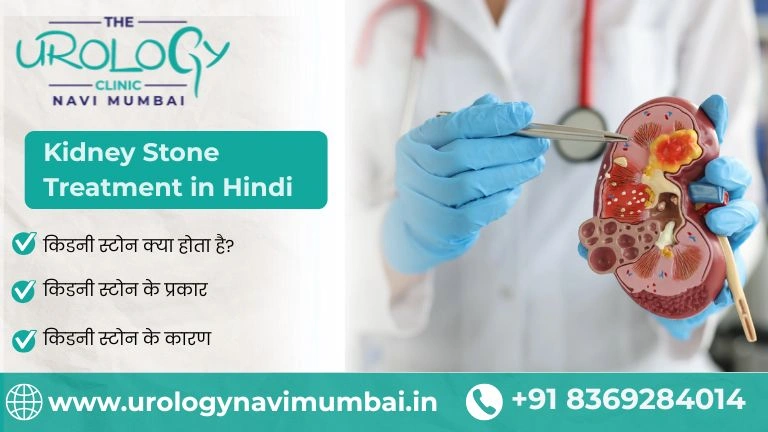
Kidney Stone Treatment in Hindi: किडनी स्टोन का इलाज, लक्षण और बचाव
Blogs Book An Apppointment Kidney Stone Treatment in Hindi: किडनी स्टोन का इलाज, लक्षण और बचाव किडनी स्टोन क्या होता है? किडनी स्टोन, जिसे आम भाषा में पथरी कहा जाता है, दरअसल किडनी में बनने वाला कठोर (सख्त) जमाव होता है। यह छोटे-छोटे क्रिस्टल से बनता है, जो धीरे-धीरे आपस में जुड़कर पत्थर जैसा रूप ले लेते हैं। हमारी किडनी खून को साफ करती है और शरीर के अपशिष्ट पदार्थों को पेशाब के जरिए बाहर निकालती है। लेकिन जब कुछ खनिज और लवण शरीर में ज्यादा मात्रा में जमा होने लगते हैं और पूरी तरह घुल नहीं पाते, तो वे किडनी के अंदर जमकर पथरी बना सकते हैं। किडनी स्टोन बनने की प्रक्रिया किडनी स्टोन एक दिन में नहीं बनती। यह एक धीरे-धीरे होने वाली प्रक्रिया है। जब पेशाब में कैल्शियम, ऑक्सलेट, यूरिक एसिड या अन्य खनिजों की मात्रा बढ़ जाती है और पानी कम होता है, तो ये तत्व घुलने के बजाय क्रिस्टल के रूप में जमने लगते हैं। शुरू में ये बहुत छोटे कण होते हैं, जिन्हें अक्सर शरीर खुद ही बाहर निकाल देता है। लेकिन अगर ये कण बार-बार बनते रहें या पेशाब गाढ़ा बना रहे, तो ये आपस में चिपककर बड़े आकार की पथरी बना सकते हैं। शरीर में पथरी क्यों बनती है पथरी बनने के पीछे कई कारण हो सकते हैं। कम पानी पीना ज्यादा नमक या प्रोटीन वाला आहार बार-बार पेशाब रोककर रखना पारिवारिक इतिहास मोटापा या कुछ हार्मोनल समस्याएं कुछ लोगों में शरीर की बनावट या मेटाबॉलिज्म ऐसा होता है कि उनमें पथरी बनने की संभावना अधिक रहती है। किडनी स्टोन का आकार और प्रकार किडनी स्टोन का आकार बहुत छोटा भी हो सकता है जैसे रेत का कण और कभी-कभी यह मटर या उससे भी बड़ा हो सकता है। छोटी पथरी कई बार बिना ज्यादा दर्द के पेशाब के साथ निकल जाती है, लेकिन बड़ी पथरी पेशाब की नली में फंस जाए तो तेज दर्द का कारण बनती है। पथरी के प्रकार भी अलग-अलग होते हैं: कैल्शियम स्टोन यूरिक एसिड स्टोन स्ट्रुवाइट स्टोन सिस्टीन स्टोन किडनी स्टोन के प्रकार कैल्शियम स्टोन यह सबसे सामान्य प्रकार की पथरी है। ज्यादातर मामलों में पथरी कैल्शियम ऑक्सलेट से बनी होती है, हालांकि कुछ मामलों में यह कैल्शियम फॉस्फेट की भी हो सकती है। यह तब बनती है जब पेशाब में कैल्शियम या ऑक्सलेट की मात्रा ज्यादा हो जाती है और वे पूरी तरह घुल नहीं पाते। ज्यादा नमक, कुछ खास तरह के आहार या कम पानी पीने से इसका खतरा बढ़ सकता है। यूरिक एसिड स्टोन यह पथरी तब बनती है जब शरीर में यूरिक एसिड की मात्रा बढ़ जाती है। ऐसा अधिक प्रोटीन वाला भोजन, खासकर लाल मांस, या गाउट जैसी समस्या में देखा जाता है। अगर पेशाब ज्यादा अम्लीय (एसिडिक) हो, तो यूरिक एसिड आसानी से क्रिस्टल बनाकर पथरी में बदल सकता है। इस तरह की पथरी कई बार दवाइयों और खानपान में बदलाव से घुल भी सकती है। स्ट्रुवाइट स्टोन यह पथरी आमतौर पर मूत्र मार्ग में संक्रमण (यूटीआई) के बाद बनती है। बैक्टीरिया पेशाब के रसायनों को बदल देते हैं, जिससे स्ट्रुवाइट नामक पदार्थ जमने लगता है। इस तरह की पथरी तेजी से आकार में बढ़ सकती है और कई बार बड़ी होकर पूरी किडनी के हिस्से को घेर लेती है। इसलिए बार-बार होने वाले संक्रमण को हल्के में नहीं लेना चाहिए। सिस्टीन स्टोन यह दुर्लभ प्रकार की पथरी है और आमतौर पर आनुवंशिक कारणों से बनती है। सिस्टीन नामक अमीनो एसिड पेशाब में अधिक मात्रा में निकलने लगता है और धीरे-धीरे पथरी बना सकता है। ऐसे मरीजों में पथरी बार-बार बनने की संभावना रहती है, इसलिए उन्हें लंबे समय तक नियमित देखभाल और विशेष आहार की जरूरत हो सकती है। किडनी स्टोन के कारण कम पानी पीना यह किडनी स्टोन का सबसे आम कारण माना जाता है।जब हम पर्याप्त पानी नहीं पीते, तो पेशाब गाढ़ा हो जाता है। ऐसे में उसमें मौजूद खनिज और लवण पूरी तरह घुल नहीं पाते और छोटे-छोटे क्रिस्टल बनकर जमा होने लगते हैं। यही क्रिस्टल आगे चलकर पथरी का रूप ले सकते हैं। खासकर गर्म मौसम या ज्यादा पसीना आने की स्थिति में पानी की कमी जल्दी हो सकती है। ज्यादा नमक और प्रोटीन खाने में ज्यादा नमक लेने से पेशाब में कैल्शियम की मात्रा बढ़ सकती है, जिससे कैल्शियम स्टोन बनने का खतरा बढ़ता है। इसी तरह, बहुत अधिक प्रोटीन खासकर लाल मांस या हाई-प्रोटीन डाइट यूरिक एसिड का स्तर बढ़ा सकती है। इससे यूरिक एसिड स्टोन बनने की संभावना रहती है। संतुलित आहार रखना इसलिए जरूरी है, ताकि शरीर में किसी भी तत्व की मात्रा असामान्य रूप से न बढ़े। लाइफस्टाइल और मोटापा बैठे-बैठे काम करना, शारीरिक गतिविधि की कमी और बढ़ता वजन भी पथरी के जोखिम को बढ़ा सकते हैं। मोटापे की स्थिति में शरीर का मेटाबॉलिज्म बदलता है, जिससे पेशाब की संरचना पर असर पड़ सकता है। अनियमित दिनचर्या और जंक फूड का ज्यादा सेवन भी अप्रत्यक्ष रूप से समस्या को बढ़ा सकता है। पारिवारिक इतिहास अगर परिवार में किसी को पहले किडनी स्टोन रही हो, तो दूसरों में भी इसका खतरा थोड़ा ज्यादा हो सकता है। कुछ लोगों की शारीरिक बनावट या रासायनिक संतुलन ऐसा होता है कि उनमें पथरी बनने की प्रवृत्ति अधिक रहती है। ऐसे मामलों में थोड़ी अतिरिक्त सावधानी जरूरी होती है। कुछ दवाइयों का प्रभाव कुछ खास दवाइयाँ जैसे लंबे समय तक ली जाने वाली कुछ सप्लीमेंट्स या विशेष चिकित्सीय दवाएँ पेशाब में खनिजों की मात्रा बढ़ा सकती हैं। इससे पथरी बनने का खतरा बढ़ सकता है। हालांकि इसका मतलब यह नहीं कि दवा बंद कर दी जाए। डॉक्टर की सलाह के अनुसार ही दवा लेनी चाहिए और जरूरत हो तो नियमित जांच करानी चाहिए। किडनी स्टोन के लक्षण कमर या पेट में तेज दर्द यह पथरी का सबसे पहचानने वाला लक्षण है।दर्द अचानक शुरू होता है और बहुत तेज हो सकता है। आमतौर पर कमर के एक साइड से शुरू होकर पेट के निचले हिस्से या जांघ तक फैल सकता है। दर्द लहरों की तरह आता-जाता है और व्यक्ति को बेचैन कर देता है। कई लोग इसे जीवन के सबसे तेज दर्दों में से एक बताते हैं। पेशाब में जलन जब पथरी पेशाब की

Kidney Cancer ke Lakshan: किडनी कैंसर के शुरुआती संकेत और पहचान
Blogs Book An Apppointment Kidney Cancer ke Lakshan: किडनी कैंसर के शुरुआती संकेत और पहचान किडनी कैंसर क्या होता है? किडनी कैंसर वह स्थिति है जिसमें गुर्दे (किडनी) की कोशिकाएं असामान्य रूप से बढ़ने लगती हैं और एक गांठ या ट्यूमर बना लेती हैं। हमारे शरीर में दो किडनियां होती हैं, जो खून को फिल्टर करने, अतिरिक्त पानी और विषैले पदार्थों को बाहर निकालने का काम करती हैं। जब इन्हीं किडनी की कोशिकाओं के डीएनए में बदलाव होता है, तो वे अनियंत्रित रूप से बढ़ने लगती हैं और कैंसर का रूप ले सकती हैं। किडनी कैंसर का सरल अर्थ सरल शब्दों में समझें तो किडनी कैंसर का मतलब है किडनी की कोशिकाओं का बिना नियंत्रण के बढ़ना और एक असामान्य गांठ बन जाना। यह गांठ धीरे-धीरे बड़ी हो सकती है और समय रहते इलाज न मिले तो शरीर के अन्य हिस्सों तक भी फैल सकती है। वयस्कों में इसका सबसे सामान्य प्रकार रेनल सेल कार्सिनोमा होता है। किडनी में कैंसर कैसे विकसित होता है किडनी की अंदरूनी बनावट बहुत सूक्ष्म नलिकाओं से बनी होती है, जो खून को छानने का काम करती हैं। इन्हीं नलिकाओं की कोशिकाओं में जब डीएनए स्तर पर बदलाव आता है, तो कोशिकाएं सामान्य नियमों का पालन करना बंद कर देती हैं। आम तौर पर शरीर में पुरानी या खराब कोशिकाएं समय पर नष्ट हो जाती हैं। लेकिन जब यह प्रक्रिया गड़बड़ा जाती है, तो कोशिकाएं मरने की बजाय जमा होने लगती हैं। धीरे-धीरे यही जमा हुई कोशिकाएं एक ट्यूमर बना देती हैं। शुरुआत में यह ट्यूमर छोटा और सीमित रहता है, लेकिन समय के साथ यह आसपास के ऊतकों या शरीर के अन्य हिस्सों तक भी फैल सकता है। धूम्रपान, मोटापा, लंबे समय से उच्च रक्तचाप, या परिवार में पहले किसी को किडनी कैंसर रहा हो ऐसे कारण जोखिम को बढ़ा सकते हैं। शुरुआती स्टेज में पहचान क्यों मुश्किल होती है किडनी कैंसर की सबसे बड़ी समस्या यही है कि इसके शुरुआती चरण में अक्सर कोई खास लक्षण महसूस नहीं होते। किडनी शरीर के अंदर गहराई में होती है, इसलिए छोटी गांठ बाहर से महसूस नहीं होती। कई बार व्यक्ति बिल्कुल सामान्य जीवन जी रहा होता है और किसी अन्य कारण से करवाई गई जांच जैसे अल्ट्रासाउंड या सीटी स्कैन में यह संयोग से पता चलता है। जब लक्षण दिखाई देते हैं, जैसे पेशाब में खून आना, कमर के एक तरफ लगातार दर्द रहना, बिना वजह वजन कम होना या लगातार थकान महसूस होना तब तक कई बार बीमारी आगे बढ़ चुकी होती है। इसीलिए जोखिम वाले लोगों के लिए नियमित जांच और शरीर में होने वाले छोटे-छोटे बदलावों को नजरअंदाज न करना बहुत जरूरी माना जाता है। Kidney Cancer ke Lakshan (किडनी कैंसर के लक्षण) पेशाब में खून आना पेशाब का रंग गुलाबी, लाल या भूरे जैसा दिखना किडनी कैंसर का एक महत्वपूर्ण संकेत हो सकता है। कई बार खून की मात्रा बहुत कम होती है और यह केवल जांच में पता चलता है। यदि पेशाब में बार-बार खून दिखे, तो तुरंत डॉक्टर से संपर्क करना जरूरी है। कमर या साइड में लगातार दर्द कमर के एक तरफ या पेट के साइड हिस्से में लगातार हल्का या तेज दर्द रहना भी एक संकेत हो सकता है। यह दर्द सामान्य मांसपेशियों के दर्द जैसा नहीं होता, बल्कि लंबे समय तक बना रहता है और आराम करने से भी पूरी तरह ठीक नहीं होता। बिना कारण वजन कम होना अगर बिना डाइट या व्यायाम के अचानक वजन कम होने लगे, तो यह शरीर के अंदर किसी गंभीर समस्या का संकेत हो सकता है। कैंसर की स्थिति में शरीर की ऊर्जा तेजी से खर्च होती है, जिससे वजन घट सकता है। थकान और कमजोरी लगातार थकान महसूस होना, काम करने की इच्छा न होना या छोटी-छोटी गतिविधियों में भी कमजोरी लगना ये लक्षण भी नजर आ सकते हैं। कई बार यह खून की कमी (एनीमिया) से जुड़ा होता है, जो किडनी कैंसर में देखा जाता है। भूख में कमी अचानक भूख कम लगना या खाने का मन न होना भी एक सामान्य लेकिन महत्वपूर्ण लक्षण है। लंबे समय तक ऐसा बने रहना चिंता का विषय हो सकता है। बुखार या रात में पसीना बार-बार हल्का बुखार आना या रात में अधिक पसीना आना भी कुछ मामलों में देखा गया है। अगर यह बिना किसी संक्रमण के हो रहा हो, तो जांच कराना जरूरी है। शुरुआती और एडवांस स्टेज के लक्षण शुरुआती संकेत जो अक्सर नजरअंदाज होते हैं शुरुआती स्टेज में लक्षण बहुत हल्के या असामान्य नहीं लगते, इसलिए लोग इन्हें सामान्य समस्या समझकर टाल देते हैं। पेशाब में हल्का खून आना, जो कभी-कभी ही दिखाई दे कमर के एक तरफ हल्का लेकिन लगातार बना रहने वाला दर्द बिना कारण थकान रहना भूख कम लगना हल्का बुखार जो बार-बार आए इनमें से कई संकेत सामान्य संक्रमण या कमजोरी जैसे लग सकते हैं, इसलिए व्यक्ति तुरंत जांच नहीं कराता। यही वजह है कि शुरुआती पहचान मुश्किल हो जाती है। बढ़ते कैंसर के गंभीर लक्षण जब कैंसर का आकार बढ़ने लगता है या वह आसपास के हिस्सों में फैलने लगता है, तब लक्षण अधिक स्पष्ट और गंभीर हो सकते हैं। पेशाब में लगातार और स्पष्ट रूप से खून आना पेट या साइड में गांठ महसूस होना तेज और लगातार दर्द तेजी से वजन घटना अत्यधिक कमजोरी या सांस फूलना पैरों में सूजन अगर कैंसर शरीर के अन्य हिस्सों में फैल जाए तो हड्डियों में दर्द या लगातार खांसी जैसी समस्याएं भी हो सकती हैं इस अवस्था में शरीर स्पष्ट संकेत देने लगता है कि अंदर कुछ गंभीर चल रहा है। कब तुरंत डॉक्टर से मिलना चाहिए अगर पेशाब में एक से अधिक बार खून दिखाई दे कमर या साइड का दर्द कई हफ्तों तक बना रहे अचानक और बिना कारण वजन कम होने लगे लगातार बुखार या रात में पसीना आए सामान्य कमजोरी इतनी बढ़ जाए कि रोजमर्रा के काम प्रभावित होने लगें किडनी कैंसर के कारण और जोखिम कारक धूम्रपान धूम्रपान किडनी कैंसर का एक प्रमुख जोखिम कारक माना जाता है। सिगरेट के धुएं में मौजूद हानिकारक रसायन खून के जरिए किडनी तक पहुंचते हैं। किडनी का काम ही खून को फिल्टर करना है, इसलिए ये जहरीले तत्व

Urine Infection Specialist | Advanced UTI Care
Blogs Book An Apppointment Urine Infection Specialist Urine infection… most people don’t take it seriously at first. It starts with slight burning while passing urine. Maybe you feel like going to the washroom again and again. Some discomfort. You think, “Okay, I’ll take medicines and it’ll settle.” And yes, sometimes it does. But sometimes… it doesn’t. When the burning just refuses to stop. When you barely get relief even after antibiotics. When fever joins in. That’s usually the point where you shouldn’t just repeat medicines on your own. That’s when a urine infection specialist becomes important. UTIs are common — very common actually. Women experience them more often, but men can get them too. The real concern begins when infections keep coming back or don’t respond properly to treatment. Let’s understand this properly, in simple words. Who is a urine infection specialist? A urine infection specialist is a urologist — a doctor who deals with problems of the kidneys, bladder, urinary tract and related organs. Your general physician can treat simple UTIs. But if infections are frequent, severe, or complicated, a specialist looks beyond just symptoms. Instead of only prescribing antibiotics, they try to understand why the infection is happening again and again. Because honestly, repeated infections are usually not random. There is almost always a reason behind them. When should you actually see a specialist? Many people delay visiting a specialist. They assume it’s a “small issue.” But you should consider consulting a urine infection specialist if: Burning sensation is not improving even after medication You feel constant urge to urinate but very little comes out There is blood in urine Urine smells unusually strong or looks cloudy Fever starts along with urinary symptoms You keep getting infections repeatedly If you’ve had 2–3 infections within a year, that’s not something to ignore. Also, in men, UTIs are less common compared to women. So if a man gets repeated infections, doctors usually check for prostate enlargement or urinary blockage. This is probably the most common question patients ask. There are several possible reasons. Sometimes people stop antibiotics midway because they start feeling better. But bacteria may not be completely gone. So infection returns. Sometimes kidney stones are present. Stones can trap bacteria, making infections repeat. In men, an enlarged prostate can prevent the bladder from emptying fully. When urine stays inside for longer, bacteria multiply more easily. People with diabetes are also more prone because high sugar levels help bacteria grow faster. And something as simple as not drinking enough water can also contribute. Less water means less urine flow — which means bacteria stay longer in the urinary tract. So instead of just treating the infection again and again, a specialist checks the root cause. How is a urine infection properly diagnosed? In many cases, antibiotics are started without proper testing. For first-time infections, that may work. But for repeated infections, proper tests are very important. Doctors may advise: Urine routine test Urine culture test Ultrasound scan if needed Blood tests in certain cases A urine culture test is especially useful. It tells exactly which bacteria is causing the infection and which antibiotic will work best. This avoids guesswork. Because overusing or taking the wrong antibiotics can make bacteria resistant. And then treatment becomes more complicated later. What treatment can you expect? Treatment depends on how serious the infection is. For simple infections, antibiotics based on culture reports are usually enough. For complicated cases, treatment may be longer. If there’s an underlying issue like kidney stones or prostate enlargement, that problem also needs to be treated. Otherwise, infections may keep returning no matter how many medicines you take. Doctors may also suggest: Drinking more water daily Not holding urine for long Managing blood sugar properly Improving hygiene habits So treatment is not just about tablets. It’s about solving the actual reason behind the infection. Can a urine infection become dangerous? Yes, it can — if ignored. If infection spreads to the kidneys, it can cause a kidney infection. Symptoms may include high fever, severe back pain, chills, nausea. That condition is more serious and sometimes requires hospital care. In rare situations, untreated infection can spread into the bloodstream. That’s why persistent symptoms should never be ignored. Early consultation with a urine infection specialist reduces risks significantly. How long does recovery usually take? For mild infections, people start feeling better within 2–3 days of starting antibiotics. Complete recovery may take about 5–7 days. But one very important thing — even if you feel better, do not stop medication midway. Incomplete treatment is one of the biggest reasons infections return. Complicated infections may take longer. Your doctor will guide you based on your condition. How can you prevent future urine infections? Prevention matters a lot, especially if you’ve suffered repeatedly. Some simple steps: Drink 2 to 3 liters of water daily Don’t hold urine for long hours Maintain proper personal hygiene Control blood sugar if diabetic Avoid self-medicating repeatedly Small habits make a big difference over time. Why choose our urine infection specialist in Navi Mumbai? When it comes to urinary infections, correct diagnosis is more important than temporary relief. At Urology Clinic Navi Mumbai, patients receive: Detailed evaluation of symptoms Proper urine testing before starting treatment Advanced diagnostic support if required Individualized treatment plans Care for recurrent or complicated infections Follow-up guidance to reduce recurrence Everything is handled in one place, making the process smoother and less stressful for patients. Book Your Urine Infection Consultation Today in Navi Mumbai. Get accurate diagnosis and advanced UTI treatment with expert care. Book An Apppointment Conclusion Urine infections are common, yes. But that doesn’t mean they should be ignored. Repeated burning, fever, blood in urine — these are not things to overlook. A urine infection specialist doesn’t just treat the current infection. They find out why it happened. And that makes all the difference. If symptoms are not improving or keep coming

Kidney Stone Laser Treatment | Safe & Fast Relief
Blogs Book An Apppointment Kidney Stone Laser Treatment If you’ve ever experienced a kidney stone, you probably don’t need anyone to describe the pain. It’s sudden, sharp, and honestly unbearable at times. People often say it’s one of the worst pains they’ve felt. First reaction? Drink tons of water, take painkillers, and hope it passes. Sometimes that works. But sometimes the stone just refuses to move. That’s usually when doctors suggest kidney stone laser treatment. And to be honest, this procedure has made things much easier for patients compared to older surgical methods. No large cuts. No long hospital stays. And recovery is generally quicker than most people expect. Let’s break it down in simple, everyday language. What Is Kidney Stone Laser Treatment? In basic terms, it’s a procedure where a laser is used to break the kidney stone into very small pieces. These small fragments are either taken out during the procedure or they pass naturally through urine later on. There’s no open surgery involved. Doctors use a thin instrument called a ureteroscope, which goes through the natural urinary passage. That means no visible scars or stitches on the outside. For many patients, that’s a big relief. Years ago, open surgeries were more common. Now, laser-based treatment is widely preferred because it’s safer and much less invasive. How Does the Laser Break the Stone? A lot of patients worry and ask, “Is the laser going to damage my kidney?” That’s a very common fear. The answer is no. The laser is extremely precise. It focuses only on the stone. The energy breaks the stone into tiny particles, almost like crushing it into powder. The surrounding kidney tissue remains safe. The entire procedure is done under anesthesia. So you won’t feel pain during the treatment. Most patients later say they were surprised at how smooth the whole process felt. When Is This Treatment Needed? Not every kidney stone requires surgery. Smaller stones often pass naturally with medication and good hydration. However, laser treatment may be recommended if: The stone is too large to pass on its own Pain keeps returning again and again Urine flow is blocked Infection develops because of the stone Medicines are not providing relief If the stone gets stuck in the ureter and causes constant pain, waiting may only make things worse. In such cases, going ahead with treatment is usually the better option. Is Kidney Stone Laser Treatment Painful? This is probably the first thing patients ask. During the procedure, you won’t feel pain because anesthesia is given. After the procedure, there might be slight burning while passing urine. Some people notice mild blood in the urine for a short time. It can look alarming, but it’s usually temporary. Compared to the intense pain of a kidney stone attack, the discomfort after treatment is much easier to handle. How Long Does the Procedure Take? Typically, the procedure lasts between 30 minutes to 90 minutes. The exact time depends on the size and location of the stone. Many patients are discharged the same day. In some cases, an overnight stay is advised for observation. But extended hospital stays are not common with this procedure. That’s one reason why kidney stone laser treatment has become so popular — shorter hospital time and quicker recovery. What Is Recovery Like? Recovery is usually straightforward, but you still need to follow medical advice carefully. Doctors generally recommend: Drinking plenty of water to flush out fragments Avoiding heavy lifting for a few days Taking prescribed medicines on time Attending follow-up appointments In some cases, a temporary stent is placed inside the ureter to help urine flow smoothly. If a stent is inserted, you may feel a slight urge to urinate more often. It can be uncomfortable, but it’s temporary and usually removed within one or two weeks. Most people return to their routine work within 2 to 5 days. Are There Any Risks? Like any medical procedure, there are small risks involved. Though serious complications are rare. Possible side effects may include: Mild blood in urine Burning sensation while urinating Temporary urinary urgency Rare cases of infection Choosing a well-equipped hospital and an experienced urologist reduces these risks significantly. How Effective Is This Treatment? The success rate is generally high, especially for stones located in the ureter. Many patients become completely stone-free after just one session. For very large or complex stones, an additional session might be needed. But overall, outcomes are positive and recovery is faster compared to older surgical techniques. What Is the Cost in Navi Mumbai? The cost of kidney stone laser treatment depends on several factors: Size and number of stones Hospital infrastructure Whether a stent is required Type of anesthesia used Additional investigations Most hospitals provide a clear estimate beforehand. If you have health insurance, the procedure is often covered under many policies. Can Kidney Stones Come Back? Yes, they can return. And this is something many people overlook. Removing a stone does not guarantee it won’t form again. Prevention plays a very important role. Doctors usually suggest: Drinking 2.5 to 3 liters of water daily Reducing salt intake Avoiding excessive processed foods Following dietary guidelines based on stone type Simple lifestyle changes can reduce the chances of recurrence significantly. Why Choose Our Clinic for Kidney Stone Laser Treatment in Navi Mumbai? When it comes to kidney health, proper care makes all the difference. Patients often look for: Modern laser technology Experienced urology specialists Clean and well-maintained operation theatres Personalized treatment approach Clear communication about costs Ongoing support after the procedure Having everything managed under one roof makes the entire journey less stressful. Book Your Kidney Stone Consultation Today in Navi Mumbai. Schedule your evaluation for Kidney Stone Laser Treatment with Dr. Ninad Tamboli. Book An Apppointment Conclusion Kidney stones can be extremely painful and disruptive. Thankfully, medical advancements have made treatment much more comfortable than before. Kidney stone laser treatment offers a minimally invasive option with strong success

PSA Test
Blogs Book An Apppointment PSA Test – what it really means and why some men are asked to do it A lot of men hear about the PSA test only when a doctor casually mentions it during a check-up. And honestly, many just nod in the clinic and later think, “Wait… what was that test for again?” Some people get advised to do it after crossing a certain age. Others are told to take it because they’re having urine problems. And naturally, the mind jumps to scary thoughts. So let’s slow it down and talk about it in a very normal way. No medical lecture. Just real explanation. Even if someone young is reading this for their father or uncle, they should be able to understand what’s going on. What is a PSA test in simple language? PSA stands for Prostate Specific Antigen. It’s basically a protein made by the prostate gland. The prostate is a small gland in men that sits below the bladder and helps in making semen. A PSA test is just a blood test. That’s it. No big procedure. A small sample of blood is taken and checked to see how much PSA is in it. Doctors use this test to get an idea about prostate health. It doesn’t automatically mean something is wrong. It’s more like a signal test — something that helps doctors decide if further checking is needed. Why would a doctor suggest a PSA test? Not every man needs it at a young age. Usually doctors suggest it in certain situations. Age factor Many doctors recommend PSA testing after 45 or 50 years, especially if there’s family history of prostate issues. As men age, the prostate can enlarge naturally. Urine problems If someone is facing symptoms like: Frequent urination Weak urine stream Trouble starting urine Waking up many times at night to pee the doctor might suggest a PSA test just to check what’s happening. Family history If a father or brother had prostate cancer, doctors may suggest earlier testing. So the PSA test is not automatically about cancer. It’s more about checking prostate health in general. Does high PSA always mean cancer? This is where most fear comes in. Someone sees a slightly high number and immediately thinks the worst. But honestly, high PSA doesn’t always mean cancer. PSA levels can increase because of: Enlarged prostate (very common with age) Infection Inflammation Recent medical procedures Even cycling or certain activities sometimes That’s why doctors don’t rely on one single PSA test. They look at trends, repeat tests, and combine it with other exams. So if your PSA number is a bit high, it doesn’t automatically mean something serious. It just means the doctor might want to look a bit closer. How is the PSA test done? Very simple process. Blood is taken from your arm Sent to the lab Report usually comes in a day or two You don’t usually need fasting. Sometimes doctors may suggest avoiding certain activities before the test, but they’ll guide you. Physically, it’s no different from a regular blood test. The stress usually comes more from waiting for results than from the test itself. Understanding the PSA numbers PSA reports show a number. Doctors look at that number along with your age and symptoms. Lower numbers are usually reassuring. Slightly higher numbers may just need monitoring. Higher levels may need further evaluation. But here’s something important — PSA naturally increases a little as men grow older. So doctors always consider age when reading the report. One number alone doesn’t decide anything big. When should men think about getting tested? It’s worth discussing PSA testing with a doctor if: You are above 45–50 You have urine problems There’s family history of prostate cancer You just want a routine health check It’s not something to panic about. It’s just a preventive health check like checking blood sugar or cholesterol. Is PSA testing risky? No, not really. It’s just a blood test. The only “pain” is the small needle prick. The emotional side, though, can be heavy. Some men feel anxious waiting for results. That’s normal. But remember, the test is just a tool. It doesn’t give a final answer on its own. Benefits people talk about Circumcision can have some benefits, though not everyone needs it. Slightly lower risk of infections Easier hygiene Prevents foreskin-related problems Slightly reduced risk of some STDs These benefits vary from person to person. For some families, they matter. For others, they don’t. What happens if PSA is higher than normal? If PSA is high, doctors may: Repeat the test after some time Check for infection Suggest ultrasound or scans In some cases, recommend further prostate evaluation It doesn’t always jump straight to something serious. Many times, it’s just monitoring over time. Why choose The Urology Clinic? Many men prefer coming to The Urology Clinic because conversations about prostate health can feel a bit awkward, and the doctors here understand that. They take time to explain PSA results in plain, everyday language instead of throwing too many technical terms at you. Rather than rushing through the appointment, they discuss what the numbers actually mean for your age and symptoms, and whether anything really needs to be done or just monitored. The focus is more on clear guidance and honest advice, so patients walk out feeling informed and calmer — not confused or unnecessarily scared. Final thoughts The PSA test is not something to be afraid of. It’s simply a blood test that helps doctors understand prostate health. It doesn’t mean you have cancer. It doesn’t mean something terrible is happening. It’s just a screening tool. If you’re in the age group where it’s recommended or if you’re noticing changes in urination, having a conversation with a urology specialist is a sensible step. Getting clarity is always better than worrying silently. Health checks are not about fear. They’re about staying aware and catching problems early if they ever show up. Unsure Whether You