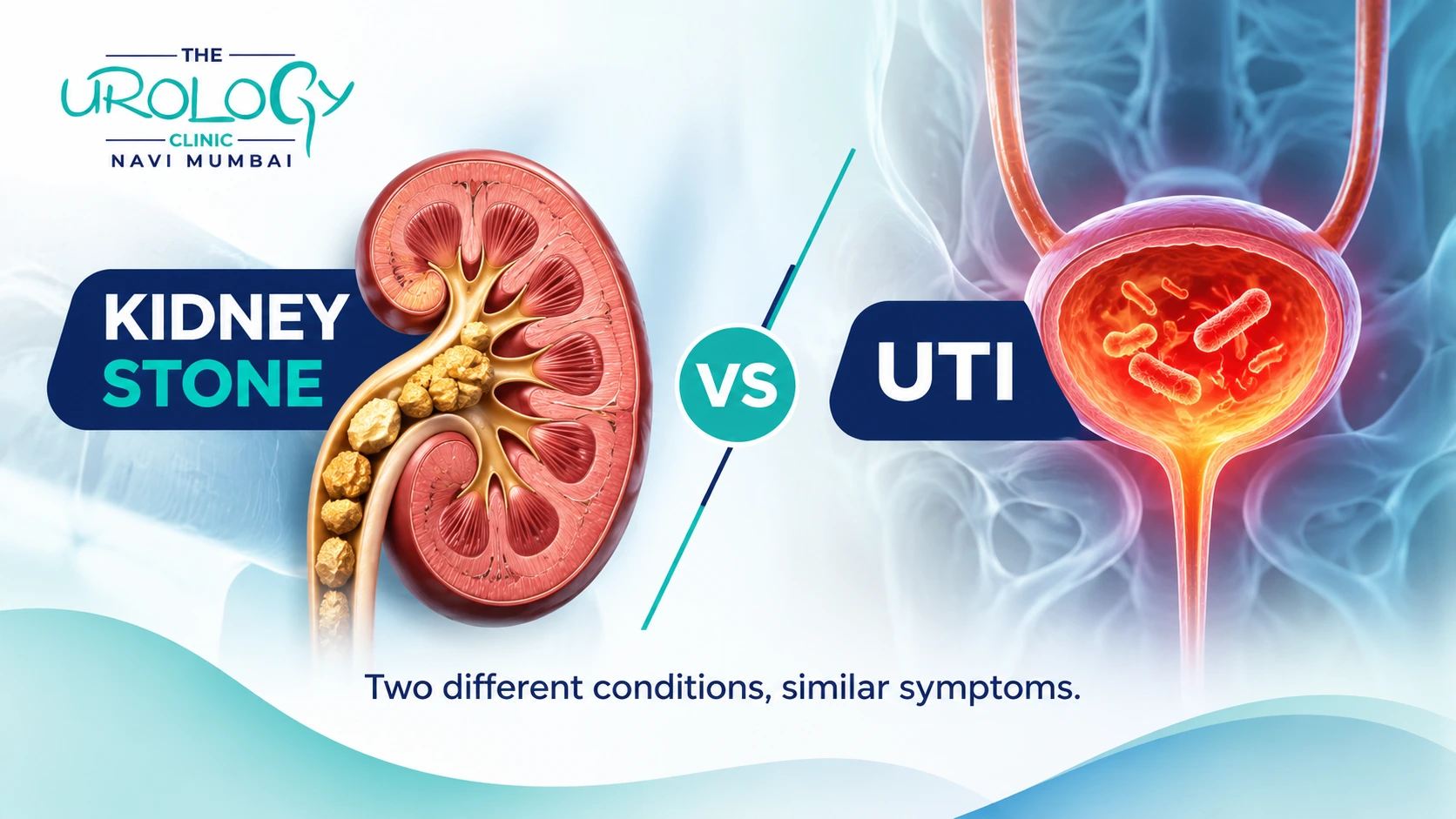


Pain or discomfort while urinating can be caused by several urinary tract problems, but kidney stones and urinary tract infections (UTIs) are two common causes. Although they can sometimes produce similar symptoms, they are different conditions and require different approaches to treatment. A kidney stone is a hard, crystal-like deposit that forms from substances in the urine, while a UTI occurs when bacteria infect part of the urinary system, such as the bladder or urethra.
Understanding the difference between Kidney Stone vs UTI can be helpful when symptoms such as frequent urination, abdominal discomfort, back pain, or changes in urine occur. Kidney stones may cause severe, sharp pain when a stone moves through the urinary tract, whereas a UTI commonly causes burning or pain during urination and an increased urge to urinate. Some people may also experience both conditions at the same time.
Doctors may use a combination of symptoms, physical examination, urine tests, blood tests, and imaging studies to determine the underlying cause. Getting the correct diagnosis is important because kidney stones and UTIs are treated differently.
|
Feature
|
Kidney Stone
|
UTI
|
|---|---|---|
|
What is it?
|
A hard deposit formed from minerals and salts in the urine
|
An infection caused mainly by bacteria in the urinary tract
|
|
Common location
|
Kidney or urinary tract
|
Bladder, urethra, ureters, or kidneys
|
|
Main cause
|
Concentrated urine, mineral buildup, dehydration and other risk factors
|
Bacteria entering and multiplying in the urinary tract
|
|
Pain
|
Often causes sharp, severe pain in the side, back or lower abdomen
|
Commonly causes burning or pain while urinating and lower abdominal discomfort
|
|
Urination
|
May cause frequent urination or difficulty passing urine if the stone blocks the urinary tract
|
Frequent or urgent need to urinate is common
|
|
Urine changes
|
Blood in the urine may occur; urine can sometimes appear cloudy
|
Urine may become cloudy, have an unusual smell, or contain blood
|
|
Fever
|
Usually not caused by an uncomplicated kidney stone
|
Fever may occur, particularly when infection involves the kidneys
|
|
Nausea/vomiting
|
Can occur with severe kidney stone pain
|
May occur if the infection has reached the kidneys
|
|
Diagnosis
|
Urine tests and imaging such as ultrasound or CT may be used
|
Urine analysis and urine culture are commonly used
|
|
Treatment
|
Depends on the stone's size, location and symptoms; may include fluids, medication or stone-removal procedures
|
Usually treated with appropriate antibiotics and supportive care
|
|
Can it block urine flow?
|
Yes, a larger or strategically located stone can obstruct urine flow
|
Severe infection-related swelling can affect urine flow, but obstruction is less typical
|
|
Is it contagious?
|
No
|
A UTI itself is generally not considered a contagious infection
|
About The Urology Clinic Navi Mumbai
The Urology Clinic Navi Mumbai, led by Dr. Ninad Tamboli, a trusted urologist in Navi Mumbai, is your destination for expert urological care. Specializing in advanced treatments for urinary and reproductive health.
We’re here to assist you! Reach out to us for appointments, inquiries, or detailed information about our services: