

Blogs Book An Apppointment Genitourinary Surgery – Understanding Procedure, Benefits & Recovery Introduction Our body’s urinary and reproductive systems work like a team, removing waste, keeping us healthy, and helping with important functions like urination and fertility. Sometimes, problems in these systems may need genitourinary surgery for proper treatment. At Dr. Ninad Tamboli’s Urology Clinic in Navi Mumbai, patients receive advanced, minimally invasive, and safe genitourinary surgeries. The clinic focuses on quick recovery, low pain, and high success rates, using modern technology and expert care. This blog explains what genitourinary surgery is, the types of surgeries performed, why it’s needed, and what to expect before and after treatment. What is Genitourinary Surgery? Genitourinary surgery is a branch of medicine that deals with the urinary system (kidneys, bladder, ureters, and urethra) and the male reproductive organs (penis, testicles, prostate, etc.). These surgeries help diagnose, treat, and correct issues related to urination, fertility, infections, stones, and cancers. Urologists like Dr. Ninad Tamboli specialize in this field, using both traditional and minimally invasive techniques, including laparoscopic and laser-assisted surgeries, to ensure safer and faster healing. Genitourinary surgery can treat conditions in both men and women, though the specific procedures may differ slightly based on anatomy. Conditions Treated with Genitourinary Surgery Genitourinary surgery covers a wide range of conditions. Some of the most common include: Kidney and Ureteral Stones: Removal of stones that cause pain, infection, or blockage. Prostate Problems: Surgery for benign prostatic hyperplasia (BPH) or prostate cancer. Bladder Issues: Treating bladder stones, tumors, or incontinence. Urethral Strictures: Repairing narrow or blocked urine passages. Male Infertility: Procedures like varicocele repair or vasectomy reversal. Genital Abnormalities: Correcting congenital issues such as hypospadias. Urinary Tract Cancers: Removing or treating tumors of the bladder, kidneys, or prostate. Infections or Injuries: Repairing damage from trauma or severe infections. These surgeries can greatly improve comfort, quality of life, and in many cases save lives. Types of Genitourinary Surgery There are many types of genitourinary surgeries, each designed to treat specific conditions. Below are some commonly performed ones at The Urology Clinic, Navi Mumbai. Kidney and Urinary Tract Surgeries These include: Ureteroscopy and Laser Lithotripsy – to remove kidney or ureter stones. PCNL (Percutaneous Nephrolithotomy) – for large kidney stones. Pyeloplasty – to correct blockages at the kidney outlet. Laparoscopic Nephrectomy – removal of a diseased kidney. Prostate and Bladder Surgeries TURP (Transurethral Resection of the Prostate): For prostate enlargement. Laser Prostate Surgery: Minimally invasive, with faster recovery. Bladder Tumor Removal: For early-stage bladder cancer. Cystolitholapaxy: To remove bladder stones. Reconstructive and Male Genital Surgeries Urethroplasty: Repairing urethral strictures. Varicocele Repair: Improves fertility in men. Circumcision and Hypospadias Repair: Corrective surgeries for the penis. Vasectomy and Reversal: For family planning and fertility restoration. Each surgery is tailored to the patient’s age, condition, and overall health — ensuring safe and effective results. When is Genitourinary Surgery Recommended? Your urologist may suggest genitourinary surgery when: Medication or non-surgical treatments fail to relieve symptoms. There is severe pain or urinary blockage caused by stones or strictures. Cancers or tumors are detected in the urinary or reproductive organs. There’s a need to improve fertility or repair birth defects. The patient has recurring urinary infections due to underlying problems. In every case, Dr. Ninad Tamboli ensures a full evaluation before recommending surgery. The goal is always to choose the least invasive and most effective option for each patient. Preparation Before the Surgery Before any genitourinary surgery, the doctor prepares you carefully to ensure the safest outcome. Preparation may include: Medical Tests: Blood and urine tests, ultrasound, or CT scans to confirm diagnosis. Medication Review: You might need to stop blood thinners or certain medications. Dietary Instructions: Avoid food or drink a few hours before the procedure. Discussion with the Surgeon: Understanding the process helps reduce fear and anxiety. If it’s a day-care surgery, you’ll usually go home the same day. Otherwise, you may stay overnight for observation. Dr. Tamboli’s clinic ensures a smooth pre-surgery process with patient comfort and safety as top priorities. Benefits of Genitourinary Surgery Genitourinary surgery, especially when done using modern laser and endoscopic methods, offers many benefits: Minimally Invasive: Small cuts or no cuts at all. Less Pain and Bleeding: Faster healing and minimal discomfort. Short Hospital Stay: Most patients return home within 24 hours. High Success Rate: Especially for stone removal and prostate surgeries. Better Quality of Life: Relief from pain, improved urinary function, and restored confidence. At Urology Navi Mumbai, these benefits are enhanced through the use of advanced instruments and personalized care plans for every patient. Recovery and Aftercare Recovery depends on the type of genitourinary surgery performed. Most patients can: Resume normal activities in a few days to a week. Drink plenty of water to aid healing and flush out toxins. Take prescribed antibiotics or pain relief medicines. Avoid heavy exercise or lifting until the doctor approves. Follow-up appointments are very important to monitor healing and ensure there are no complications. Patients treated by Dr. Ninad Tamboli often report quick recovery and long-term relief, thanks to proper aftercare and modern techniques used during surgery. Book Your Genitourinary Surgery Consultation Today in Navi Mumbai. Schedule your consultation with Dr. Ninad Tamboli. Book An Apppointment Why Choose The Urology Clinic Navi Mumbai? When it comes to urological and genitourinary health, choosing the right specialist makes all the difference. Here’s why patients trust Dr. Ninad Tamboli’s Urology Clinic in Navi Mumbai: Expertise & Experience: Dr. Tamboli is a skilled urologist and laparoscopic surgeon with years of experience in treating complex genitourinary conditions. Advanced Equipment: The clinic is equipped with modern laser and endoscopic tools for precise, painless surgery. Patient-Centered Care: Every patient receives personal attention and a customized treatment plan. Affordable & Transparent Pricing: The clinic offers cost-effective genitourinary surgeries without compromising on quality. High Success Rate: Proven results with minimal complications and quick recovery. Whether it’s kidney stones, prostate enlargement, or urinary infections, The Urology Clinic, Navi Mumbai, ensures safe, advanced, and compassionate care. Conclusion Genitourinary surgery
Ureteroscopy Cost in Navi Mumbai | Dr. Ninad Tamboli Clinic
Blogs Book An Apppointment Ureteroscopy Explained – Cost, Benefits & What to Expect in Navi Mumbai Introduction Have you been told you have a urinary or kidney stone that needs to be removed? Don’t worry, you’re not alone. Many people face this issue, and one of the safest and most effective treatments is ureteroscopy.At Dr. Ninad Tamboli’s Urology Clinic in Navi Mumbai, patients receive advanced care for urinary stones using modern and painless methods like laser ureteroscopy. This blog will help you understand what ureteroscopy is, when it’s needed, how it’s performed, and most importantly the ureteroscopy cost in Navi Mumbai and what factors affect it. What is Ureteroscopy? Ureteroscopy is a medical procedure that helps doctors look inside your urinary tract the passage that carries urine from your kidneys to your bladder.Using a thin, flexible tube with a small camera (called a ureteroscope), doctors can see, identify, and treat problems like kidney or ureteral stones. Unlike traditional open surgeries, ureteroscopy is minimally invasive, meaning no large cuts are made. It’s often a day-care procedure, so patients can usually go home the same day. Why is Ureteroscopy Needed? Ureteroscopy is commonly done for: Removing kidney or ureter stones that are too large to pass naturally. Diagnosing and treating narrowing (strictures) or tumors in the ureter. Managing persistent urinary infections caused by blocked urine flow. Collecting small tissue samples (biopsies) for diagnosis. If medications or shockwave therapy don’t work for kidney stones, ureteroscopy is usually the next best step. How Is Ureteroscopy Performed? Ureteroscopy is performed under general or spinal anesthesia, so you won’t feel any pain. Here’s what happens: Step-by-Step Ureteroscopy Procedure The urologist gently inserts a thin tube (ureteroscope) through the urethra into the bladder and ureter. A tiny camera sends live images to a screen, helping the doctor locate the stone. If a stone is found, it’s broken into smaller pieces using a laser (like Holmium laser). The small fragments are either removed or passed naturally in urine. In some cases, a stent (small tube) is placed temporarily to help urine flow smoothly after the procedure. Step-by-Step Ureteroscopy Procedure Modern clinics like The Urology Clinic in Navi Mumbai use laser ureteroscopy a precise, high-tech version of the procedure. It uses laser energy to break stones into fine dust (a process called “dusting”), reducing discomfort and ensuring faster recovery. Duration and Anesthesia Used The procedure usually takes 30 to 90 minutes, depending on stone size and location. Most patients go home the same day or after an overnight stay. When is Ureteroscopy Recommended for Urinary Stones? Your doctor may recommend ureteroscopy if: You have stones larger than 6 mm that are stuck in the ureter or kidney. You experience severe pain, infection, or blockage in urine flow. Non-surgical methods like medicines or shockwave lithotripsy haven’t worked. You have a single functioning kidney where blockage could be risky. Preparation Before the Procedure Before ureteroscopy, your doctor will: Perform urine and blood tests. Ask for ultrasound or CT scans to locate stones Advise you to stop eating or drinking a few hours before surgery. Stop certain medications (like blood thinners) for a few days. Following these steps ensures the procedure is safe and smooth Benefits of Ureteroscopy Ureteroscopy offers many advantages: No external cuts or scars High success rate (over 95% for most stones) Quick recovery and minimal hospital stay Suitable for all stone locations Safe for children and elderly patients It’s an excellent option for patients who want a safe, effective, and modern solution for kidney and urinary stones. How Much Does Ureteroscopy Cost in Navi Mumbai? Now let’s discuss the most asked question how much does ureteroscopy cost in Navi Mumbai? At The Urology Clinic, Navi Mumbai, the average ureteroscopy cost ranges between ₹45,000 and ₹1,20,000, depending on several factors: Cost-Determining Factors Type of procedure: Laser ureteroscopy usually costs more than conventional ones. Stone size and number: Larger or multiple stones may require longer operation time. Hospital facilities: Costs vary based on whether it’s a clinic, multispecialty, or premium hospital. Surgeon’s expertise: Experienced urologists like Dr. Ninad Tamboli ensure higher success rates with minimal risk. Stent use and post-surgery care: If a stent is placed, it slightly increases the total cost. Insurance often covers a significant portion of the procedure, especially if it’s done for medical necessity. Risks and Possible Complications Ureteroscopy is generally safe, but like any procedure, it may have minor risks such as: Mild burning while urinating for a few days. Temporary blood in urine. Urinary infection (treated easily with antibiotics). Discomfort from a ureteral stent, if placed. Serious complications are rare when performed by expert urologists like Dr. Ninad Tamboli. Recovery After Ureteroscopy Most patients recover quickly after ureteroscopy. You can usually: Resume daily activities within 2–3 days. Drink plenty of water to flush out remaining stone particles. Follow prescribed antibiotics or pain medicines. Avoid heavy exercise until your doctor approves. Your urologist may schedule a follow-up scan to confirm that all stones are cleared. Aftercare Tips and Lifestyle Recommendations Most patients recover quickly after ureteroscopy. You can usually: Drink 2–3 liters of water daily. Avoid excessive salt and animal protein. Eat fruits like oranges, lemons, and bananas to maintain healthy kidney function. Limit tea, coffee, and aerated drinks. Follow up regularly to prevent new stones from forming. Healthy habits after ureteroscopy help prevent stones from coming back. Success Rate and Long-Term Outcomes Ureteroscopy has a very high success rate up to 95–98% in expert hands.Laser ureteroscopy, in particular, ensures complete removal of even tiny stone fragments, reducing recurrence risk. Most patients lead completely normal lives after recovery with no long-term complications. Need expert advice on ureteroscopy cost and treatment in Navi Mumbai? Schedule your consultation with Dr. Ninad Tamboli for safe, laser-assisted care. Book An Apppointment Alternative Treatments for Urinary Stones Other common treatments include: Shockwave Lithotripsy (SWL): Uses sound waves to break small stones; non-invasive. Percutaneous Nephrolithotomy (PCNL): Used for very large stones; involves a small incision. Medication and dietary management: For
UTI Infection Treatment in Hindi | यूटीआई संक्रमण का इलाज, लक्षण, कारण और उपचार
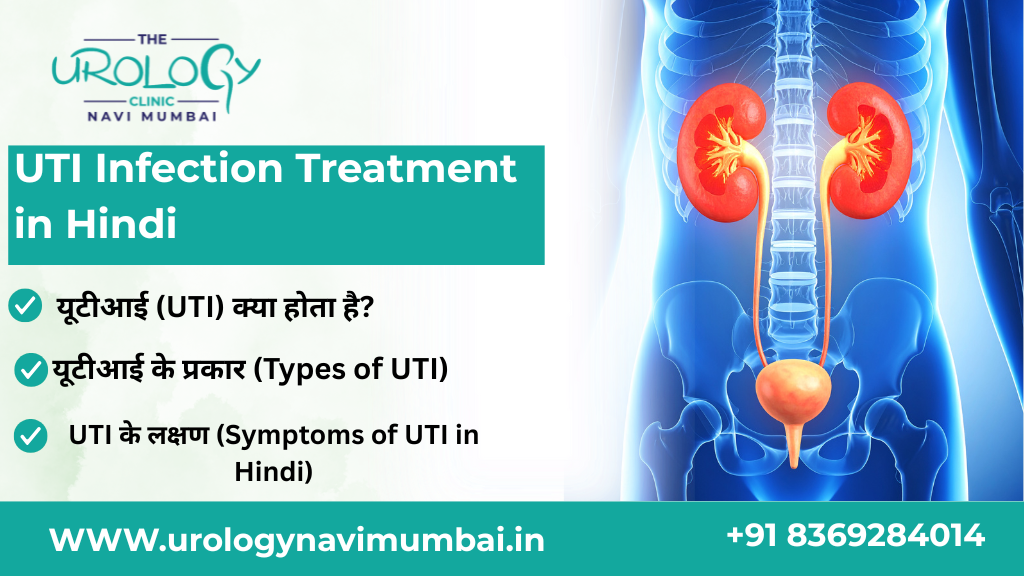
UTI Infection Treatment in Hindi (यूटीआई संक्रमण का इलाज) Book An Apppointment यूटीआई (UTI) क्या होता है? UTI का पूरा नाम क्या है? गुर्दे, मूत्राशय, मूत्रमार्ग या मूत्रमार्ग सहित मूत्रमार्ग के किसी भी भाग में संक्रमण को मूत्रमार्ग संक्रमण (यूटीआई) कहा जाता है। यह संक्रमण शरीर के किन हिस्सों को प्रभावित करता है? यह आमतौर पर मूत्राशय और मूत्रमार्ग के निचले हिस्से में संक्रमण को संदर्भित करता है। पुरुषों की तुलना में महिलाओं में यूटीआई होने की संभावना अधिक होती है। मूत्रमार्ग संक्रमण (यूटीआई) का सबसे आम कारण बैक्टीरिया जैसे रोगाणु होते हैं। यूटीआई के प्रकार (Types of UTI) मूत्र पथ के संक्रमण तीन प्रकार के होते हैं। संक्रमण का प्रकार इस बात पर निर्भर करता है कि मूत्र पथ का कौन सा भाग संक्रमित है। मूत्र पथ संक्रमण में मूत्र पथ के विभिन्न भाग शामिल हो सकते हैं, जिनमें निम्नलिखित शामिल हैं: मूत्रमार्गशोथ : मूत्रमार्ग का संक्रमण, वह खोखली नली जो मूत्राशय से मूत्र को शरीर के बाहर ले जाती है। सिस्टाइटिस : मूत्राशय में एक जीवाणु संक्रमण जो अक्सर मूत्रमार्ग से ऊपर की ओर बढ़ जाता है। पाइलोनफ्राइटिस : गुर्दे का एक संक्रमण जो आमतौर पर मूत्रमार्ग में फैले संक्रमण या मूत्रमार्ग में किसी रुकावट के कारण होता है। मूत्रमार्ग में रुकावट के कारण मूत्र मूत्रवाहिनी और गुर्दे में वापस प्रवाहित होने लगता है। UTI के लक्षण (Symptoms of UTI in Hindi) ज़्यादातर मामलों में, यूटीआई बिना किसी लक्षण के ठीक हो जाता है। हालाँकि, अगर आप यूटीआई से पीड़ित हैं, तो आपको निम्नलिखित लक्षण दिखाई दे सकते हैं: महिलाओं में आम लक्षण बार-बार पेशाब आना : सामान्य से अधिक बार पेशाब करने की अचानक इच्छा होना। जलन : पेशाब करते समय जलन महसूस होगी। पेट दर्द: पेट के निचले हिस्से या श्रोणि में असुविधा महसूस होती है। धुंधला या खूनी मूत्र: कुछ मामलों में, महिलाओं के मूत्र में रक्त दिखाई देता है। असामान्य मूत्र गंध: मूत्र में बहुत तेज़, अप्रिय गंध। बुखार और ठंड लगना: ये गंभीर मामलों में अधिक सामान्य लक्षण हैं। थकान: वृद्ध महिलाएं अक्सर थका हुआ, सुस्त, भ्रमित या कमजोर महसूस करती हैं। पुरुषों में आम लक्षण पुरुषों में मूत्र मार्ग संक्रमण के सबसे आम लक्षणों में से एक लिंग में दर्द है। बुजुर्ग मरीज़ों को अक्सर यूटीआई संक्रमण के कोई विशिष्ट लक्षण नहीं दिखते, लेकिन उनमें दर्द हो सकता है। बार-बार या तत्काल पेशाब करने की आवश्यकता पेशाब के दौरान जलन पुरुषों में दर्दनाक पेशाब मूत्र में रक्त बादलदार या दुर्गंधयुक्त मूत्र पेट के निचले हिस्से या श्रोणि में दर्द बुखार, ठंड लगना, या थकान खाने की आदतों में बदलाव जठरांत्र संबंधी लक्षण गंभीर संक्रमण के संकेत गुर्दे में संक्रमण: यूटीआई गुर्दे तक पहुंच सकता है, जिससे पाइलोनफ्राइटिस नामक अधिक गंभीर स्थिति पैदा हो सकती है।गुर्दे को स्थायी क्षति: अनुपचारित या बार-बार होने वाले यूटीआई से गुर्दे पर निशान पड़ सकते हैं और स्थायी क्षति हो सकती है। UTI के कारण (Causes of UTI in Hindi) बैक्टीरिया संक्रमण (Bacterial Infection) मूत्र मार्ग में संक्रमण (यूटीआई) का सबसे आम कारण बैक्टीरिया (सबसे आम तौर पर एस्चेरिचिया कोलाई (ई. कोलाई)) होते हैं। ये बैक्टीरिया मूत्रमार्ग (शरीर से मूत्र बाहर निकालने वाली नली) में प्रवेश कर सकते हैं और मूत्र मार्ग में ऊपर की ओर बढ़ते हैं, जहाँ ये बढ़ते हैं और संक्रमण का कारण बनते हैं। स्वच्छता की कमी (Poor Hygiene) अस्वच्छ परिस्थितियाँ इसका मुख्य कारण हैं। शारीरिक स्वच्छता की कमी से इस समस्या की संभावना बढ़ जाती है। अस्वच्छ पश्चिमी शैली के शौचालयों का उपयोग करने से भी यह रोग होता है। पानी कम पीना पानी मूत्र मार्ग से बैक्टीरिया को बाहर निकालने में मदद करता है। जब आप पर्याप्त मात्रा में तरल पदार्थ नहीं पीते हैं: मूत्र सांद्रित होता है। मूत्राशय कम बार खाली होता है। बैक्टीरिया रेंगते हैं और गुणा करते हैं। बार-बार मूत्र रोकना ज़्यादा देर तक पेशाब रोकने से आपके मूत्राशय में बैक्टीरिया पनप सकते हैं। जैसे ही आपको पेशाब करने की इच्छा हो, तुरंत पेशाब करने की कोशिश करें। साथ ही, हर बार अपने मूत्राशय को पूरी तरह से खाली करें। इससे बैक्टीरिया बाहर निकल जाते हैं और संक्रमण को और फैलने से रोका जा सकता है। अन्य जोखिम कारक (Other Risk Factors) कुछ लोग यूटीआई के शुरुआती लक्षणों को यह सोचकर नज़रअंदाज़ कर देते हैं कि यह अपने आप ठीक हो जाएगा। यह खतरनाक हो सकता है। अगर इलाज न किया जाए, तो हल्का संक्रमण गंभीर किडनी संक्रमण या यूरोसेप्सिस में बदल सकता है, जो एक जानलेवा स्थिति है जहाँ संक्रमण रक्तप्रवाह में फैल जाता है। इलाज की अनदेखी या देरी करने से गंभीर स्वास्थ्य समस्याएं हो सकती हैं, जैसे: गुर्दे की क्षति या अल्सर बार-बार होने वाले संक्रमण गंभीर मामलों में सेप्सिस (रक्त संक्रमण)। गर्भावस्था के दौरान जटिलताएँ बार-बार संक्रमण से पुरुषों में मूत्रमार्ग का संकुचित होना। UTI का इलाज (Treatment of UTI in Hindi) एंटीबायोटिक दवाइयाँ (Antibiotic Medicines) मूत्र मार्ग संक्रमण (यूटीआई) का इलाज आसान है। इन संक्रमणों के लिए प्राथमिक उपचार एंटीबायोटिक्स हैं, और ये आपके संक्रमण और आपके मूत्र के नमूने में पाए जाने वाले बैक्टीरिया के प्रकार पर आधारित होते हैं। ये उपचार बहुत प्रभावी हैं और कुछ ही दिनों में संक्रमण को ख़त्म कर देते हैं। दर्द और जलन कम करने के घरेलू उपाय अंतरंग क्षेत्र में डूशिंग, तीव्र योनि धुलाई या सुगंधित साबुन का उपयोग करने से बचें। ये प्राकृतिक पीएच को बाधित कर सकते हैं और जलन या संक्रमण पैदा कर सकते हैं। मासिक धर्म के दौरान हर 4-6 घंटे में सैनिटरी पैड या टैम्पोन बदलें। पूरे दिन एक ही पैड का उपयोग करने से बचें, भले ही आपका प्रवाह हल्का हो। डॉक्टर से कब मिलें? लक्षण 2-3 दिनों से अधिक समय तक बने रहते हैं आपके मूत्र में रक्त है. बुखार या गंभीर पीठ दर्द होता है। यूटीआई बार-बार आते रहते हैं गंभीर संक्रमण के लिए अस्पताल में इलाज कुछ जटिल मामलों में, यूटीआई एंटीबायोटिक दवाओं के प्रति प्रतिरोधी हो सकता है, या संक्रमण आपके गुर्दे तक फैल सकता है। आपको अस्पताल में इलाज की आवश्यकता हो सकती है, जहाँ चिकित्सक आपको एक सुई के माध्यम से दवा देंगे, जिसे वे आमतौर पर आपकी बांह की नस में डालते हैं (अंतःशिरा)। घर लौटने के बाद, आपको संक्रमण से

Male Infertility Doctor: Understanding, Diagnosis, and Treatment
Male Infertility Doctor: Understanding, Diagnosis, and Treatment Book An Apppointment Male infertility affects millions of men and is a contributing factor in nearly 40–50% of couples who struggle to conceive. Many men are unaware that fertility issues can originate from them. Recognizing the causes, symptoms, and treatment options is essential for early intervention. Consulting a male infertility doctor like Dr. Ninad Tamboli ensures accurate diagnosis and effective treatment. This guide will explain male infertility in simple terms, discuss causes, symptoms, testing methods, treatment options, and preventive strategies. Understanding Male Infertility Male infertility can be classified based on sperm health and production: Azoospermia – No sperm in semen Oligospermia – Low sperm count Asthenospermia – Poor sperm motility (movement) Teratospermia – Abnormal sperm shape Identifying the type is crucial for a male infertility doctor to decide the appropriate treatment. Common Causes of Male Infertility Several factors can affect male fertility: Hormonal imbalances (low testosterone) Varicocele (enlarged veins in the scrotum) Genetic conditions affecting sperm production Infections such as STDs or prostatitis Blockages in reproductive ducts A proper evaluation by a male infertility doctor can detect the exact cause. Risk Factors for Male Infertility Some men are at higher risk due to: Age over 40 Chronic illnesses like diabetes or thyroid disorders Lifestyle habits such as smoking, alcohol, or drugs Exposure to environmental toxins or radiation Obesity and poor nutrition Early detection of risk factors improves chances of successful treatment. Symptoms of Male Infertility The urethra acts like a small pipeline for urine. When it narrows or develops a scar, the urine flow slows down. This narrowing is known as a stricture. Even though it can happen to anyone, men are more likely to develop urethral strictures because their urethra is longer. The condition can occur anywhere along the tube from the tip of the penis to the bladder. If not treated on time, it can lead to urinary infections, bladder stones, or even kidney damage. That’s why early diagnosis and treatment are very important. Lifestyle and Male Fertility Lifestyle has a strong impact on male fertility. Key factors include: Balanced Diet – Foods rich in vitamins, antioxidants, zinc, and selenium Regular Exercise – Maintains hormonal balance and healthy weight Avoiding Toxins – Limit exposure to chemicals, pesticides, and radiation Stress Management – Chronic stress affects sperm quality Simple lifestyle changes can improve fertility alongside medical treatments. Myths and Misconceptions About Male Infertility Common myths include: Infertility is always a woman’s problem – False Only older men face fertility issues – False Lifestyle changes do not affect fertility – False Consulting a male infertility doctor helps separate facts from myths. How Can You Test for Male Fertility? Semen Analysis Measures sperm count, motility, and shape to detect abnormalities. Hormonal Testing Tests testosterone, FSH, and LH levels to check hormonal balance. Imaging and Genetic Tests Ultrasound and genetic tests identify structural or inherited issues affecting fertility. Early testing by a male infertility doctor ensures accurate diagnosis and treatment planning. Male Infertility Treatment Options Treatment depends on the cause and severity of infertility: Medication – Hormone therapy or antibiotics Surgical Treatment – Correcting varicocele or reproductive blockages Assisted Reproductive Techniques (ART) – IVF, ICSI, and sperm retrieval Lifestyle Adjustments – Diet, exercise, and stress reduction A personalized plan from a male infertility doctor improves chances of conception. Preventive Measures to Improve Male Fertility Men can adopt preventive strategies to maintain fertility: Maintain a healthy diet and weight Avoid smoking, alcohol, and recreational drugs Reduce exposure to environmental toxins Manage stress through yoga, meditation, or hobbies Schedule regular check-ups Preventive measures not only improve fertility but overall health as well. Latest Advances in Male Infertility Treatment Modern urology provides advanced solutions: Genetic Screening – Detects hidden fertility issues Microsurgical Techniques – Precise correction of reproductive tract problems Advanced ART – Higher IVF and ICSI success rates Regenerative Medicine – Experimental therapies like stem cell treatment Consulting a skilled male infertility doctor ensures access to the latest technology and treatments. Why Choose Dr. Ninad Tamboli’s Urology Clinic for Male Infertility? Dr. Ninad Tamboli is a leading male infertility doctor in Navi Mumbai, recognized for his personalized and compassionate care. Urology Navi Mumbai offers advanced diagnostics and treatment facilities, supported by Dr. Tamboli’s extensive experience in managing complex infertility cases. With evidence-based and ethical treatment approaches, patients trust the clinic for its modern technology and holistic focus on male reproductive health. Conclusion Male infertility is a treatable condition. Early detection and intervention significantly improve outcomes. Understanding causes, symptoms, and treatment options empowers men and couples to take action. With guidance from a male infertility doctor like Dr. Ninad Tamboli, achieving parenthood is possible even in challenging cases. Proactive medical care combined with healthy lifestyle choices ensures better fertility and overall well-being. Frequently Asked Questions Can lifestyle changes improve male fertility? Yes, proper diet, regular exercise, and avoiding toxins can improve sperm quality. How long should a couple try before consulting a male infertility doctor? After 12 months of unsuccessful attempts, or 6 months if the female partner is over 35. Are infertility treatments successful? Success varies by age, cause, and treatment type, but modern techniques have high success rates. Yes, proper diet, regular exercise, and avoiding toxins can improve sperm quality. After 12 months of unsuccessful attempts, or 6 months if the female partner is over 35. Success varies by age, cause, and treatment type, but modern techniques have high success rates. Free Consultation Book Now Book An Apppointment Dr. Ninad Tamboli Author
Urethral Stricture Surgery: Causes, Treatment, Recovery & Cost Explained
Urethral Stricture Surgery: Causes, Treatment, Recovery & Cost Explained Book An Apppointment Have you ever wondered why some people find it difficult to pass urine or experience pain while urinating? One possible reason could be a condition called urethral stricture. It’s when the tube that carries urine (called the urethra) becomes narrow, making it hard for urine to flow freely. When this happens, doctors may suggest a treatment known as urethral stricture surgery. This procedure helps restore normal urine flow and comfort. In this blog, we’ll explain everything about it from causes and symptoms to recovery and urethral stricture surgery cost in Navi Mumbai in a simple and easy-to-understand way. At Dr. Ninad Tamboli Urology Clinic, our goal is to make sure every patient understands their condition and gets the best care possible. What is Urethral Stricture Surgery? Urethral stricture surgery is a medical procedure used to widen or repair a narrow urethra. The main aim is to allow urine to pass smoothly from the bladder to the outside of the body. The surgery may involve removing the narrowed section or rebuilding it using nearby tissue. Depending on the type and severity, your doctor may recommend a simple endoscopic procedure or a more detailed reconstruction known as urethroplasty. The urethral stricture surgery cost in India, especially in Navi Mumbai, can vary based on several factors including the type of surgery, hospital facilities, and the surgeon’s experience. Understanding Urethral Stricture The urethra acts like a small pipeline for urine. When it narrows or develops a scar, the urine flow slows down. This narrowing is known as a stricture. Even though it can happen to anyone, men are more likely to develop urethral strictures because their urethra is longer. The condition can occur anywhere along the tube from the tip of the penis to the bladder. If not treated on time, it can lead to urinary infections, bladder stones, or even kidney damage. That’s why early diagnosis and treatment are very important. Common Symptoms of Urethral Stricture Recognizing the signs early can help prevent complications. Here are some of the most common symptoms: Weak or slow urine flow Pain or burning sensation while urinating Frequent urge to urinate Incomplete emptying of the bladder Urinary tract infections (UTIs) Blood in the urine If you notice these symptoms, it’s best to visit a urologist in Navi Mumbai, like Dr. Ninad Tamboli, for a proper check-up and guidance. Causes of Urethral Stricture There are many reasons why the urethra can become narrow. Some of the common causes include: Injury or trauma Infection Previous surgeries or catheter use Congenital (birth-related) reasons No matter the cause, modern medical techniques allow doctors to treat urethral stricture effectively and safely. Diagnosis of Urethral Stricture Before suggesting surgery, your doctor will perform tests to understand the severity and exact location of the stricture. Common diagnostic methods include: Physical examination and medical history Uroflowmetry test Cystoscopy Retrograde urethrogram These tests help the doctor choose the best treatment plan for your specific condition. Types of Urethral Stricture Surgery Urethral Dilation A simple procedure where the doctor uses special instruments to stretch the narrowed part of the urethra. This is often used for short, less severe strictures. Direct Vision Internal Urethrotomy (DVIU) A minimally invasive surgery where a small incision is made inside the urethra using a thin scope. It helps open the blocked area and improve urine flow. Urethroplasty Surgery This is a more advanced procedure where the narrowed section is removed or reconstructed using tissue from another part of the body (like the mouth’s inner lining). Urethroplasty surgery cost is usually higher than simple dilation, but it offers long-lasting results with a much lower chance of recurrence. Preparing for Urethral Stricture Surgery Preparation plays a key role in achieving the best outcomes. Your doctor may advise: Routine blood and urine tests Avoiding certain medications before surgery Keeping the bladder empty before the procedure Arranging for someone to assist after surgery Recovery Times for Urethral Stricture Surgeries Recovery depends on the type of surgery and overall health. For simple dilation or DVIU, most patients recover within a week. For urethroplasty, recovery may take 2–3 weeks. During recovery: A catheter is usually kept for 7–14 days to allow healing. Drink plenty of water and maintain hygiene. Avoid heavy physical work until your doctor says it’s safe. The urethral stricture surgery cost often includes follow-up visits and catheter removal, so always confirm what’s included in the total package. Diet and Lifestyle Tips for UTI Prevention Your food choices also impact urinary health. Drink water: Aim for 8+ glasses daily. Eat probiotics: Yogurt and fermented foods help healthy bacteria. Cut down sugar & caffeine: They irritate the bladder. Add Vitamin C: It strengthens your immune system and makes urine acidic to reduce bacteria. Possible Risks and Complications Like any surgery, urethral stricture surgery also carries some risks, though they are rare. These may include: Mild bleeding or infection Temporary difficulty urinating Stricture recurrence (rare with urethroplasty) Long-Term Results and Success Rates Taking care of your body after surgery is essential for fast healing. Here are a few tips: Drink 2–3 liters of water daily Maintain good hygiene Avoid smoking and alcohol for a few weeks Eat light, healthy meals Attend all follow-up appointments These small steps can make a big difference in your recovery and overall well-being. Why Choose Dr. Ninad Tamboli Urology Clinic for Urethral Stricture Surgery? At Urology Navi Mumbai, patients receive personalized and advanced care for urethral conditions. Led by Dr. Ninad Tamboli, a leading urologist and andrologist specializing in reconstructive and endoscopic surgeries, the clinic offers state-of-the-art facilities and the latest urology technology. The cost of urethral stricture surgery in Navi Mumbai is transparent and budget-friendly, ensuring accessible treatment for all. With a strong patient-centered approach, every stage from consultation to recovery is focused on comfort, safety, and achieving the best outcomes, whether it’s a simple dilation or a complex urethroplasty. Conclusion Urethral stricture surgery is a safe and effective
UTI Treatment Doctor in Navi Mumbai – Expert Care at Dr. Ninad Tamboli Urology Clinic
UTI Treatment Doctor in Navi Mumbai – Expert Care at Dr. Ninad Tamboli Urology Clinic Book An Apppointment Have you ever felt a burning sensation while peeing or needed to rush to the bathroom again and again? That might be a sign of a Urinary Tract Infection (UTI). UTIs are among the most common infections that affect people of all ages especially women. At Dr. Ninad Tamboli Urology Clinic, Navi Mumbai, we specialize in diagnosing and treating UTIs with a caring approach. This blog will help you understand everything about UTIs what they are, how to treat them, and when to see a UTI treatment doctor. What is a UTI? A Urinary Tract Infection (UTI) happens when bacteria enter your urinary system kidneys, bladder, ureters, or urethra. Most infections affect the bladder and urethra, causing pain or discomfort while urinating. Your body naturally flushes bacteria out through urine, but sometimes bacteria multiply faster than they can be removed leading to infection. Types of UTIs Cystitis (Bladder Infection): Common type caused by E. coli. Leads to burning, frequent urination, and cloudy urine. Urethritis (Urethra Infection): Affects the tube that carries urine outside. Pyelonephritis (Kidney Infection): More serious; causes fever, back pain, and nausea. Needs immediate medical help from a urologist or UTI treatment doctor. Causes of Urinary Tract Infection UTIs usually happen when bacteria (mostly E. coli) from the digestive system enter the urinary tract. Common causes include: Poor hydration Unhygienic washroom habits Holding urine too long Hormonal changes Kidney stones or prostate enlargement Weak immune system Women are more likely to get UTIs due to their shorter urethra. If you want to understand UTI in more detail in Hindi, including its causes, symptoms, and treatment options, you can explore our detailed guides. Read more about UTI symptoms and early signs in Hindi here: UTI infection in Hindi and learn about treatment methods and home-care tips here: UTI infection treatment in Hindi. Common Symptoms of UTI Here are some signs that may indicate a UTI: Burning sensation while urinating Frequent urination Cloudy or bloody urine Lower belly or back pain Fever or chills (in serious cases) If you feel these symptoms, it’s best to visit a UTI treatment doctor in Navi Mumbai quickly. Diagnosis of UTI: How It’s Detected Urine Test A basic test to check for bacteria or white blood cells in the urine. Urine Culture Used to identify which bacteria caused the infection so the doctor can choose the right antibiotic. Imaging Tests In recurring or complicated cases, imaging like ultrasound or CT scan helps detect blockages or kidney stones. Early detection allows quicker treatment and avoids complications. Treatment for Your UTI Treatment depends on infection severity. Your UTI treatment doctor will usually prescribe antibiotics to kill bacteria. It’s essential to finish the full course, even if you feel better early. Other helpful tips include: Drinking more water Avoiding caffeine and alcohol Taking pain relief if needed Maintaining hygiene Chronic or frequent UTIs may need further testing to find underlying causes. How to Prevent Getting UTIs Preventing a UTI is often simple with the right habits: Preventing a UTI is often simple with the right habits: Stay hydrated Don’t hold in urine Wipe front to back Use clean toilets Avoid harsh soaps and sprays Empty your bladder after intimacy These steps can protect your urinary system and prevent infection. Diet and Lifestyle Tips for UTI Prevention Your food choices also impact urinary health. Drink water: Aim for 8+ glasses daily. Eat probiotics: Yogurt and fermented foods help healthy bacteria. Cut down sugar & caffeine: They irritate the bladder. Add Vitamin C: It strengthens your immune system and makes urine acidic to reduce bacteria. Complications of Untreated UTIs Ignoring a UTI can lead to serious health problems: Kidney infections (pyelonephritis) Kidney damage Sepsis (blood infection) Pregnancy complications That’s why consulting an experienced urology specialist like Dr. Ninad Tamboli is crucial. How To Manage and Prevent a Urinary Tract Infection Managing a UTI involves following your doctor’s advice, staying hydrated, and keeping good hygiene. If UTIs keep coming back, regular checkups with your UTI treatment doctor can help identify triggers and prevent recurrence. Why Choose Urology Navi Mumbai for UTI Treatment? At Urology Navi Mumbai, we offer expert care for urinary problems, including UTIs. Led by Dr. Ninad Tamboli, our clinic combines advanced diagnostics, personalized treatment, and a patient-friendly approach. We’re proud to be among the best clinics for UTI treatment in Navi Mumbai. Conclusion UTIs are common but easily treatable if detected early. Staying clean, drinking enough water, and seeing a trusted UTI treatment doctor can help you recover fast. At Dr. Ninad Tamboli Urology Clinic, we’re committed to keeping your urinary system healthy with expert, compassionate care. Frequently Asked Questions Can UTIs go away on their own? Some mild infections might improve, but most need antibiotics to prevent complications. How long does UTI treatment take? Usually between 3–7 days; chronic infections may need more time. Can men get UTIs too? Yes, though less often. In men, it may indicate prostate or urinary tract issues requiring a specialist’s help. Some mild infections might improve, but most need antibiotics to prevent complications. Usually between 3–7 days; chronic infections may need more time. Yes, though less often. In men, it may indicate prostate or urinary tract issues requiring a specialist’s help. Free Consultation Book Now Book An Apppointment Dr. Ninad Tamboli Author
Prostate Laser Surgery in Navi Mumbai | Dr. Ninad Tamboli
Prostate Laser Surgery : Advanced Treatment at Dr. Ninad Tamboli Urology Clinic Book An Apppointment Introduction Enlarged prostate, also called benign prostatic hyperplasia (BPH), affects many men as they age. This condition can cause difficulty in urination, frequent nighttime visits to the bathroom, and reduced quality of life. Thankfully, medical advances like prostate laser surgery have made treatment safer, faster, and less painful. At Dr. Ninad Tamboli Urology Clinic in Navi Mumbai, patients receive expert care from a trusted urologist with over a decade of experience. In this blog, we’ll explain everything about laser prostate surgery in a simple, easy-to-understand manner. What is Laser Prostate Surgery? Laser prostate surgery is a minimally invasive procedure used to treat an enlarged prostate. Unlike traditional surgery, it uses laser energy to remove excess prostate tissue, allowing urine to flow normally. For Hindi readers: To better understand the basics, read our detailed guide on Prostate Meaning in Hindi. For Marathi readers: Learn more about the prostate and its functions in simple terms through our Prostate Meaning in Marathi blog. Common Types of Laser Prostate Surgery HoLEP (Holmium Laser Enucleation of the Prostate) HoLEP uses a holmium laser to remove enlarged prostate tissue. It’s highly effective for large prostates and often eliminates the need for further treatment. GreenLight Laser Surgery GreenLight laser vaporizes excess prostate tissue. This technique reduces bleeding and is suitable for patients on blood thinners. Thulium Laser Surgery Thulium lasers provide precise tissue removal with minimal heat damage to surrounding areas. Recovery is usually quick and smooth. How Laser Prostate Surgery Works Laser prostate surgery is performed under anesthesia, using a thin instrument called a cystoscope inserted through the urethra. The laser precisely targets and removes excess tissue that blocks urine flow. Benefits of Laser Prostate Surgery Minimally invasive: No large incisions Reduced bleeding: Safer for patients on anticoagulants Quick recovery: Resume normal activities in days High success rate: Significant improvement in urinary symptoms Lower risk of infection: Reduced tissue trauma Who is a Candidate for Laser Prostate Surgery? Men with severe urinary symptoms, recurrent urinary tract infections, or bladder stones are potential candidates. It is particularly suitable for older men, patients on blood thinners, and those with large prostates.If you’re experiencing symptoms of an enlarged prostate, explore our comprehensive Prostate Treatment options at Urology Navi Mumbai for safe and effective care. How Long Does Laser Prostate Surgery Take? Typically, 60–90 minutes, depending on prostate size, laser type, and patient’s health. Most patients have a short hospital stay. Cost of Laser Prostate Surgery The average cost of laser prostate surgery ranges from ₹1,50,000 to ₹3,50,000 in India. Factors Affecting Laser Prostate Surgery Cost Prostate size Hospital facilities Surgeon’s experience Additional treatments or tests What is the Recovery Time After Laser Prostate Surgery? Light activities: 2–3 days Full recovery: 2–4 weeks Immediate improvement in urination Risks and Complications of Laser Prostate Surgery Temporary burning sensation while urinating Blood in urine Urinary tract infections Rare : incontinence or erectile dysfunction Why Choose Urology Navi Mumbai for Laser Prostate Surgery Expert urologist: Dr. Ninad Tamboli State-of-the-art technology Patient-centric approach Proven track record: 300+ successful surgeries FAQs Is laser prostate surgery painful? Minimal discomfort due to its minimally invasive nature. How long will I stay in the hospital? Usually 1 day or same-day discharge in some cases. Can I resume normal activities after surgery? Light activities in 2–3 days; full recovery in 2–4 weeks. Is laser prostate surgery safe for elderly patients? Yes, it is safer than traditional surgery. Will I need repeat surgery? Often a permanent solution, though follow-up is necessary. Minimal discomfort due to its minimally invasive nature. Usually 1 day or same-day discharge in some cases. Light activities in 2–3 days; full recovery in 2–4 weeks. Yes, it is safer than traditional surgery. Often a permanent solution, though follow-up is necessary. Conclusion Laser prostate surgery is a safe, effective, and minimally invasive solution for men with prostate enlargement. Early evaluation and timely treatment can improve urinary health and quality of life. For expert consultation and advanced prostate laser surgery in Navi Mumbai, visit Urology Navi Mumbai today. Book An Appointment Dr. Ninad Tamboli Author
Enlarged Prostate Surgery Cost | Dr. Ninad Tamboli
Enlarged Prostate Surgery Cost in India – Treatment, Types & Recovery Book An Apppointment An enlarged prostate can be uncomfortable and worrying for many men, especially as they get older. If you or a loved one face frequent urination, weak urine flow, or interrupted sleep due to bathroom trips, it might be time to learn more about prostate health. In this guide, we’ll explain everything about enlarged prostate surgery, its causes, when it’s needed, cost in India, recovery, and why Dr. Ninad Tamboli’s Urology Clinic in Navi Mumbai is a trusted name for expert urological care. For safe, advanced, and effective management of enlarged prostate, explore our specialized Prostate Treatment services at Urology Navi Mumbai. What is Enlarged Prostate Surgery? The prostate is a small, walnut-sized gland found only in men. It’s located below the bladder and surrounds the urethra the tube that carries urine out of the body. As men age, the prostate may grow bigger, known as Benign Prostatic Hyperplasia (BPH). “Benign” means it’s not cancer, but it can still cause uncomfortable symptoms like: Difficulty in starting urination Weak urine flow Feeling that the bladder isn’t empty Frequent urination, especially at night When these symptoms become severe or medicines don’t help, doctors may suggest enlarged prostate surgery to remove or shrink the extra prostate tissue and restore normal urine flow. What is the Main Cause of Prostate Enlargement? The exact cause of prostate enlargement isn’t always clear, but it mostly happens due to hormonal changes with age. As men grow older, changes in testosterone and estrogen levels cause prostate cells to multiply, leading to gland enlargement. Other risk factors include: Family history of prostate problems Obesity and lack of exercise Diabetes or heart disease Smoking or unhealthy diet Why is Prostate Surgery Needed? Prostate surgery becomes necessary when urinary symptoms severely affect daily life or cause complications. Doctors try medication first, but if symptoms worsen or side effects appear, surgery helps: Relieve urine blockage Prevent infections and kidney issues Improve sleep and comfort Restore quality of life When is Prostate Surgery Needed? Your urologist may recommend surgery if you experience: Trouble urinating even with medicine Repeated urinary tract infections Blood in urine (hematuria) Bladder stones Sudden urinary retention If left untreated, prostate enlargement can lead to bladder or kidney damage, making early treatment essential. Symptoms That Indicate Surgery May Be Required Watch for these warning signs: Weak or interrupted urine flow Straining while urinating Frequent nighttime urination Dribbling after urination Pain or burning during urination If these persist, visit Dr. Ninad Tamboli, a trusted urologist in Navi Mumbai, for proper evaluation. Diagnosis and Evaluation Before Surgery Before recommending surgery, doctors perform tests to understand your condition, such as: Digital Rectal Exam (DRE) – Checks prostate size. PSA Blood Test – Rules out prostate cancer. Ultrasound or MRI – Measures prostate size and shape. Urine Flow Test – Assesses urine speed and volume. Cystoscopy – Visual inspection of bladder and urethra. These tests help your urologist decide the best enlarged prostate treatment for you. How Much Does Prostate Surgery Cost? The average enlarged prostate surgery cost in India ranges from ₹70,000 to ₹2,50,000, depending on the hospital, technology, and surgeon’s expertise. At Dr. Ninad Tamboli’s Urology Clinic, Navi Mumbai, patients get transparent pricing with advanced and minimally invasive options. Type of Surgery Average Cost TURP (Transurethral Resection) ₹90,000 – ₹1,80,000 Laser Prostate Surgery (HoLEP, GreenLight) ₹1,20,000 – ₹2,50,000 Open Prostate Surgery ₹1,00,000 – ₹2,00,000 Minimally Invasive Surgery ₹80,000 – ₹1,50,000 Types of Prostate Surgery and Their Costs TURP (Transurethral Resection of Prostate) The most common surgery where a scope removes extra prostate tissue. Cost : ₹90,000 – ₹1,80,000 Recovery : 1–2 days in hospital, full recovery in 2–3 weeks. Laser Prostate Surgery (HoLEP / GreenLight) A modern, precise laser removes excess tissue with minimal bleeding. Cost : ₹1,20,000 – ₹2,50,000 Recovery : 24-hour stay, quick healing, minimal pain. Open or Robotic Prostatectomy Used for very large prostates or complex cases. Cost : ₹1,00,000 – ₹2,50,000 Recovery : 4–6 weeks, depending on patient health. Factors Affecting Prostate Surgery Cost The total enlarged prostate surgery cost varies due to: Type of surgery (laser, open, TURP) Hospital facilities and technology Doctor’s expertise and experience City and region (costs differ across India) Room category (private or shared) Aftercare and medications At Urology Navi Mumbai, costs are explained clearly so patients can make informed decisions. What is the Recovery Time After Enlarged Prostate Surgery? Most patients recover in 2 to 6 weeks, depending on the surgery type. Open or Robotic Prostatectomy First few days: Catheter support 1 week: Light activities 1 week: Light activities 6 weeks: Full recovery Recovery tips: Drink plenty of fluids Avoid heavy lifting Take prescribed medications Attend follow-ups Why Choose Urology Navi Mumbai for Enlarged Prostate Surgery At Dr. Ninad Tamboli’s Urology Clinic Navi Mumbai, you’ll receive world-class care, advanced technology, and expert guidance all in one place. Expertise You Can Trust Dr. Ninad Tamboli is a highly experienced urologist in Navi Mumbai, known for precision and patient-centered care in prostate and kidney surgeries. Modern Technology & Minimally Invasive Options The clinic offers laser and advanced endoscopic procedures that ensure faster healing, less pain, and minimal hospital stay. Affordable & Transparent Pricing Patients get complete clarity on enlarged prostate surgery cost, ensuring high-quality treatment at reasonable prices. FAQs Is prostate enlargement the same as cancer? No. Benign Prostatic Hyperplasia (BPH) is non-cancerous and unrelated to prostate cancer. Can prostate enlargement be treated without surgery? Yes. Lifestyle changes and medicines may help in mild cases. Surgery is needed only when symptoms become severe. How painful is prostate surgery? Laser and minimally invasive surgeries cause very little pain and allow faster recovery. What is the average enlarged prostate surgery cost in Navi Mumbai? It ranges between ₹90,000 to ₹2,00,000, depending on the type and hospital. How soon can I return to normal activities? Most men can resume light work within a week and normal life in 3–4 weeks. No. Benign Prostatic
Varicocele Surgery Cost in Navi Mumbai | Expert Urologists & Treatment
Varicocele Surgery Cost in Navi Mumbai: Everything You Need to Know Book An Apppointment If you or someone you love has been diagnosed with a varicocele, it may feel confusing at first. Many young men and adults experience this condition, and the good news is that safe and effective treatments are available today. At The Urology Clinic Navi Mumbai, our mission is to make complicated medical topics simple, so patients and families can understand their options and feel confident about the next steps. This detailed guide will explain what a varicocele is, the symptoms you should look out for, treatment options, how to prepare for surgery, what affects the varicocele surgery cost, and why choosing the right clinic matters. What is Varicocele? A varicocele is when the veins inside the scrotum (the pouch that holds the testicles) become enlarged and twisted. It’s similar to varicose veins in the legs, except it happens around the testicles. Doctors often describe it as feeling like a “bag of worms.” Why does a varicocele happen? The veins in the scrotum have small valves that keep blood flowing in one direction. When these valves don’t work properly, blood flows backward and pools in the veins. Over time, this causes swelling and discomfort. Symptoms of Varicocele Some people don’t even realize they have a varicocele until a doctor checks them. But when symptoms do appear, they may include: A dull or aching pain in the scrotum, especially after standing or exercising for long periods. A heavy feeling in the scrotum. Noticeably enlarged or twisted veins. Fertility issues in some men. A size difference between the two testicles. If you notice these signs, visiting a urologist early can prevent future problems. Varicocele Treatment Options Treatment depends on the severity of the condition. Not everyone with varicocele needs surgery right away. Common treatment choices Observation – If the varicocele is small and doesn’t cause pain, doctors may simply monitor it with regular checkups. Medication for pain relief – Medicines can ease discomfort but won’t cure the varicocele. Varicocele Surgery (Varicocelectomy) – The most effective treatment, where the swollen veins are tied off so blood flows only through healthy veins. Minimally invasive procedures (laparoscopy or embolization) – These advanced techniques involve tiny cuts or special instruments for quicker recovery. How to Prepare for Varicocele Surgery? Preparing for surgery helps ensure a smooth process and faster healing. Here’s what most patients are advised to do: Medical tests – Ultrasound, semen analysis, and blood work help doctors plan treatment. Fasting – You may be asked not to eat or drink for a few hours before surgery. Stopping certain medicines – Blood thinners or some herbal supplements may need to be paused. Arranging support – Having a family member or friend to accompany you is always helpful. Which Factors Affect the Cost of Varicocele Surgery? The varicocele surgery cost can vary depending on many factors: Type of surgery – Open surgery is usually more affordable, while laparoscopic and microscopic surgeries may cost more due to advanced techniques. Hospital or clinic facilities – Modern equipment, specialized care units, and advanced technology can raise costs, but they often mean safer outcomes. Surgeon’s expertise – Highly experienced urologists may charge higher fees, but the chances of success and fewer complications are also greater. City or location – In metro cities like Mumbai, costs may be higher compared to smaller towns. Extra medical requirements – Pre-surgery tests, anesthesia, medicines, and follow-up visits also add to the total. What Elements Are Included in the Cost of Varicocele Surgery? When asking about the cost, it’s important to understand what’s included. Generally, the package covers: Doctor consultation fees. Diagnostic tests such as ultrasound and semen analysis. Operation theatre charges. Surgeon and anesthetist fees. Hospital stay (if needed). Medicines used during and after the procedure. Follow-up consultations. Always ask for a clear cost breakdown so you know exactly what you are paying for. Is Varicocele Surgery Successful? Yes, varicocele surgery is very successful in most cases. Research and patient experiences show that: Pain relief is significant after surgery. Fertility often improves in men who had fertility issues due to varicocele. The risk of varicocele returning is very low, especially when performed by an expert urologist. Most patients recover in 1–2 weeks and can get back to normal daily life. Heavy lifting and intense exercise are usually avoided for a few weeks to ensure full healing. Recovery and Life After Varicocele Surgery Many patients wonder what life will be like after the operation. The good news is that recovery from varicocele surgery is usually smooth and quick when you follow your doctor’s advice. What to Expect After Surgery Mild discomfort – Some swelling or soreness in the scrotum is normal for a few days. Quick return to daily life – Most patients can resume work or school within 1–2 weeks. Avoiding heavy activity – Doctors usually recommend avoiding gym workouts, running, or lifting heavy objects for 3–4 weeks. Better health outcomes – Many men notice improved comfort and fertility results in the months following surgery. Tips for Faster Recovery Wear supportive underwear to reduce strain. Take prescribed medicines on time. Keep the surgical area clean and dry. Attend follow-up visits with your urologist. Eat healthy food and drink enough water to support healing. With these simple steps, most patients enjoy a smooth recovery and a better quality of life after varicocele surgery. Why Choose The Urology Clinic Navi Mumbai? Choosing the right clinic for a sensitive condition like varicocele makes all the difference, and at The Urology Clinic Navi Mumbai, patients find the perfect balance of expertise, technology, and care. Our highly experienced urologists have successfully treated countless cases with safe and effective techniques, while our advanced facilities allow for minimally invasive surgeries that support quicker recovery. We believe in complete transparency, which means you always get a clear idea of the varicocele surgery cost with no hidden charges. What sets us apart is our patient-first approach we take time
Urinary Tract Infection in Marathi | मूत्र संक्रमण लक्षणे, कारणे व उपचार
लघवी इन्फेक्शन कशामुळे होते? Book An Apppointment मूत्रमार्गाचे संसर्ग (UTIs) खूप सामान्य आहेत – विशेषतः महिला, बाळे आणि वृद्धांमध्ये. सामान्यतः मूत्रमार्गात बॅक्टेरिया राहत नाहीत. जेव्हा बॅक्टेरिया मूत्रमार्गात प्रवेश करतात आणि त्यांची संख्या वाढते तेव्हा ते मूत्रमार्गाच्या संसर्गास कारणीभूत ठरू शकतात. मूत्रमार्गात संसर्ग किंवा सिस्टिटिस होऊ शकणारे अनेक जंतू आहेत. मूत्रमार्गात संसर्ग निर्माण करणारे सर्वात सामान्य जंतू तुमच्या पचनसंस्थेत आढळतात, एस्चेरिचिया कोलाई (ई.कोलाई). ई.कोलाई सहजपणे मूत्रमार्गात पसरू शकते आणि तुमच्या मूत्रमार्गाच्या अस्तराला चिकटू शकते. मायकोप्लाझ्मा आणि क्लॅमिडीया सारखे जंतू पुरुष आणि महिला दोघांमध्येही मूत्रमार्गाचा दाह होऊ शकतात. हे जंतू लैंगिक संभोगादरम्यान संक्रमित होऊ शकतात म्हणून पुन्हा संसर्ग टाळण्यासाठी दोन्ही भागीदारांना वैद्यकीय उपचारांची आवश्यकता असते. काही लोकांना लघवीचा प्रवाह अवरोधित झाल्यामुळे किंवा मूत्राशयातून मूत्रपिंडात परत मूत्रमार्गात वाहत असल्याने संसर्ग होण्याचा धोका जास्त असू शकतो. मूत्र संसर्ग किती दिवसात बरा करायचा? कधीकधी, यूटीआय कोणत्याही उपचाराशिवाय स्वतःहून बरे होऊ शकतात. जर उपचार न केले तर, यूटीआय स्वतःहून बरा होण्यासाठी साधारणपणे तीन ते सात दिवस लागतात. जर तुमच्या मूत्राशयावर UTI चा परिणाम झाला नाही तर एक ते दोन दिवसांच्या उपचारानंतर तुम्हाला आराम मिळू शकतो . जर तुमच्या मूत्रपिंडांवर त्याचा परिणाम झाला तर UTI बरा होण्यासाठी एक आठवडा लागू शकतो. मूत्र मार्गातील संसर्गाबद्दल माहिती वेगवेगळ्या भाषेत उपलब्ध आहे. जर तुम्हाला वारंवार मूत्रमार्गाच्या संसर्गाचा त्रास होत असेल, तर तुमचे डॉक्टर शिफारस करू शकतात: कमी डोसची अँटीबायोटिक्स. तुम्ही ती सहा महिने किंवा त्याहून अधिक काळ घेऊ शकता. लक्षणे आढळल्यास स्वतःचे निदान आणि उपचार करणे. तुम्हाला तुमच्या प्रदात्याच्या संपर्कात राहण्यास देखील सांगितले जाईल. जर मूत्रमार्गाच्या संसर्गाचा संसर्ग लैंगिक क्रियाकलापांशी संबंधित असेल तर संभोगानंतर अँटीबायोटिकचा एकच डोस घेणे. जर तुम्ही रजोनिवृत्तीपर्यंत पोहोचला असाल तर योनीतून इस्ट्रोजेन थेरपी. यूटीआयची लक्षणे काय आहेत? यूटीआयची सामान्य लक्षणे खालीलप्रमाणे आहेत: जास्त वेळा आणि तातडीने लघवी करायची इच्छा होणे, जरी काही थेंब असले तरी लघवी करताना जळजळ होणे. लघवी केल्यानंतरही मूत्राशय भरलेला आहे अशी भावना जघनाच्या हाडाच्या वर वेदना ढगाळ, रक्ताळलेले किंवा खूप वास येणारे मूत्र. जर संसर्ग मूत्रपिंडापर्यंत पोहोचला तर त्वरित वैद्यकीय मदत घेणे आवश्यक आहे. मूत्रमार्गाच्या संसर्गाच्या सामान्य लक्षणांव्यतिरिक्त, मूत्रपिंडाच्या संसर्गाने ग्रस्त असलेल्या व्यक्तीला हे देखील अनुभव येऊ शकतात: थंडी वाजून येणे ताप कंबर (खालच्या ओटीपोटात) वेदना पाठदुखी उलट्या होणे. युरिन इन्फेक्शन चे कारण काय? विशेषतः वाढत्या वयानुसार, मूत्रमार्गाच्या संसर्गाचे आजार (UTI) सामान्य होतात. पुरुषांपेक्षा महिलांना मूत्रमार्गाच्या संसर्गाची लागण होण्याची शक्यता जास्त असते. महिलांमध्ये, मूत्रमार्ग लहान आणि सरळ असतो, ज्यामुळे जंतूंना मूत्राशयात जाणे सोपे होते. काही महिलांमध्ये, मूत्रमार्गाच्या संसर्गामुळे त्यांच्या हार्मोनल पातळीत बदल होतात. काहींना मासिक पाळीच्या काही विशिष्ट वेळी, जसे की मासिक पाळीच्या आधी किंवा गर्भधारणेदरम्यान संसर्ग होण्याची शक्यता जास्त असते. वृद्ध महिलांमध्ये, मूत्रमार्ग आणि मूत्राशयाचे ऊती वयानुसार, तसेच रजोनिवृत्ती किंवा हिस्टेरेक्टॉमीनंतर पातळ आणि कोरडे होतात. हे वाढत्या यूटीआयशी जोडले जाऊ शकते. गर्भधारणेदरम्यान, मूत्रपिंडापासून मूत्राशयापर्यंतची ड्रेनेज सिस्टीम रुंद होते त्यामुळे मूत्र लवकर बाहेर पडत नाही. यामुळे मूत्रमार्गात संसर्ग होणे सोपे होते. कधीकधी जंतू मूत्राशयातून मूत्रपिंडात जाऊ शकतात ज्यामुळे मूत्रपिंडात संसर्ग होतो. गर्भधारणेदरम्यान मूत्रमार्गात संसर्ग झाल्यामुळे रक्तदाब वाढू शकतो, म्हणून त्यांच्यावर लवकरात लवकर उपचार करणे खूप महत्वाचे आहे. रजोनिवृत्ती: रजोनिवृत्तीनंतर, रक्ताभिसरणातील इस्ट्रोजेनमध्ये घट झाल्यामुळे मूत्रमार्गात बदल होतात. या बदलांमुळे मूत्रमार्गात संसर्ग होण्याचा धोका वाढू शकतो. काही प्रकारचे गर्भनिरोधक: गर्भनिरोधकासाठी डायफ्राम वापरल्याने मूत्रमार्गाच्या संसर्गाचा धोका वाढू शकतो. शुक्राणूनाशक घटकांचा वापर केल्याने देखील धोका वाढू शकतो. पुरुषांना मूत्रमार्गाच्या संसर्गाचा त्रास होऊ शकतो, विशेषतः जर त्यांना मूत्रमार्गाच्या संसर्गाचा त्रास होत असेल. ज्या वृद्ध पुरुषांना प्रोस्टेटायटीस (प्रोस्टेटची जळजळ) असते त्यांना याचा धोका जास्त असतो. जर मूत्राशय योग्यरित्या रिकामे होत नसेल, तर लघवी साचल्याने संसर्ग बरा करणे अधिक कठीण होते. काही तरुणांना मूत्रमार्गाच्या संसर्गाचा संसर्ग होऊ शकतो. पुरुषांमध्ये, हा सहसा लैंगिक संक्रमित आजाराचा परिणाम असतो. कॅथेटरचा वापर: जे लोक स्वतः लघवी करू शकत नाहीत त्यांना लघवी करण्यासाठी कॅथेटर नावाच्या ट्यूबचा वापर करावा लागतो. कॅथेटर वापरल्याने यूटीआयचा धोका वाढतो. रुग्णालयात दाखल असलेल्या लोकांद्वारे कॅथेटरचा वापर केला जाऊ शकतो. ज्यांना न्यूरोलॉजिकल समस्या आहेत ज्यामुळे लघवी नियंत्रित करणे कठीण होते किंवा ज्यांना अर्धांगवायू झाला आहे अशा लोकांद्वारे देखील ते वापरले जाऊ शकते. कमकुवत रोगप्रतिकारक शक्ती: मधुमेह आणि इतर आजारांमुळे रोगप्रतिकारक शक्ती – जंतूंपासून शरीराचे संरक्षण कमी होऊ शकते. यामुळे मूत्रमार्गाच्या संसर्गाचा धोका वाढू शकतो. मूत्रमार्गात अडथळे: मूत्रपिंडातील दगड किंवा वाढलेले प्रोस्टेट मूत्राशयात मूत्र अडकवू शकतात. परिणामी, यूटीआयचा धोका जास्त असतो. मूत्र संक्रमणापासून वाचण्याचे उपाय भरपूर द्रवपदार्थ प्या, विशेषतः पाणी: हे मूत्राशयातील ऊतींना हायड्रेटेड आणि निरोगी ठेवण्यास मदत करते. ते तुमचे मूत्र पातळ करते आणि मूत्राशयातील बॅक्टेरियाचे प्रमाण कमी करते. काही लोक फक्त द्रव पिऊन संसर्ग स्वतःहून दूर करू शकतात. संसर्ग टाळण्यासाठी दररोज सुमारे १.५ लिटर द्रव पिण्याचा प्रयत्न करा. तुमचे मूत्राशय वारंवार रिकामे करा: नियमितपणे मूत्राशय रिकामे केल्याने मूत्र तुमच्या मूत्राशयात जास्त काळ साठून राहणार नाही याची खात्री होते. बॅक्टेरियांना उबदार आणि ओले वातावरण वाढण्यास आवडते, त्यामुळे बॅक्टेरियासाठी चांगली राहण्याची परिस्थिती नष्ट होते. दिवसातून चार ते आठ वेळा मूत्राशय रिकामे करणे सामान्य आहे. प्रोबायोटिक्स घ्या: प्रोबायोटिक्स तुमच्या शरीरात चांगले बॅक्टेरिया वाढवतात. तुमच्याकडे जितके जास्त चांगले बॅक्टेरिया असतील तितके हानिकारक बॅक्टेरिया वाढण्याची शक्यता कमी असते. लैंगिक संबंधापूर्वी आणि नंतर मूत्राशय रिकामा करा: संभोगापूर्वी आणि नंतर शक्य तितक्या लवकर शौचालयाचा वापर करा. यामुळे लैंगिक संबंधादरम्यान मूत्रमार्गात प्रवेश केलेले कोणतेही बॅक्टेरिया बाहेर काढण्यास मदत होऊ शकते. निरोगी आहार राखा: फळे, भाज्या आणि संपूर्ण धान्यांनी समृद्ध संतुलित आहार घ्या. साखरेचे आणि प्रक्रिया केलेले पदार्थ मर्यादित करा. निरोगी आहार मजबूत रोगप्रतिकारक शक्तीला आधार देतो, जो यूटीआयसह संक्रमणांशी लढू शकतो. घट्ट सिंथेटिक अंडरवेअर टाळा: नायलॉन किंवा इतर सिंथेटिक पदार्थ ओलावा अडकवू शकतात आणि बॅक्टेरियाच्या वाढीस अनुकूल वातावरण तयार करू शकतात. त्याऐवजी सूती अंडरवेअर निवडा. डॉक्टरांना कधी दाखवावे? जर तुमची लक्षणे गंभीर असतील, आणखी वाईट होत असतील किंवा काही दिवसांत बरी होत नसतील, विशेषतः जर तुम्हाला ताप येत असेल, लघवीत रक्त येत असेल किंवा पाठदुखी असेल, तर यूटीआयसाठी डॉक्टरांना भेटा, कारण ही अधिक गंभीर लक्षणे आहेत. जर तुम्ही गर्भवती असाल, तुमची रोगप्रतिकारक शक्ती कमकुवत असेल, तुम्हाला वारंवार मूत्रमार्गात संसर्ग होत असेल किंवा तुम्ही लहान किंवा वृद्ध असाल तर डॉक्टरांना भेटणे देखील महत्त्वाचे आहे. मूत्र मार्गातील संसर्गाबद्दल माहिती वेगवेगळ्या भाषेत उपलब्ध आहे. जर तुम्हाला हिंदीत माहिती हवी असेल तर तुम्ही urine infection symptoms in Hindi येथे वाचू शकता. यात मूत्र संसर्गाची लक्षणे, कारणे आणि उपचार याबद्दल सविस्तर माहिती दिली आहे. नवी मुंबई युरोलॉजी का निवडावे? युरोलॉजिकल समस्यांसाठी योग्य निदान आणि तज्ज्ञ उपचार मिळणे खूप महत्त्वाचे आहे. आधुनिक तंत्रज्ञान, अनुभवी डॉक्टर्स आणि रुग्ण-केंद्रित सेवा यामुळे Urology Navi Mumbai हा विश्वासार्ह पर्याय ठरतो. येथे रुग्णांना वैयक्तिक काळजी, अचूक तपासणी आणि प्रभावी उपचार मिळतात. निष्कर्ष मूत्रमार्गाच्या संसर्गामुळे तुमच्या मूत्रमार्गात संसर्ग होतो.