


Hormonal Imbalance in Hindi: हार्मोनल असंतुलन पूरी जानकारी Book An Apppointment हार्मोनल असंतुलन क्या है? आपके शरीर में 50 से ज़्यादा तरह के हार्मोन होते हैं जो ऑर्केस्ट्रा के वाद्ययंत्रों की तरह काम करते हैं। इन वाद्ययंत्रों या उनके बजाने के तरीके में थोड़ा सा भी बदलाव ऑर्केस्ट्रा के संतुलन को बिगाड़ सकता है। आपके अंग और ऊतक रक्त में हार्मोन छोड़ते हैं। ये हार्मोन आपके पूरे शरीर में घूमते हैं और उन प्रणालियों को नियंत्रित और विनियमित करते हैं जो आपके शरीर को प्रभावित करती हैं: विकास चयापचय मनोदशा प्रजनन यौन कार्य यदि आपका शरीर किसी विशेष हार्मोन का बहुत कम या बहुत अधिक उत्पादन करता है, तो यह उनमें से किसी भी कार्य को प्रभावित कर सकता है। हार्मोन का परिचय हार्मोन रासायनिक संदेशवाहक होते हैं जो सैकड़ों शारीरिक प्रक्रियाओं को प्रभावित और प्रबंधित करते हैं। अक्सर, एक शारीरिक प्रक्रिया में कई अलग-अलग हार्मोनों की एक श्रृंखला प्रतिक्रिया शामिल होती है। हार्मोनल असंतुलन के सामान्य कारण जीवनशैली से जुड़ी आदतें तनाव: दीर्घकालिक तनाव से कोर्टिसोल का स्तर बढ़ सकता है, जिससे अन्य हार्मोनों का संतुलन बिगड़ सकता है। आहार और पोषण: खराब आहार, अत्यधिक चीनी का सेवन और पोषण संबंधी कमियां हार्मोन उत्पादन को प्रभावित कर सकती हैं। थायरॉइड समस्याएं जो आपके थायरॉइड की हार्मोन बनाने की क्षमता को प्रभावित करते हैं। डायबिटीज और इंसुलिन रेजिस्टेंस जो इंसुलिन (रक्त शर्करा को नियंत्रित करने वाला हार्मोन) को प्रभावित करता है। मोटापा और डाइट संबंधी समस्याएं शरीर में अतिरिक्त वसा हार्मोन के स्तर को प्रभावित कर सकती है, विशेष रूप से इंसुलिन और एस्ट्रोजन और टेस्टोस्टेरोन जैसे सेक्स हार्मोन को। उम्र और हार्मोनल बदलाव प्राकृतिक उम्र बढ़ने की प्रक्रियाएं, जैसे महिलाओं में रजोनिवृत्ति और पुरुषों में एंड्रोपॉज, हार्मोन के स्तर में परिवर्तन लाती हैं। हार्मोनल असंतुलन के लक्षण पुरुषों में लक्षण पुरुषों में हार्मोनल असंतुलन, हालाँकि इस पर कम ही चर्चा होती है, एक गंभीर स्वास्थ्य समस्या है जो किसी भी उम्र में हो सकती है, और अक्सर तनाव, बढ़ती उम्र, मोटापा और हाइपोगोनाडिज्म व थायरॉइड विकारों जैसी चिकित्सीय स्थितियों के कारण होती है । इसके सामान्य लक्षणों में कामेच्छा में कमी, स्तंभन दोष , थकान, अवसाद , मांसपेशियों में कमी, शरीर में वसा का बढ़ना और मनोदशा में उतार-चढ़ाव शामिल हैं। टेस्टोस्टेरोन की कमी पुरुषों में हार्मोनल असंतुलन का एक आम रूप है, जिससे शारीरिक और मानसिक स्वास्थ्य में गिरावट आती है। सामान्य लक्षणों में शामिल हैं: कामेच्छा में कमी: यौन इच्छा में कमी। स्तंभन दोष: स्तंभन बनाए रखने में कठिनाई। बालों का झड़ना: सिर के बालों का पतला होना या चेहरे के बालों का झड़ना। अस्पष्टीकृत वजन बढ़ना: वसा वितरण में परिवर्तन, विशेष रूप से पेट के आसपास। थकान: लगातार थकान और कम ऊर्जा स्तर। मूड स्विंग्स: चिड़चिड़ापन, चिंता या अवसाद में वृद्धि। मांसपेशियों की हानि: मांसपेशियों की ताकत और टोन में कमी। महिलाओं में लक्षण मासिक धर्म में परिवर्तन:आपके मासिक धर्म में बदलाव के कई कारण हो सकते हैं, लेकिन अक्सर हार्मोनल असंतुलन भी इसमें भूमिका निभाता है। हार्मोन के स्तर में बदलाव के कारण आपके मासिक धर्म असामान्य हो सकते हैं: अनुपस्थित अक्सर भारी अनियमित अधिकांश हार्मोन-संबंधी मासिक धर्म परिवर्तन एस्ट्रोजन के स्तर में उतार-चढ़ाव से जुड़े होते हैं। लेकिन आपके मासिक धर्म में आहार, व्यायाम, मानसिक स्वास्थ्य और अन्य अंतर्निहित स्थितियों के कारण भी बदलाव आ सकते हैं। बालों की समस्याएँ: हार्मोन बालों के प्राकृतिक चक्र और संरचना को प्रभावित करते हैं। अगर आपके हार्मोन असंतुलित हैं, तो आप इसे अपने बालों में भी देख सकते हैं। उदाहरण के लिए, गर्भावस्था के कारण हार्मोन में बदलाव होने पर अक्सर लोगों के बाल घने और घने हो जाते हैं। बालों का झड़ना और अत्यधिक बालों का बढ़ना दोनों ही हार्मोनल असंतुलन के लक्षण हो सकते हैं। अगर आपके चेहरे और ठुड्डी पर मोटे बाल उगते हैं, तो हो सकता है कि आपके शरीर में बहुत ज़्यादा पुरुष हार्मोन बन रहे हों। अगर आपके बाल झड़ रहे हैं, तो आपको थायरॉइड की समस्या हो सकती है। त्वचा संबंधी समस्याएं: हार्मोनल असंतुलन आपकी त्वचा के रंग और बनावट में बदलाव ला सकता है। अगर आप प्रोजेस्टेरोन के स्तर में वृद्धि का अनुभव कर रही हैं – जो गर्भावस्था के दौरान होता है – तो आपको अपने चेहरे, छाती और पीठ पर ज़्यादा मुहांसे दिखाई दे सकते हैं। एस्ट्रोजन और प्रोजेस्टेरोन सहित हार्मोन में बदलाव भी हाइपरपिग्मेंटेशन का कारण बन सकते हैं – त्वचा पर काले धब्बे। यह सबसे ज़्यादा गर्दन, कमर और स्तनों के नीचे होता है। बच्चों और किशोरों में लक्षण जैसे-जैसे बच्चे बड़े होते हैं, उनके विकास पैटर्न में हार्मोनल असंतुलन दिखाई दे सकता है। एक आम समस्या है छोटा कद, जहाँ बच्चे की लंबाई उसके दोस्तों की तुलना में बहुत कम होती है। हालाँकि आनुवंशिकी लंबाई में एक बड़ी भूमिका निभाती है, लेकिन हार्मोनल समस्याएँ, जैसे थायरॉइड या ग्रोथ हार्मोन की समस्याएँ, भी विकास को प्रभावित कर सकती हैं। शुरुआती पहचान और उपचार आपके बच्चे के विकास को बेहतर बनाने में मदद कर सकते हैं। हार्मोनल असंतुलन कई ऐसे लक्षणों के रूप में प्रकट हो सकता है जो तुरंत हार्मोनल स्वास्थ्य से संबंधित नहीं लगते। उदाहरण के लिए, बच्चों में सीखने में कठिनाई या याददाश्त की समस्या थायरॉइड असंतुलन का संकेत हो सकती है। इसी तरह, थकान, त्वचा संबंधी समस्याएं और बालों का झड़ना कैल्शियम या अन्य हार्मोन के स्तर में समस्या का संकेत हो सकता है। हार्मोनल असंतुलन से होने वाली स्वास्थ्य समस्याएं पीसीओडी और पीसीओएस पीसीओएस जैसी स्थितियों से जुड़े हार्मोन असंतुलन के कारण महिलाओं को गर्भावस्था संबंधी जटिलताएं जैसे प्री-एक्लेमप्सिया, गर्भावधि मधुमेह, जन्म के समय अधिक वजन और गर्भपात का सामना करना पड़ सकता है। बांझपन (Infertility) महिलाओं में बांझपन का प्रमुख कारण हार्मोनल असंतुलन है। पीसीओएस और एनोव्यूलेशन जैसी हार्मोन संबंधी स्थितियाँ बांझपन का कारण बन सकती हैं। पुरुषों में भी हार्मोनल असंतुलन हो सकता है जो प्रजनन क्षमता को प्रभावित करता है, जैसे टेस्टोस्टेरोन का निम्न स्तर (हाइपोगोनाडिज़्म)। यौन स्वास्थ्य समस्याएं असंतुलन के कारण अनियमित अण्डोत्सर्ग, बांझपन या गर्भावस्था के दौरान जटिलताएं हो सकती हैं। मूड स्विंग्स और मानसिक स्वास्थ्य बार-बार मूड में बदलाव, अत्यधिक चिंता, या लगातार अवसाद। दीर्घकालिक हार्मोनल असंतुलन अक्सर चिंता, अवसाद और यहां तक कि संज्ञानात्मक गिरावट से जुड़ा होता है। हार्मोनल असंतुलन का निदान

Kidney ka Dard Kahan Hota Hai: किडनी का दर्द कहाँ होता है? कारण, लक्षण और इलाज
Kidney ka Dard Kahan Hota Hai: कारण, लक्षण और इलाज Book An Apppointment किडनी का परिचय आपके गुर्दे, मुट्ठी के आकार के दो सेम के आकार के अंग है। पुरुषों और महिलाओं दोनों के शरीर में दो सामान्य गुर्दे होते हैं। एक वयस्क में, गुर्दा आमतौर पर 10 सेंटीमीटर लंबा, 5 सेंटीमीटर चौड़ा और 4 सेंटीमीटर मोटा होता है। गुर्दे का वजन 150 से 170 ग्राम के बीच होता है। गुर्दे में बनने वाले मूत्र को मूत्राशय तक ले जाने वाली नली को मूत्रवाहिनी कहते हैं। यह नली लगभग 25 सेंटीमीटर लंबी होती है और एक विशेष प्रकार की लचीली मांसपेशी से बनी होती है। मूत्राशय एक मांसपेशीय थैली है जो पेट के निचले हिस्से में, पेट के सामने स्थित होती है, जो मूत्र को संग्रहित करती है। जब मूत्राशय में 300 से 400 मिलीलीटर मूत्र जमा हो जाता है, तो व्यक्ति को पेशाब करने की इच्छा होती है। मूत्र शरीर से मूत्रमार्ग के माध्यम से बाहर निकाला जाता है। किडनी के दर्द की पहचान कैसे करें? आपको अपनी पीठ के एक या दोनों तरफ़ गुर्दे में दर्द महसूस हो सकता है। इन जगहों पर दर्द का मतलब हमेशा यह नहीं होता कि आपके गुर्दे में कोई समस्या है। चूँकि आपके गुर्दे के आसपास मांसपेशियाँ, हड्डियाँ और अन्य अंग होते हैं, इसलिए यह बताना मुश्किल हो सकता है कि आपके दर्द का कारण क्या है। खराब मुद्रा, लंबे समय तक खड़े रहना और यहाँ तक कि बार-बार बैठे रहना भी पीठ के निचले हिस्से में दर्द का कारण बन सकता है, साथ ही डिस्क फटना, गठिया और ऑस्टियोपोरोसिस जैसी चिकित्सीय स्थितियाँ भी पीठ के निचले हिस्से में दर्द का कारण बन सकती हैं। अंतर्निहित समस्या के आधार पर, पीठ के निचले हिस्से में दर्द को अक्सर इस प्रकार वर्णित किया जाता है: एक सुस्त दर्द कठोरता दर्द जो कुछ गतिविधियों के साथ बढ़ जाता है, लेकिन अधिक आरामदायक स्थिति में जाने से ठीक हो सकता है तीव्र दर्द जो शरीर के अन्य भागों में फैलता है, प्रायः पैरों में (यदि तंत्रिकाएं प्रभावित हों) गुर्दे में दर्द के सबसे आम कारणों में गुर्दे की पथरी और मूत्र मार्ग में संक्रमण शामिल हैं। कभी-कभी, गुर्दे का दर्द गुर्दे (वृक्क कोशिका) के कैंसर से संबंधित हो सकता है। गुर्दे में दर्द आमतौर पर: यह पार्श्व भाग में, या रीढ़ की हड्डी के दोनों ओर पसलियों के नीचे और कूल्हों के ऊपर के क्षेत्र में महसूस होता है गति के साथ न तो बिगड़ता है और न ही सुधरता है उपचार के बिना सुधार नहीं होता एक ही क्षेत्र में रहता है, लेकिन पेट के निचले हिस्से या जांघों के भीतरी हिस्से तक फैल सकता है दर्द के अलावा, गुर्दे से संबंधित समस्याओं के अन्य लक्षण भी हैं: मतली या उलटी बुखार खूनी, बादलदार या गहरे रंग का मूत्र बार-बार पेशाब करने की इच्छा होना दर्दनाक पेशाब थकान चक्कर आना सांसों की दुर्गंध या मुंह में धातु जैसा स्वाद किडनी का दर्द कहाँ-कहाँ महसूस होता है? पीठ के निचले हिस्से में दर्द आपको अपनी पीठ के बीचों-बीच, पसलियों के ठीक नीचे, रीढ़ की हड्डी के दोनों तरफ, जहाँ आपके गुर्दे होते हैं, गुर्दे में दर्द महसूस होता है। आपके गुर्दे मूत्र पथ का हिस्सा हैं, यानी वे अंग जो शरीर से मूत्र (पेशाब) बनाते और निकालते हैं। साइड (Flank) में दर्द ज़्यादातर मामलों में, गुर्दे के दर्द के लक्षण आपकी पसलियों के नीचे, रीढ़ की हड्डी के दाईं या बाईं ओर होते हैं। पेट के निचले हिस्से या जांघों तक फैलने वाला दर्द गुर्दे का दर्द पेट या कमर जैसे अन्य हिस्सों में भी फैल सकता है। कभी-कभी, कूल्हे के दर्द को गुर्दे के दर्द से भ्रमित कर दिया जाता है, लेकिन कूल्हे का दर्द गुर्दे के दर्द की तुलना में आपकी पीठ के निचले हिस्से में होता है। किडनी का दर्द कहाँ-कहाँ महसूस होता है? किडनी स्टोन (Kidney Stones) गुर्दे की पथरी गुर्दे के दर्द के सबसे आम कारणों में से एक है। गुर्दे की पथरी तब बनती है जब आपके रक्त में अपशिष्ट जमा होकर गुर्दे के अंदर चिपक जाता है, जिससे छोटे, सख्त गुच्छे बन जाते हैं। छोटे गुर्दे की पथरी आपके मूत्र मार्ग से होकर मूत्र के साथ बाहर आ सकती है। हालाँकि, बड़े पत्थरों को निकालने में बहुत दर्द हो सकता है और उन्हें निकालने के लिए सर्जरी की आवश्यकता हो सकती है। किडनी इन्फेक्शन (Pyelonephritis) गुर्दे के संक्रमण बैक्टीरिया या अन्य जीवों के कारण होते हैं जो आमतौर पर आपके मूत्र मार्ग के किसी अन्य भाग से गुर्दे में फैलते हैं, उदाहरण के लिए, यदि आपको मूत्र मार्ग में संक्रमण है। महिलाओं में गुर्दे के संक्रमण होने की संभावना अधिक होती है क्योंकि मूत्रमार्ग छोटा होता है, जिससे बैक्टीरिया के लिए मूत्राशय तक पहुँचना आसान हो जाता है। अगर आपको लगता है कि आपको गुर्दे में संक्रमण है, तो अपने डॉक्टर से संपर्क करें – गुर्दे की क्षति को रोकने के लिए इसका तुरंत इलाज किया जाना चाहिए। यूरिनरी ट्रैक्ट इन्फेक्शन (UTI) मूत्र मार्ग में संक्रमण (यूटीआई) आपके मूत्र मार्ग में बैक्टीरिया या यीस्ट के कारण होता है और पेशाब करते समय दर्द का कारण बन सकता है। ज़्यादातर यूटीआई मूत्राशय और मूत्रमार्ग में होते हैं। यूटीआई के कारण बुखार और बार-बार पेशाब आने की समस्या भी हो सकती है। पॉलिसिस्टिक किडनी डिज़ीज़ पॉलीसिस्टिक किडनी रोग एक आनुवंशिक स्थिति है जिसके कारण आपके गुर्दे में सिस्ट (द्रव से भरी हुई वृद्धि) विकसित हो जाती है। ये सिस्ट गुर्दे को सामान्य से कहीं अधिक बड़ा बना देते हैं और आपकी पीठ या बगल में दर्द पैदा कर सकते हैं। पॉलिसिस्टिक किडनी डिज़ीज़ कभी-कभी, गिरने, दुर्घटना होने, या फुटबॉल, बॉक्सिंग या सॉकर जैसे खेलों के दौरान होने वाली चोटों के कारण आपके गुर्दे क्षतिग्रस्त हो सकते हैं। गुर्दे की चोट से होने वाला दर्द हल्का या बहुत तेज़ हो सकता है, यह इस बात पर निर्भर करता है कि आपके गुर्दे कितने गंभीर रूप से क्षतिग्रस्त हैं। गुर्दे की चोट, जिसे गुर्दे का आघात या गुर्दे में चोट भी कहा जाता है, तीव्र गुर्दे की चोट से अलग होती है। किडनी दर्द के साथ आने वाले लक्षण गुर्दे में दर्द से पीड़ित लोगों को अलग-अलग लक्षण हो सकते हैं।
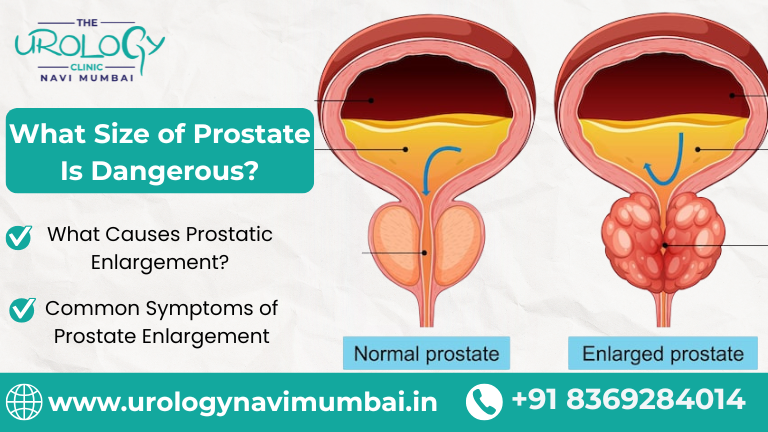
What Size of Prostate Is Dangerous?
What Size of Prostate Is Dangerous? Book An Apppointment The prostate is a small gland in men, usually the size of a walnut, but it plays a very big role in health. It helps make the fluid that mixes with sperm to form semen, which is important for fertility. But sometimes, this gland grows larger than normal. A small increase in size is natural with age, but too much growth can cause serious problems. So, the big question is: what size of prostate is dangerous? Doctors often measure the prostate in cc (cubic centimeters). The normal size of prostate in cc for younger men is about 20–30 cc. If the prostate grows beyond 40–50 cc, it is considered enlarged. Once it crosses 80–100 cc, it may cause dangerous symptoms, like trouble passing urine, infections, or kidney problems. Understanding prostate size, normal limits, and when to seek help can protect men’s health. The Prostate Gland and Its Role in Men’s Health The prostate sits just below the bladder and surrounds the urethra, the tube that carries urine and semen out of the body. Its main function is to produce fluid that keeps sperm healthy. A healthy prostate is important not just for fertility but also for comfortable urination. That’s why knowing what size of prostate is dangerous helps men act early if problems start. Normal Prostate Size Doctors measure prostate size using tests like ultrasound or MRI. Normally, the prostate weighs about 20–30 grams and has a volume of 20–30 cc. Normal Prostate Measurements Length: 3–4 cm Width: 4–5 cm Thickness: 2–3 cm Volume: 20–30 cc (normal size of prostate in cc) As men age, the prostate grows slowly. By the age of 60, a volume of around 30–40 cc may still be normal. Prostate Size Chart by Age A prostate size chart by age helps doctors and patients understand what is normal at different stages of life. Age Group Normal Size (cc) What Doctors Consider Enlarged 20–30 yrs 20–30 cc Above 35 cc 40–50 yrs 25–35 cc Above 40 cc 60–70 yrs 30–40 cc Above 50 cc 70+ yrs 35–45 cc Above 60 cc This chart shows that some growth is natural with age. But when it goes too far, it raises the question: what size of prostate is dangerous? What Is Considered an Enlarged Prostate? An enlarged prostate is also called Benign Prostatic Hyperplasia (BPH). It is not cancer, but it can still cause problems. Enlarged Prostate Measurements Normal size of prostate: 20–30 cc Mild enlargement: 30–40 cc Moderate enlargement: 40–80 cc Severe enlargement (dangerous): Above 80–100 cc So, how big is too big? For most men, once the prostate reaches 80–100 cc, it becomes dangerous because it can block urine flow and damage the kidneys. If you experience urinary symptoms or discomfort, early prostate treatment from an experienced urologist can help prevent complications and improve quality of life. What Causes Prostatic Enlargement? The exact cause of prostate growth is not fully known, but doctors believe these factors play a role: Age: Most common in men over 50. Hormonal changes: Testosterone and other hormones affect growth. Lifestyle: Poor diet, obesity, and lack of exercise can worsen enlargement. Genetics: Family history increases the risk. Common Symptoms of Prostate Enlargement When the prostate grows too large, it squeezes the urethra, causing: Weak urine flow Difficulty starting urination Frequent urination, especially at night Feeling bladder is not empty Dribbling after urination In severe cases, inability to pass urine These symptoms often make men ask their doctor, what size of prostate is dangerous for me? What Happens if an Enlarged Prostate Is Left Untreated? Ignoring prostate enlargement can lead to: Bladder damage Urinary infections Kidney damage Bladder stones Complete urinary blockage (medical emergency) That is why understanding normal size of prostate and when it becomes dangerous is very important. Treatment Options for Enlarged Prostate Treatment depends on how large the prostate is and the symptoms. Medicines Doctors may give medicines to relax muscles or shrink the prostate. Minimally Invasive Treatments PAE (Prostate Artery Embolization): Blocks blood flow to shrink the prostate. Laser surgery: Removes extra tissue. Surgery For very large prostates (above 100 cc), surgery may be the best choice. Why More Men Are Choosing PAE Treatment for BPH PAE is becoming popular because: No large cuts are needed. Shorter hospital stay. Faster recovery. Safe for men who cannot undergo big surgery. This option is helping many men with enlarged prostates live better lives. Recommendations for Enlarged Prostate Diet Food plays an important role in prostate health. Doctors often warn men about the ten worst foods for prostate health, such as: Red meat Processed foods Fried foods Too much dairy Spicy food Sugary drinks Excess alcohol Caffeine High-salt snacks Fast food Instead, eat: Tomatoes (rich in lycopene) Green vegetables Fish with omega-3 Nuts and seeds Whole grains A good diet helps control prostate growth and keeps symptoms under check. What Is the Recovery Time After Enlarged Prostate Surgery? Recovery depends on the type of treatment: PAE or laser surgery: 1–2 weeks Traditional surgery: 4–6 weeks During recovery, doctors advise drinking more water, avoiding heavy lifting, and following a healthy diet. Why Choose The Urology Clinic Navi Mumbai? When it comes to prostate health, you need a trusted doctor who listens and cares. At The Urology Clinic Navi Mumbai, led by Dr. Ninad Tamboli, patients get expert guidance and modern treatment options. Dr. Tamboli has wide experience in treating enlarged prostate, kidney stones, and other urology problems. The clinic uses advanced scans and minimally invasive treatments to ensure quick recovery and comfort. Most importantly, patients are treated with respect and personal attention. This makes The Urology Clinic Navi Mumbai a trusted choice for families across the city. Conclusion The prostate is small but very important for men’s health. Knowing what size of prostate is dangerous can prevent serious problems. While the normal size is about 20–30 cc, a prostate larger than 80–100 cc can block urine flow and harm the bladder or kidneys.

पुरुष बांझपन (Male Infertility in Hindi): कारण, लक्षण और उपचार
पुरुष बांझपन (Male Infertility in Hindi): कारण, लक्षण और उपचार Book An Apppointment पुरुष बांझपन क्या है? बांझपन की परिभाषा पुरुष बांझपन एक ऐसी स्थिति है जो पुरुषों को प्रभावित करती है। यह उनकी प्रजनन प्रणाली की महिला को गर्भवती करने की क्षमता में बाधा उत्पन्न करता है। पुरुषों की प्रजनन क्षमता किस बात पर निर्भर करती है? पुरुषों की प्रजनन क्षमता इस बात पर निर्भर करती है कि उनके शुक्राणु कितने स्वस्थ, सक्रिय और पर्याप्त संख्या में मौजूद हैं। जब पुरुष का शुक्राणु महिला के अंडाणु तक पहुँचकर उसे निषेचित करता है, तभी गर्भधारण की प्रक्रिया शुरू होती है। सामान्यत: वीर्य के प्रत्येक मिलीलीटर में 20 मिलियन या उससे अधिक शुक्राणु होना आवश्यक माना जाता है। इन शुक्राणुओं में इतनी शक्ति और गतिशीलता होनी चाहिए कि वे महिला की फैलोपियन ट्यूब तक पहुँचकर अंडाणु को निषेचित कर सकें। इसके अलावा, शुक्राणुओं की गुणवत्ता यानी उनका सही आकार और संरचना भी प्रजनन क्षमता में अहम भूमिका निभाती है। अगर शुक्राणु संख्या पर्याप्त हो लेकिन वे असामान्य आकार के हों या उनकी गति कमजोर हो, तो गर्भधारण में कठिनाई आ सकती है। इसी तरह हार्मोन का संतुलन, विशेषकर टेस्टोस्टेरोन, पुरुषों की प्रजनन क्षमता बनाए रखने में बहुत महत्वपूर्ण होता है। जीवनशैली और स्वास्थ्य की स्थिति भी प्रजनन क्षमता को प्रभावित करती है। धूम्रपान, अत्यधिक शराब का सेवन, तनाव, मोटापा और असंतुलित आहार शुक्राणुओं की संख्या और गुणवत्ता दोनों को कम कर सकते हैं। दूसरी ओर, संतुलित आहार, नियमित व्यायाम और स्वस्थ आदतें पुरुषों की प्रजनन क्षमता को मजबूत बनाए रखती हैं। पुरुष बांझपन के प्रमुख कारण कई जैविक और पर्यावरणीय कारक पुरुष बांझपन का कारण बन सकते हैं। इनमें शामिल हैं: शुक्राणुओं की संख्या और गुणवत्ता में कमी शुक्राणु संबंधी समस्याएं, जिनमें विकृत शुक्राणु, कम शुक्राणु संख्या (ओलिगोस्पर्मिया) और आपके वीर्य में शुक्राणु की अनुपस्थिति (एज़ोस्पर्मिया) शामिल हैं। हार्मोनल असंतुलन हार्मोनल विकार जो आपके हाइपोथैलेमस या पिट्यूटरी ग्रंथियों को प्रभावित करते हैं। वंशानुगत या जन्मजात समस्याएं संक्रमण, जिसमें एपिडीडिमाइटिस , ऑर्काइटिस और यौन संचारित संक्रमण (एसटीआई) शामिल हैं, जिसमें गोनोरिया या एचआईवी शामिल हैं । जीवनशैली और बाहरी कारक (जैसे धूम्रपान, शराब, तनाव आदि) कैंसर उपचार, जिसमें कीमोथेरेपी , विकिरण चिकित्सा या आपके अंडकोष को शल्य चिकित्सा द्वारा हटाना ( ऑर्किएक्टोमी ) शामिल है। आपके अंडकोष में सूजी हुई नसें (वैरिकोसील्स)। पुरुषों में बांझपन के क्या लक्षण हैं? सामान्य यौन समस्याएं कम सेक्स ड्राइव तब होती है जब पुरुष को लगता है कि अब उसे सेक्स की कोई इच्छा नहीं रही। उसे अब सेक्स करने का मन नहीं करता। शरीर में हार्मोनल बदलाव के संकेत शरीर और चेहरे पर बालों का झड़ना हार्मोनल असंतुलन के कारण होता है। गाइनेकोमास्टिया: पुरुषों में स्तन वृद्धि अंडकोष में दर्द या सूजन अंडकोष क्षेत्र में किसी भी प्रकार का दर्द। यदि आपको कोई गांठ या सूजन दिखाई दे। बांझपन कैसे पता करें? शारीरिक परीक्षण बांझपन की पहचान के लिए डॉक्टर सबसे पहले शारीरिक परीक्षण करते हैं। इस जाँच में आपके जननांगों को देखा जाता है और आपसे उन वंशानुगत बीमारियों, पुरानी स्वास्थ्य समस्याओं, चोटों या सर्जरी के बारे में पूछा जाता है, जो प्रजनन क्षमता को प्रभावित कर सकती हैं। इसके साथ ही, आपका डॉक्टर आपकी यौन आदतों और किशोरावस्था में हुए यौन विकास से जुड़ी जानकारी भी ले सकता है। वीर्य विश्लेषण (Semen Analysis) वीर्य के नमूने कई अलग-अलग तरीकों से प्राप्त किए जा सकते हैं। आप डॉक्टर के क्लिनिक में हस्तमैथुन करके और एक विशेष कंटेनर में स्खलन करके नमूना प्राप्त कर सकते हैं। धार्मिक या सांस्कृतिक मान्यताओं के कारण, कुछ पुरुष वीर्य संग्रह के लिए एक वैकल्पिक तरीका पसंद करते हैं। ऐसे मामलों में, संभोग के दौरान एक विशेष कंडोम का उपयोग करके वीर्य एकत्र किया जा सकता है। अल्ट्रासाउंड और इमेजिंग टेस्ट इनमें गैर-आक्रामक परीक्षण, जैसे अल्ट्रासाउंड या चुंबकीय अनुनाद इमेजिंग (एमआरआई), या आक्रामक परीक्षण जैसे वेनोग्राम शामिल हो सकते हैं । हार्मोन और रक्त परीक्षण पिट्यूटरी ग्रंथि, हाइपोथैलेमस और वृषण द्वारा बनाए गए हार्मोन पुरुषों के यौन विकास और शुक्राणु उत्पादन में अहम भूमिका निभाते हैं। अगर इन हार्मोनों या शरीर की अन्य ग्रंथियों और अंगों में कोई गड़बड़ी हो जाए, तो यह बांझपन का कारण बन सकती है। इस स्थिति को समझने के लिए रक्त परीक्षण किया जाता है, जिसमें टेस्टोस्टेरोन और अन्य हार्मोन के स्तर की जाँच की जाती है। अल्ट्रासाउंड और इमेजिंग टेस्ट इनमें गैर-आक्रामक परीक्षण, जैसे अल्ट्रासाउंड या चुंबकीय अनुनाद इमेजिंग (एमआरआई), या आक्रामक परीक्षण जैसे वेनोग्राम शामिल हो सकते हैं । पुरुष बांझपन के उपचार विकल्प दवाइयों द्वारा इलाज एंटीबायोटिक उपचार प्रजनन पथ के संक्रमण को ठीक कर सकता है, लेकिन इससे हमेशा प्रजनन क्षमता बहाल नहीं होती। हार्मोन थेरेपी हार्मोन थेरेपी आपके हार्मोन के स्तर को नियंत्रित कर सकती है जो बहुत ज़्यादा या बहुत कम हो और आपके शुक्राणुओं की गुणवत्ता को प्रभावित कर सकता है। सर्जरी (जैसे वैरिकोसेल सुधार) पुरुष नसबंदी उलटाव: यदि आपनेशुक्राणु को वीर्य में प्रवेश करने से रोकने के लिए पुरुष नसबंदी करवाई थी, तो पुरुष नसबंदी उलटाव आपके शुक्रवाहिकाओं को फिर से जोड़ता है ताकि गर्भावस्था फिर से संभव हो सके। वासोएपिडीडिमोस्टॉमी: यह सर्जरी आपके एपिडीडिमिस (कुंडलित ट्यूब जो आपके अंडकोष के पास स्थित होती है जहां शुक्राणु परिपक्व होते हैं) में रुकावट को हटाती है जो शुक्राणु को आपके वीर्य में प्रवेश करने से रोकती है। वैरिकोसेलेक्टोमी: वैरिकोसेले एक ऐसी स्थिति है जिसमें अंडकोष में वैरिकाज़ नसों के कारण अंडकोष में रक्त जमा हो जाता है। इसका शुक्राणु की गुणवत्ता पर नकारात्मक प्रभाव पड़ सकता है। सर्जरी से वैरिकाज़ नसों को हटाया जाता है, और इससे कुछ मामलों में गर्भधारण की संभावना बढ़ सकती है। सहायक प्रजनन तकनीक (IVF, ICSI आदि) इंट्रासाइटोप्लाज़्मिक स्पर्म इंजेक्शन (ICSI): इस तकनीक में डॉक्टर सीधे एक स्वस्थ शुक्राणु को अंडाणु के अंदर इंजेक्ट करते हैं। यह तरीका तब इस्तेमाल किया जाता है जब शुक्राणुओं की संख्या बहुत कम हो या उनकी गति कमजोर हो। इन विट्रो फर्टिलाइजेशन (IVF): इस प्रक्रिया में महिला को ऐसी दवाइयाँ दी जाती हैं, जिनसे उसके अंडाशय में कई अंडे परिपक्व हो जाते हैं। जब अंडे तैयार हो जाते हैं, तो डॉक्टर उन्हें निकालकर प्रयोगशाला में शुक्राणुओं के साथ मिलाते हैं। निषेचन के बाद बने भ्रूण को चुनकर महिला के गर्भाशय में स्थानांतरित किया जाता है, जिससे गर्भधारण

CUE Test – Complete Urine Examination, Purpose & Procedure | Urology Navi Mumbai
What is a CUE Test? – Understanding Complete Urine Examination Book An Apppointment The CUE test, also known as Complete Urine Examination (CUE), is a fundamental diagnostic tool used to assess overall urinary tract health. It provides a broad insight into kidney function, urinary tract infections (UTIs), diabetes, and other systemic conditions. This test includes Urine Routine and Microscopy, where various physical, chemical, and microscopic properties of the urine are examined. At Urology Clinic Navi Mumbai, led by Dr. Ninad Tamboli, a renowned urologist in Navi Mumbai, CUE testing is performed with high precision to guide accurate diagnosis and treatment. What Does a CUE Test Mean? You should consider a CUE test if you are experiencing: Burning sensation or pain during urination Foul-smelling or cloudy urine Blood in urine Unexplained fever or chills Frequent urge to urinate Lower abdominal or back pain People with chronic kidney disease, diabetes, or high blood pressure may be advised to undergo regular CUE tests for monitoring. When Should You Get a CUE Test? You should consider a CUE test if you are experiencing: Burning sensation or pain during urination Foul-smelling or cloudy urine Blood in urine Unexplained fever or chills Frequent urge to urinate Lower abdominal or back pain People with chronic kidney disease, diabetes, or high blood pressure may be advised to undergo regular CUE tests for monitoring How is a CUE Test Performed? Step-by-Step Procedure Sample Collection A midstream urine sample is collected in a sterile container. The first few drops are discarded to avoid contamination. Physical Examination Checks for urine color, clarity, and odor. Chemical Examination Measures parameters such as pH, glucose, protein, ketones, nitrites, bilirubin using reagent strips. Microscopic Examination A drop of centrifuged urine is examined under a microscope for pus cells, red blood cells (RBCs), epithelial cells, bacteria, or crystals. What is Included in a CUE Test? Physical Examination Color Clarity Odor Chemical Examination pH Protein Glucose Ketones Nitrites Urobilinogen Bilirubin Leukocyte esterase Specific Gravity Microscopy RBCs (Red Blood Cells) WBCs (White Blood Cells / Pus Cells) Casts Crystals Epithelial cells Bacteria or Yeast What Can Be Detected in a CUE Test? Infections – UTIs, kidney infections Kidney Diseases – Proteinuria, nephritis Liver Disorders – Presence of bilirubin Diabetes – Sugar or ketones in urine Hematuria – Presence of blood Dehydration – Altered specific gravity Kidney Stones – Crystals or hematuria How to Prepare for a CUE Test? Basic Preparation Guidelines Drink enough water to produce a fresh sample Avoid vigorous exercise before the test Inform the doctor of any medications or supplements Avoid sample contamination by cleaning the genital area before collecting No special fasting is typically required. Is Fasting Required Before a CUE Test? No, fasting is not required before undergoing a CUE test. However, it is advised to avoid food that could discolor the urine (e.g., beetroot) or alter its pH temporarily. Can I Collect the Urine Sample at Home? Yes, but only if advised. The container should be sterile, and the sample must be delivered to the lab within 1 hour. Improper handling can affect accuracy. At Urology Clinic Navi Mumbai, we recommend in-clinic collection for best results. Can Children or Infants Undergo CUE Test? Yes. CUE tests are safe for all age groups, including infants and children. It is often used to diagnose UTIs or monitor kidney function in pediatric patients. What are the 3 Types of Urine Testing? Urine Routine and Microscopy (CUE) – Broad screening test Urine Culture – Detects infection-causing bacteria 24-Hour Urine Test – Measures kidney function and protein levels CUE test is the first-line, most commonly advised test. What is the Normal Range of Pus Cells in Urine? 0–5 pus cells/HPF (High Power Field) is considered normal. A count above 5 usually indicates infection or inflammation. A detailed report will be interpreted by Dr. Ninad Tamboli, who can guide further investigations or treatment if needed. Precautions Before and During the Test (CUE Test Safety Guidelines} Ensure the sample is midstream and not the first few drops Clean the genital area properly Use a sterile container Submit the sample within the advised time These steps ensure accurate diagnosis and avoid misleading results. Why Choose Urology Clinic Navi Mumbai for Your CUE Test? At Urology Clinic Navi Mumbai, we ensure: Accurate and hygienic sample collection Fast and reliable lab reports Expert diagnosis by Dr. Ninad Tamboli, a trusted name in urology Follow-up care and treatment planning Patient-first care in a state-of-the-art facility If you suspect urinary problems, book your appointment today and get a complete urine examination done under professional care. Frequently Asked Questions (FAQs) About CUE Test Is CUE Test painful? No. It is a non-invasive, painless test involving only urine sample collection. Can menstruating women undergo CUE test? It is recommended to avoid the test during menstruation unless urgent. Blood contamination may alter results. How long does it take to get CUE test results? Usually, within 24 hours. No. It is a non-invasive, painless test involving only urine sample collection. It is recommended to avoid the test during menstruation unless urgent. Blood contamination may alter results. Usually, within 24 hours. Conclusion: Monitor Your Urinary Health with CUE Test The CUE test is a crucial diagnostic step to assess kidney health, detect infections, and understand systemic diseases. Timely testing, accurate diagnosis, and expert care are vital for urinary health. Visit Urology Clinic Navi Mumbai, consult Dr. Ninad Tamboli, and ensure your urinary tract is in excellent condition. Free Consultation Book Now Book An Apppointment
Urine Formation – Steps, Physiology & Mechanism Explained | Urology Clinic
Urine Formation – Complete Process, Steps & Physiology Explained Book An Apppointment The human body is a complex machine with numerous processes that work in tandem to maintain internal balance. One such vital process is urine formation, which helps filter blood, eliminate waste, and regulate bodily fluids. In this comprehensive guide, we break down the complete mechanism of urine formation, the organs involved, and the physiological importance of each step. Introduction to Urine Formation Urine formation is the physiological process by which the kidneys filter blood to produce urine, a fluid containing metabolic waste products, excess salts, and water. This process is essential for maintaining electrolyte balance, pH levels, and blood pressure. Without efficient urine formation, toxic substances would build up in the body, leading to serious health complications. Kidney Structure and Physiology Involved in Urine Formation The Nephron: Functional Unit of the Kidney The kidneys are composed of millions of nephrons, each responsible for producing urine. Each nephron includes: A glomerulus for filtration A renal tubule (proximal tubule, Henle loop, and distal tubule) A collecting duct Supporting Structures Renal cortex: Contains glomeruli and initial segments of tubules The renal medulla contains the loop of Henle and the collecting ducts. Renal pelvis: Funnel-like structure that collects urine and sends it to the ureters Mechanism of Urine Formation – Key Steps Urine formation occurs in three primary stages: Step 1: Glomerular Filtration This is the initial stage, where blood plasma is filtered through the glomerulus into the Bowman’s capsule. This filtration method is based on size and pressure. Important Terms: Glomerular Filtration Rate (GFR): The volume of filtrate formed per minute Net Filtration Pressure (NFP): Pressure gradient that drives filtration The filtrate contains water, electrolytes, glucose, amino acids, and waste products like urea and creatinine. Step 2: Tubular Reabsorption As the filtrate passes through the renal tubules, important substances are reabsorbed back into the bloodstream: Proximal tubule: Glucose, sodium, chloride, and water Loop of Henle: Concentration of urine via water and salt reabsorption Distal tubule: fine-tuning the electrolyte and pH balance Step 3: Tubular Secretion This step removes additional waste and toxins: Hydrogen ions (H+) Potassium ions (K+) Creatinine and drugs Secretion occurs mainly in the distal tubule and collecting duct to maintain acid-base balance and blood composition. Additional Processes Supporting Urine Formation Loop of Henle and Urine Concentration The descending limb is permeable to water, while the ascending limb actively transports salts. This countercurrent system helps in concentrating urine. Collecting Ducts Final adjustments to urine concentration are made here, regulated by hormones like ADH. Hormonal Regulation Antidiuretic Hormone (ADH): Increases water reabsorption to reduce urine output Aldosterone increases salt reabsorption, which affects water retention and blood pressure. Transport and Elimination of Urine From Kidney to Bladder Urine moves from the renal pelvis to the ureters, which then transport it to the bladder. This transport is facilitated by peristaltic muscle movements. Urination or Micturition When the bladder is full, stretch receptors trigger the micturition reflex, prompting urination through the urethra. Conditions Affecting Urine Formation Dehydration Leads to higher ADH release, reducing urine output and concentrating it. Kidney Failure When the nephrons are damaged, filtration drops significantly, leading to waste accumulation and electrolyte imbalance. Medications and Diseases Diuretics increase urine output Diabetes affects glucose reabsorption, leading to glucose in urine Hypertension damages glomerular capillaries, reducing filtration Diagnostic Importance of Understanding Urine Formation Understanding the mechanism helps in diagnosing: Urinary Tract Infections (UTIs) Chronic Kidney Disease (CKD) Acute Renal Failure Glomerulonephritis Common diagnostic tests include: Urinalysis Serum creatinine and BUN eGFR (Estimated Glomerular Filtration Rate) Ultrasound and imaging When to See a Urologist You should consult a urologist like Dr. Ninad Tamboli at The Urology Clinic Navi Mumbai if you experience: Foamy or cloudy urine Burning sensation while urinating Blood in urine Changes in urination frequency or volume Early diagnosis can prevent chronic kidney complications and improve treatment outcomes. Why Choose The Urology Clinic Navi Mumbai? Expert Consultation: Led by Dr. Ninad Tamboli, a renowned urologist and kidney care specialist Advanced Testing: State-of-the-art diagnostics like urinalysis, eGFR, ultrasound Comprehensive Kidney Care: Diagnosis, treatment, and preventive care for all urinary disorders Personalized Attention: Patient-first approach with ethical and transparent treatment protocols Convenient Access: Easy appointments, online consultations, and affordable care Conclusion Urine formation is a vital process for filtering waste, regulating blood pressure, and maintaining fluid balance. It involves coordinated actions between nephrons, hormones, and various parts of the kidney. An understanding of this mechanism is crucial for recognizing and addressing urinary and renal disorders in time. FAQs – Frequently Asked Questions What are the three major processes in urine formation? Glomerular filtration Tubular reabsorption Tubular secretion How does ADH affect urine formation? ADH increases water reabsorption in the collecting ducts, leading to reduced urine volume. What does a low GFR indicate? A low GFR can indicate kidney disease or impaired kidney function. Can dehydration affect urine formation? Yes. Dehydration triggers the release of ADH, reducing urine volume and increasing concentration. What causes cloudy or foamy urine? It could indicate elevated protein levels, infection, or kidney disease. What role does aldosterone play? Aldosterone promotes sodium reabsorption and potassium secretion, affecting fluid balance. How is urine different from plasma? Urine contains waste items such as urea, while plasma contains nutrients and proteins. Glomerular filtration Tubular reabsorption Tubular secretion ADH increases water reabsorption in the collecting ducts, leading to reduced urine volume. A low GFR can indicate kidney disease or impaired kidney function. Yes. Dehydration triggers the release of ADH, reducing urine volume and increasing concentration. It could indicate elevated protein levels, infection, or kidney disease. Aldosterone promotes sodium reabsorption and potassium secretion, affecting fluid balance. Urine contains waste items such as urea, while plasma contains nutrients and proteins. Free Consultation Book Now Book An Apppointment

PSA Test Price in Mumbai | Cost, Procedure & Results
PSA Test Price Guide: Complete Information on Cost, Procedure, and Results in Mumbai Book An Apppointment Prostate cancer ranks as one of the most prevalent cancers in men worldwide, with its occurrence steadily increasing in India. PSA test prices usually vary from ₹500 to ₹2,500, based on the medical facility and the specific type of test performed. One of the most effective tools for early detection is the PSA test, or Prostate-Specific Antigen test-a simple blood test that can help spot prostate issues before symptoms even begin. In Mumbai, where access to quality healthcare varies widely across public and private sectors, understanding the cost of the PSA test is essential. Whether you’re looking for affordable diagnostics or advanced urological care, knowing what to expect helps you make informed decisions. This guide offers a complete overview of the PSA test price in Mumbai, its procedure, benefits, and why The Urology Clinic Navi Mumbai, under the expert care of Dr. Ninad Tamboli, is a trusted choice for comprehensive prostate health management. Understanding PSA Test – What You Need to Know What is a PSA Test? A PSA (Prostate-Specific Antigen) test is a simple blood test used to measure the amount of PSA-a protein made by cells in the prostate gland-in a man’s bloodstream. While some PSA is naturally present, higher-than-normal levels may signal potential prostate issues such as prostate enlargement (BPH), inflammation (prostatitis), or even prostate cancer. Purpose and Benefits of PSA Testing Early detection of prostate cancer: helps identify potential issues before any symptoms show up. Monitoring of known prostate conditions: Track disease progression or response to treatment. Screening tool for prostate health: Particularly important for men over 50 or those with a family history. Preventive approach: Early medical intervention helps prevent complications and promotes better health outcomes Key Benefits of Regular PSA Screening Helps identify cancer in its earliest and most treatable stage Provides data to assist in decision-making for treatment. Offers reassurance to men with normal PSA levels. Helps monitor progression of non-cancerous prostate conditions. Understanding PSA Test – What You Need to Know PSA Test Cost in Mumbai – A Complete Pricing Overview In Mumbai, PSA test prices generally fall between ₹500 and ₹2,500. Prices may vary based on the type of facility, the inclusion of related tests (like Free PSA), and whether the sample is collected at home or in a clinic. PSA Test Cost Breakdown Basic Total PSA Test: ₹500–₹1,000 Free PSA Test (Add-On): ₹700–₹1,500 Combo Packages (Total + Free PSA): ₹1,200–₹2,500 Home Sample Collection (if available): ₹100–₹300 additional PSA Test Charges at Urology Clinic Navi Mumbai Transparent pricing with no hidden charges Standard PSA test starting from ₹800 Combo packages (with Free PSA) available Insurance billing assistance and affordable pricing Who Should Get a PSA Test? Age-Based PSA Testing Guidelines Age 50 and above: Routine screening advised. High-risk groups (age 45+): Especially those with a family history or African ancestry. Age 40+: In case of multiple risk factors. Symptoms That Indicate Need for PSA Testing Difficulty in urinating Frequent urination at night Blood in urine or semen Pain in pelvic area or lower back Slow or weak urinary stream Risk Factors for Prostate Problems Increasing age Family history of prostate conditions Sedentary lifestyle and obesity Exposure to chemicals or toxins PSA Test Procedure and What to Expect Pre-Test Preparations No fasting required Avoid ejaculation for 48 hours prior Inform your doctor about medications like finasteride or dutasteride Refrain from biking or heavy exercise a day before the test Important Pre-Test Guidelines Ensure doctor is aware of any recent urological exams Stay calm before the test to prevent stress from affecting the results. Avoid urinary infections; wait until resolved before testing PSA Test Procedure Steps A small blood sample is drawn from a vein in your arm. The procedure takes about 5–10 minutes A blood sample is analyzed in the lab to determine PSA levels. What Happens During the Test Arm is cleaned and prepped Needle inserted into vein Sample labeled and sent for testing Results usually available within 24–48 hours Post-Test Care and Considerations Resume daily activities immediately Avoid interpreting results without doctor consultation Schedule follow-up if needed based on results PSA Test Normal Range and Result Interpretation Understanding PSA Levels by Age Age Group Normal PSA Range (ng/mL) 40–49 0–2.5 50–59 0–3.5 60–69 0–4.5 70+ 0–6.5 PSA Level Interpretation Guide 0–2.5 ng/mL: Normal 2.6–4.0 ng/mL: Slightly elevated 4.1–10.0 ng/mL: Moderately high (Further testing needed) Above 10.0 ng/mL: High risk (Likely requires biopsy or imaging) Factors Affecting PSA Results Prostatitis or infection Recent ejaculation Prostate manipulation (e.g., rectal exam) Certain medications When PSA Levels Indicate Concern Elevated PSA: What It Means May indicate prostate inflammation or cancer Requires correlation with symptoms and physical exam Could prompt further diagnostic testing PSA Levels and Prostate Cancer Risk Risk increases with rising PSA levels Free PSA helps differentiate between prostate cancer and benign prostatic hyperplasia (BPH). PSA velocity (rate of increase over time) is critical Follow-up Tests for Abnormal PSA Digital Rectal Exam (DRE) Prostate MRI Transrectal Ultrasound (TRUS) Biopsy if needed PSA Trends and Monitoring Yearly testing helps track PSA changes Changes over time can matter more than just one reading. Helps assess treatment effectiveness Types of PSA Tests Available Total PSA Test Most commonly used for general screening Best for initial baseline measurement Free PSA Test Recommended if total PSA is borderline Helps reduce unnecessary biopsies Free PSA to Total PSA Ratio Lower ratios indicate higher cancer risk Helps provide clearer diagnosis when PSA levels fall within borderline or uncertain ranges. Advanced PSA Testing Options PSA Density refers to the concentration of prostate-specific antigen in the blood, adjusted based on the size or volume of the prostate gland 4Kscore Test: Measures four prostate biomarkers Prostate Health Index (PHI) integrates various biomarkers to offer a more precise assessment of prostate health. Home Sample Collection and Convenience Options Home Collection Services Available in Navi Mumbai through Urology Clinic Ensures privacy and comfort Includes safe, sterile sample collection

Best Urine Infection Specialists in Navi Mumbai | Urology Clinic
Complete Guide to Urine Infection Specialists: When and Why to Consult a Urologist Book An Apppointment Urinary issues can disrupt your daily life and lead to serious complications if left untreated. Whether you’re dealing with recurrent urinary tract infections (UTIs) or more complex bladder or kidney problems, the right care begins with a urine infection specialist-also known as a urologist. In this comprehensive guide, you’ll learn when to consult a urologist, how they can help, and why The Urology Clinic Navi Mumbai, led by Dr. Ninad Tamboli is a reliable and well-regarded expert in urological care. Understanding Urine Infection Specialists (Urologists) What is a Urine Infection Specialist? A urine infection specialist, also known as a urologist, is a medical professional who focuses on diagnosing and treating conditions related to the urinary system and male reproductive organs. They treat both men and women and even specialize in pediatric urology for children. How to Become a Qualified Urologist To become a certified urologist in India: One must first complete an MBBS degree Followed by MS in General Surgery Then complete a super-specialty degree such as MCh or DNB in Urology to gain advanced training in the field. This extensive training ensures they are equipped to handle complex urinary and reproductive issues with confidence and expertise. How to Become a Qualified Urologist To become a certified urologist in India: One must first complete an MBBS degree Followed by MS in General Surgery Then complete a super-specialty degree such as MCh or DNB in Urology to gain advanced training in the field. This extensive training ensures they are equipped to handle complex urinary and reproductive issues with confidence and expertise. When to See a Urologist vs. Nephrologist Urologists specialize in managing urinary tract problems like urinary tract infections (UTIs), bladder disorders, kidney stones, and male reproductive health issues including infertility. Nephrologists focus on diagnosing and treating kidney-related conditions such as chronic kidney disease, managing dialysis, and correcting electrolyte imbalances. Conditions Treated by Urine Infection Specialists Urinary Tract Infections (UTIs) Types of UTIs Treated Lower urinary tract infections typically involve the bladder and urethra and are more frequently observed in women. Upper UTIs: Involve kidneys (can be severe if untreated). Recurrent UTIs refer to repeated urinary tract infections occurring within a short timeframe. Asymptomatic Bacteriuria: Presence of bacteria without symptoms-especially critical during pregnancy. Other Urological Conditions Besides UTIs, urine infection specialists also treat: Kidney stones Bladder disorders Incontinence (loss of bladder control) Benign Prostatic Hyperplasia (BPH) Prostate and bladder cancer Male infertility and sexual dysfunction Organs Treated by Urine Infection Specialists Male Urological System Urologists specialize in diagnosing and treating conditions related to the prostate, bladder, urethra, kidneys, testicles, and penis. Female Urological System Female patients are treated for bladder infections, pelvic organ prolapse, interstitial cystitis, incontinence, and UTIs. Pediatric Urological Conditions Urologists who specialize in pediatrics manage: Bedwetting (nocturnal enuresis) Undescended testicles Urinary reflux Congenital abnormalities When Should You Consult a Urine Infection Specialist? Common Symptoms Requiring Urological Consultation Symptoms in Men Pain or burning during urination Blood in urine or semen Difficulty urinating Testicular or pelvic pain Symptoms in Women Cloudy or foul-smelling urine Pelvic discomfort Frequent and urgent urination Pain during intercourse Symptoms in Children Frequent bedwetting Crying while urinating Fever with unknown cause Daytime accidents When to See a Urologist vs. Primary Care Doctor See a urologist if: Your symptoms persist after primary care treatment. You have recurrent UTIs. You experience kidney pain or bladder control issues. There’s blood in your urine. What Happens During a Visit to a Urinary Tract Infection (UTI) Specialist? Initial Consultation Process Your first appointment will involve: A thorough review of your health history and current symptoms will be conducted during the consultation. Physical examination Recommendation for relevant diagnostic tests Diagnostic Tests and Procedures Advanced Diagnostic Options Urine analysis and culture Ultrasound and CT scans Cystoscopy is a medical test in which doctors use a thin, lighted tube called a cystoscope to examine the inside of the bladder. Urodynamic studies to assess bladder function Does a Urology Exam Hurt? Most tests are non-invasive or minimally invasive. Some may cause slight discomfort, but your urologist will explain everything and make you comfortable throughout. Treatment Approaches by Urine Infection Specialists Medical Management Urologists may prescribe: Antibiotics for UTIs Alpha-blockers for enlarged prostate Hormonal therapy for prostate cancer Surgical Interventions Common Urological Procedures Lithotripsy for kidney stones TURP (Transurethral Resection of the Prostate) Cystectomy for bladder cancer Urethral dilation or reconstruction Preventive Care Strategies Lifestyle changes like hydration and dietary advice Probiotic use for recurrent infections Guidance on sexual hygiene and menopausal care Subspecialty Areas in Urology Pediatric Urology Addresses children’s urinary issues such as bedwetting, birth defects, and testicular issues. Male Reproductive Health Deals with erectile dysfunction, infertility, varicoceles, and vasectomies. Urologic Oncology It involves diagnosing and treating cancers that impact the bladder, kidneys, prostate, and testicles. Stone Disease Management Specialized care for kidney and ureteric stones, including advanced laser surgery. Finding the Right Urine Infection Specialist Best Urine Infection Specialist in Mumbai and Navi Mumbai Dr. Ninad Tamboli at The Urology Clinic Navi Mumbai is one of the city’s most trusted names for UTI diagnosis and treatment. With years of experience, compassionate care, and access to cutting-edge technology, he ensures each patient receives personalized attention. Questions to Ask Your Urologist What is the cause of my symptoms? What tests are necessary? Are there any lifestyle changes I should make? Will I need surgery? What preventive steps can I take? Expert Care at Urology Clinic Navi Mumbai Meet Dr. Ninad Tamboli – Leading Urine Infection Specialist Dr. Ninad Tamboli is an expert urologist known for his patient-centric approach and success in managing complex urinary conditions. He has received recognition for his expertise in recurrent UTI management, prostate care, and kidney stone treatment. Comprehensive Urological Services The Urology Clinic Navi Mumbai offers: UTI testing and treatment Male and female urology Pediatric urology Preventive screening Minimally invasive surgeries Why Choose Urology Clinic Navi Mumbai NABL-accredited labs for precision diagnosis

Urine Culture Test Cost in India – Price, Procedure & Sensitivity Details
Urine Culture Test in India – Cost, Procedure, and Bacterial Sensitivity Demystified Book An Apppointment Urinary Tract Infections (UTIs) are a frequent yet often overlooked medical concern. If not addressed promptly, they can lead to discomfort and serious health complications. A urine culture test plays a crucial role in correctly identifying urinary tract infections (UTIs). It helps detect the specific bacteria causing the infection and assists doctors in selecting the most effective treatment. Introduction to Urine Culture Test A urine culture test is used to detect the presence of bacteria or yeast in the urine, which are often responsible for urinary tract infections (UTIs). Unlike routine urine tests, which examine the physical and chemical properties of urine, a urine culture specifically identifies the organisms causing the infection. This test not only confirms the diagnosis but also helps determine the most effective antibiotics through a sensitivity analysis, ensuring targeted treatment and quicker recovery. When Is a Urine Culture Test Needed? Signs and health conditions that might make this test necessary. Common Symptoms That Indicate a Need for Testing If you’re showing signs of a possible infection, your doctor may recommend a urine culture test to identify the cause. Burning sensation during urination Frequent urge to urinate Cloudy, smelly, or bloody urine Lower abdominal pain Special Cases Where the Test Is Advised Some medical conditions can raise the chances of needing a urine culture test Pregnancy care is essential to avoid health risks for both the mother and the baby. Recurring UTIs: These frequent infections need accurate diagnosis and personalized treatment to prevent complications. Diabetes: To rule out infections caused by high sugar levels. Kidney disorders: To identify and prevent infections that could worsen renal function. Benefits of a Urine Culture Test Why You Should Get This Test Done A urine culture test offers several advantages: Detects specific bacteria causing UTI: Pinpoints the exact organism responsible. Aids in choosing the right antibiotic: Sensitivity results help determine the most effective treatment. Prevents complications: Early detection can stop the infection from spreading to the kidneys. Simple and non-invasive The test is easy to complete and causes no pain. Urine Culture Test Cost in India How Much Does the Test Typically Cost? In India, the cost of a urine culture test generally ranges from ₹400 to ₹1200, depending on the city and the diagnostic center you choose. The price depends on factors such as the lab’s location, the inclusion of sensitivity analysis, and the urgency of results. Urine Culture Test Price in Major Cities In India, the cost of a urine culture test generally ranges from ₹400 to ₹1200, depending on the city and the diagnostic center you choose. The price depends on factors such as the lab’s location, the inclusion of sensitivity analysis, and the urgency of results. Delhi, Mumbai, Bengaluru Typical cost: ₹500–₹1200. Pune, Hyderabad, Kolkata Typical cost: ₹400–₹1000. Factors Affecting Urine Culture Test Cost What Influences the Final Price You Pay? The cost of a urine culture test can vary depending on several factors, such as the type of laboratory, location, and any additional services required. Location of the lab or hospital: Urban labs may charge more due to higher operational expenses. Inclusion of sensitivity test often leads to an increase in the overall cost due to the added antibiotic analysis. Emergency testing charges: Urgent reports may incur additional fees. Sample handling and lab equipment: Advanced equipment and processes can add to the cost. Preparation for a Urine Culture Test Do’s and Don’ts Before the Test Proper preparation ensures accurate results: Fasting is not required – feel free to eat and drink as you normally would. Clean catch midstream urine collection: Immunocompromised patients with weaker defenses against bacteria. Inform doctor about current medications: Certain drugs may interfere with results. Avoid antibiotics 24–48 hours before the test: Unless otherwise advised by your doctor. How Is the Urine Culture Test Done? Sample Collection Use a sterile container to avoid contamination. Collect a midstream urine sample to ensure purity. Samples can be collected at the lab or through home collection services Lab Analysis The sample is placed on a culture medium to encourage bacterial growth. It is incubated for 24–48 hours. Growth is examined to identify bacteria and perform sensitivity analysis. Understanding the Urine Culture Test Report Normal Range No growth” after 48 hours suggests the absence of an infection. Presence of bacterial growth: Confirms infection. Brain injury can affect the function of the pituitary gland, leading to problems with the release of antidiuretic hormone (ADH). Sample Report Walkthrough Bacteria type: e.g., E. coli. Count (CFU/ml): Indicates the severity of the infection. Antibiotic sensitivity list: Guides the treatment plan. What is Urine Culture and Sensitivity Test? In-depth Look at C&S Test The Culture and Sensitivity (C&S) Test goes beyond identifying bacteria. It helps identify the most suitable antibiotics, which is especially crucial for treating persistent or resistant urinary tract infections. Components of a C&S Test Culture results: Show bacterial growth. Sensitivity results: Provide a list of effective antibiotics. Who Should Consider a C&S Test? High-Risk and Recurrent Cases Individuals who should prioritize a C&S test include: Frequent UTI sufferers. Elderly individuals prone to infections. Women with abnormal discharge or pain. Immunocompromised patients with weaker defenses against bacteria. Frequently Asked Questions Is fasting required for a urine culture test? No, fasting is not necessary. What does the test detect? It helps identify the bacteria or yeast responsible for a urinary tract infection (UTI). When should the test be done? If therapy fails, UTI symptoms will appear What is the difference between a routine urine test and a urine culture? Routine tests check physical properties; culture tests identify bacteria. How long does it take to get results? Typically 24–48 hours. No, fasting is not necessary. It helps identify the bacteria or yeast responsible for a urinary tract infection (UTI). If therapy fails, UTI symptoms will appear Routine tests check physical properties; culture tests identify bacteria. Typically 24–48 hours. Booking a Urine Culture Test Online Steps and

How Is the Amount of Urine Produced Regulated? | Complete Guide
How Is the Amount of Urine Produced Regulated? Book An Apppointment Urine production is an essential body function that helps maintain fluid and electrolyte balance, remove waste, and support healthy blood pressure regulation. But have you ever wondered how your body decides how much urine to produce? It’s not just about how much water you drink, a complex network of hormones, organs, and feedback systems work silently in the background to regulate this essential process.In this blog, we’ll dive deep into the science behind urine production, the role of antidiuretic hormone (ADH), and what can affect this delicate balance. Whether you’re a health-conscious reader or someone facing urinary issues, understanding this process is the first step toward better urological health. The Science Behind Urine Production The urinary system, a precisely regulated network of organs and hormones, is responsible for producing urine and helping the body maintain internal balance. Organs Involved in Urine Production Kidneys The kidneys are the body’s principal filtration units. Every day, they filter approximately 50 gallons of blood to produce 1 to 2 quarts of urine.They remove waste products, surplus salts, and extra water from the body, converting them into urine. Ureters These are thin, muscular tubes that carry urine from the kidneys down to the bladder. Each kidney has one ureter. Bladder The bladder is a muscle-lined organ that temporarily holds urine, typically storing between 400 to 600 milliliters until it’s time to release it. Urethra This is the final location where urine leaves the body during urination What Is Antidiuretic Hormone (ADH)? ADH, also called vasopressin, is a hormone produced by the hypothalamus and released by the posterior pituitary gland. It controls how much water is reabsorbed in the collecting ducts of the kidneys. When ADH levels are high, more water is reabsorbed, resulting in less urine output. When ADH levels are low, less water is reabsorbed, leading to more dilute urine. This hormone is crucial in controlling the volume and concentration of urine, especially during dehydration or excess fluid intake. Key Hormonal Regulators of Urine Volume Role of ADH in Urine Control ADH causes kidneys to retain water ADH causes the renal tubules to reabsorb more water into the circulation. Less ADH = More Urine Low levels of ADH result in dilute urine, often seen during high water intake or certain medical conditions. More ADH = Less Urine Elevated ADH levels conserve body water during dehydration, blood loss, or low blood pressure. Renin-Angiotensin-Aldosterone System (RAAS) RAAS is a hormonal feedback system that: It controls how much water is reabsorbed in the kidney’s collecting ducts. Aldosterone, a hormone in this system, causes sodium (and water) retention, thereby reducing urine output. It indirectly controls urine production by influencing how much fluid the body retains. How Blood Osmolarity and Volume Affect Urine Higher Blood Concentration → More ADH When blood becomes concentrated (e.g., due to dehydration), osmoreceptors in the brain signal increased ADH secretion. Lower Blood Volume → Reduced Urine Low blood volume such as from bleeding or vomiting triggers mechanisms that conserve water, decreasing urine output. What Disrupts ADH Function? Several health conditions and medications can affect how ADH functions, disrupting normal urine production. Medical Conditions Diabetes Insipidus A condition where the body either doesn’t produce ADH or doesn’t respond to it, leading to excessive urination and dehydration. Brain Trauma Brain injury can affect the function of the pituitary gland, leading to problems with the release of antidiuretic hormone (ADH). Tumors Pituitary tumors may alter the gland’s ability to regulate hormone levels, including ADH. Medications That Impact ADH Diuretics These medications boost urine production by preventing the kidneys from reabsorbing sodium and water. Alcohol Alcohol suppresses ADH release, causing increased urination and dehydration. Certain Antidepressants Some antidepressants can stimulate inappropriate ADH secretion, leading to water retention and low sodium levels. 5 Factors That Influence Urine Output Environmental Conditions Hot Weather → Less Urine In warmer climates, the body loses more fluid through sweat, which leads to decreased urine output. Cold Weather → More Urine In cooler environments, sweating decreases, and the body eliminates more water through urine, a phenomenon known as cold diuresis. Physical Activity Exercise Increases Sweating → Reduces Urine Intense workouts lead to fluid loss via sweat, signaling the body to conserve water, decreasing urine output. Fluid Intake More Water = More Urine Overconsumption of water raises urine output, decreases ADH, and dilutes blood osmolarity. Salt Intake High Salt → Retains Water → Reduced Urine A high-sodium diet causes the body to retain water to maintain electrolyte balance, reducing urine output. Stress & Emotions Stress can alter cortisol and ADH levels, causing temporary changes in urination frequency – often seen in anxiety or high-stress scenarios. How Your Body Maintains Water Balance These medications help the body produce more urine by preventing the kidneys from reabsorbing sodium and water. Osmoreceptors and Feedback Loops Detect Fluid Changes in Blood Osmoreceptors in the hypothalamus detect shifts in blood concentration and send signals to the pituitary gland to adjust ADH levels accordingly. Consistently Low or High Urine Output Producing less than 400 ml of urine per day (oliguria) or more than 3000 ml per day (polyuria) could be a sign of an underlying health condition. If changes in urine volume happen without a clear reason, it’s time to see a doctor. When to See a Urologist Urine output abnormalities may be signs of underlying urological or systemic conditions. Seek a urologist if you notice: Urinating too often (more than 8 times daily) or very rarely can be a cause for concern. Burning sensation, pain, or unusual color or smell Swelling in the legs or face (possible fluid retention) Sudden changes in urine volume without a lifestyle change At The Urology Clinic, Navi Mumbai, our expert urologists offer personalized diagnostics, hormone evaluations, and state-of-the-art treatments to help restore normal urinary function. Final Takeaway Urine production is not a random act, it’s a highly regulated process involving hormonal control, organ function, and lifestyle factors. From antidiuretic hormone (ADH)