

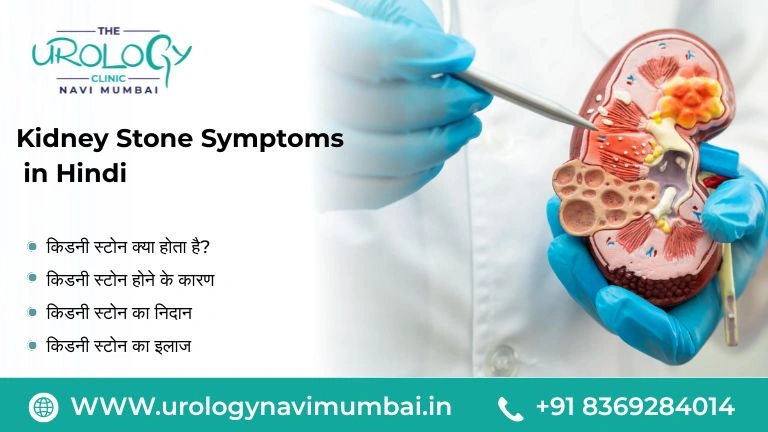
Blogs Book An Apppointment Kidney Stone Symptoms in Hindi किडनी स्टोन क्या होता है? गुर्दे की पथरी, जिसे चिकित्सकीय भाषा में यूरोलिथियासिस कहा जाता है, खनिजों और लवणों आमतौर पर कैल्शियम, ऑक्सालेट और यूरिक एसिड से बने कठोर, क्रिस्टलीय जमाव होते हैं जो गुर्दे के अंदर बनते हैं। किडनी स्टोन बनने की प्रक्रिया यह प्रक्रिया तब शुरू होती है जब मूत्र में क्रिस्टल बनाने वाले पदार्थों की मात्रा, पतला किए जाने की क्षमता से ज़्यादा हो जाती है। कैल्शियम, ऑक्सालेट और यूरिक एसिड जैसे ये पदार्थ आपस में चिपक जाते हैं। जब ये गुच्छे बढ़ते हैं, तो ये दिखाई देने वाले क्रिस्टल बनाते हैं जो या तो प्राकृतिक रूप से निकल जाते हैं या गुर्दे में फंस जाते हैं। किडनी स्टोन के प्रकार गुर्दे की पथरी चार प्रकार की होती है, मुख्यतः कैल्शियम ऑक्सालेट पथरी, जो रोगियों में अक्सर देखी जाती है। गुर्दे की पथरी का निर्माण पथरी के प्रकार पर निर्भर करता है। गुर्दे की पथरी के प्रकारों में शामिल हैं: कैल्शियम स्टोन: गुर्दे की पथरी का सबसे आम प्रकार। आमतौर पर कैल्शियम ऑक्सालेट से बना होता है, हालांकि कुछ कैल्शियम फॉस्फेट से भी बनाया जा सकता है। यूरिक एसिड की पथरी: उच्च प्रोटीन आहार, मोटापे, मधुमेह या गाउट से पीड़ित लोगों में इसके बनने की संभावना अधिक होती है। यह रोग उन लोगों में आम है जो पर्याप्त पानी नहीं पीते। स्ट्रुवाइट पत्थर: यह आमतौर पर यूटीआई की जटिलता के रूप में विकसित होता है। यह तेजी से बढ़ सकता है और बहुत बड़ा हो सकता है। यह महिलाओं में अधिक आम है क्योंकि उनमें यूटीआई होने की संभावना अधिक होती है। मिश्रित पत्थर: कुछ गुर्दे की पथरी में पदार्थों का संयोजन हो सकता है। मिश्रित पथरी उन लोगों में अधिक आम है जिनके गुर्दे में पथरी बार-बार होती है। किडनी स्टोन के लक्षण (Kidney Stone Symptoms in Hindi) कमर या पीठ के निचले हिस्से में तेज दर्द पीठ, बगल, पेट के निचले हिस्से या कमर में तेज़ और तीव्र दर्द। दर्द लहरों के रूप में आ सकता है और इसकी तीव्रता अलग-अलग हो सकती है। दर्द का लहरों जैसा आना और आगे बढ़ना पीठ में जकड़न वाला दर्द (जिसे ‘रीनल कॉलिक’ भी कहते हैं) – आमतौर पर एक तरफ पसलियों के ठीक नीचे, आगे की ओर और कभी-कभी कमर की ओर भी फैलता है। दर्द इतना गंभीर हो सकता है कि मतली और उल्टी हो सकती है। पेशाब में दर्द या जलन गुर्दे की पथरी पेशाब के दौरान असुविधा या तेज़ दर्द का कारण बन सकती है। इस दर्द को अक्सर मूत्र मार्ग में जलन या दबाव की अनुभूति के रूप में वर्णित किया जाता है। पेशाब में खून आना (Blood in urine) मूत्र में रक्त आना गुर्दे की पथरी का एक और स्पष्ट संकेत है। गुर्दे की पथरी की उपस्थिति मूत्र पथ की परत में जलन पैदा कर सकती है, जिससे मूत्र में थोड़ी मात्रा में रक्त निकल सकता है। पेशाब का रंग बदल जाना गुर्दे की पथरी के साथ अक्सर भूरे, गुलाबी या बादल जैसा मूत्र भी आता है। ये गुर्दे की अन्य बीमारियों या मूत्र मार्ग में संक्रमण के लक्षण भी हो सकते हैं, इसलिए अपनी चिंताओं के बारे में अपने डॉक्टर से बात करें। बार-बार पेशाब लगना बार-बार पेशाब आने की तीव्र इच्छा, जो अचानक से अचानक प्रकट हो जाती है, गुर्दे की पथरी का संकेत हो सकती है। जैसे-जैसे पथरी मूत्राशय के पास आती है, यह अतिरिक्त दबाव पैदा कर सकती है और बार-बार पेशाब करने की आवश्यकता पैदा कर सकती है। पेशाब की मात्रा कम होना गुर्दे की पथरी मूत्रमार्ग से मूत्र के प्रवाह को बाधित कर सकती है, जिससे पेशाब करते समय कठिनाई या दर्द हो सकता है। इस रुकावट के कारण मूत्राशय में दबाव या भरापन महसूस हो सकता है और मूत्राशय पूरी तरह खाली नहीं हो पाता है। उलटी या मतली महसूस होना या बुखार और ठंड लगना (यदि संक्रमण हो) कभी-कभी गुर्दे की पथरी के लक्षण बुखार, ठंड लगना, मतली और उल्टी के रूप में प्रकट होते हैं । जैसे-जैसे आपका शरीर पथरी को बाहर निकालने के तनाव से जूझता है, आपको ये असहज लक्षण महसूस हो सकते हैं। किडनी स्टोन होने के कारण (Causes) कम पानी पीना भारत में कम पानी पीना एक प्रमुख कारण है। गर्म मौसम और अत्यधिक पसीने के कारण अधिक तरल पदार्थों की आवश्यकता होती है। नमक और प्रोटीन से भरा आहार ऑक्सालेट युक्त खाद्य पदार्थ (जैसे कुछ पत्तेदार सब्जियां, मेवे और चॉकलेट), सोडियम, चीनी और पशु प्रोटीन से भरपूर आहार पथरी निर्माण में योगदान देता है। भारतीय आहार, जिसमें नमक की मात्रा अधिक और पानी की मात्रा कम होती है, विशेष रूप से चिंताजनक है। पारिवारिक इतिहास यदि परिवार में गुर्दे की पथरी का इतिहास रहा हो तो जोखिम बढ़ जाता है। अधिक वजन मोटापे से गुर्दे की पथरी का खतरा बढ़ जाता है। कुछ मेडिकल कंडीशन्स (जैसे Thyroid, UTI) मधुमेह: मूत्र की संरचना में परिवर्तन होता है और कैल्शियम और ऑक्सालेट उत्सर्जन बढ़ जाता है, जिससे पथरी बनने की संभावना बढ़ जाती है। यूटीआई: विशेष रूप से स्ट्रुवाइट पत्थरों का खतरा बढ़ जाता है। किडनी स्टोन का निदान (Diagnosis) अल्ट्रासाउंड प्रायः यह पहला परीक्षण होता है, यह गुर्दे में पथरी को देखने और रुकावटों (हाइड्रोनफ्रोसिस) का पता लगाने के लिए अच्छा है, लेकिन इससे मूत्रवाहिनी में छोटी पथरी का पता नहीं चल पाता है। CT Scan इसे सबसे सटीक परीक्षण माना जाता है। यह सबसे छोटे पत्थरों का भी पता लगा सकता है और उनके आकार और स्थान के बारे में विस्तृत जानकारी प्रदान करता है। X-Ray कभी-कभी इसका उपयोग किया जाता है, लेकिन सभी पथरी एक्स-रे पर दिखाई नहीं देती, विशेष रूप से छोटी पथरी। मूत्र और रक्त जांच रक्त, क्रिस्टल या संक्रमण के लक्षणों की जाँच के लिए मूत्र परीक्षण: मूत्र परीक्षण में खनिज स्तरों को मापने के लिए 24 घंटे का मूत्र संग्रह भी शामिल है। गुर्दे की कार्यप्रणाली और कैल्शियम एवं यूरिक एसिड के स्तर का आकलन करने के लिए रक्त परीक्षण। किडनी स्टोन का इलाज (Treatment) मेडिकेशन द्वारा स्टोन पास करवाना कुछ दवाएं मूत्र के पीएच को बदलकर कुछ पत्थरों, विशेष रूप से यूरिक एसिड पत्थरों को घोलने या बाहर निकालने में मदद कर

Erectile Dysfunction Specialist in Navi Mumbai
Blogs Book An Apppointment Erectile Dysfunction Treatment & Specialist Services in Navi Mumbai Introduction Erectile dysfunction (ED), also known as impotence, is a common condition that affects men of all ages, especially after 40. It can cause difficulty in achieving or maintaining an erection firm enough for sexual activity. While occasional trouble isn’t a cause for concern, persistent issues may need expert attention from an erectile dysfunction specialist. What is Erectile Dysfunction? Erectile dysfunction occurs when blood flow to the penis is limited or when the nerves that control erections are damaged. It can also result from emotional or psychological factors like stress, anxiety, or depression. Understanding Erectile Function An erection involves a complex process of brain signals, blood circulation, and hormonal balance. When any part of this system doesn’t work properly, it can lead to ED. Erectile dysfunction doesn’t just affect sexual health, it can also impact mental well-being, relationships, and self-esteem. How Common is Erectile Dysfunction? ED is much more common than most people think. According to global studies, about 1 in 3 men experience erectile difficulties at some point in life. Around 20–30% of men in their 30s may face temporary ED. The number rises to nearly 50% among men over 50. However, early consultation with an erectile dysfunction specialist can often reverse or manage the condition effectively. In Navi Mumbai, more men are seeking help as awareness increases about the availability of safe, modern treatments. Symptoms of Erectile Dysfunction The signs of erectile dysfunction can vary, but the most common symptoms include: Trouble achieving or maintaining an erection Reduced sexual desire Delayed or premature ejaculation Weak erection during sexual activity Loss of firmness or rigidity If these symptoms occur frequently, it’s important to visit a urology specialist for evaluation. For more info on erectile dysfunction can go through our blog erectile dysfunction in hindi Causes of Erectile Dysfunction Erectile dysfunction can result from physical, psychological, or lifestyle-related causes. Physical Causes Diabetes and high blood pressure High cholesterol Obesity Hormonal imbalance (low testosterone) Heart disease or poor blood circulation Nerve damage due to surgery or injury Psychological Causes Stress or anxiety Depression Relationship problems Performance pressure Lifestyle-Related Causes Smoking or excessive alcohol use Sedentary habits Poor diet Lack of sleep Addressing these underlying causes with guidance from a qualified erectile dysfunction specialist can greatly improve outcomes. Types of Erectile Dysfunction ED is generally classified based on its root cause: Organic ED: Caused by physical problems like diabetes or blood flow restriction. Psychogenic ED: Originates from emotional or psychological issues. Mixed ED: Involves both physical and emotional causes. Each type requires a tailored treatment plan which is why consulting an experienced urologist in Navi Mumbai is essential. Diagnosis of Erectile Dysfunction An accurate diagnosis is the first step toward recovery. At The Urology Clinic, Navi Mumbai, diagnosis involves: Medical History Review: Discussion about symptoms, lifestyle, and overall health. Physical Examination: Checking blood pressure, penis and testicular health. Blood Tests: To detect diabetes, hormonal imbalance, or cholesterol issues. Imaging & Penile Doppler Test: To assess blood flow to the penis. Psychological Evaluation: Identifying emotional or stress-related triggers. This holistic approach ensures the treatment is safe, targeted, and effective. Treatment Options for Erectile Dysfunction ED treatment depends on the cause and severity of the condition. Medication Prescription medications like sildenafil (Viagra), tadalafil (Cialis), or vardenafil help increase blood flow and are effective for many men. Shockwave Therapy Low-intensity shockwave therapy stimulates new blood vessel growth, helping restore natural erections. Penile Injections or Implants For severe cases, injectable medications or surgical penile implants can offer long-term solutions. Other treatments include hormone replacement therapy, vacuum erection devices, and psychological counseling when emotional stress contributes to ED. Book Your Expert Erectile Dysfunction Consultation in Navi Mumbai Today Book An Apppointment Lifestyle and Prevention Tips Small daily changes can significantly improve erectile function and overall wellness: Eat a balanced diet rich in fruits, vegetables, and whole grains. Exercise regularly to enhance blood circulation. Quit smoking and limit alcohol intake. Manage stress through meditation or yoga. Get enough sleep. Control diabetes and blood pressure levels. Following these steps under expert guidance can help prevent recurrence. How Can an Erectile Dysfunction Specialist Help? An erectile dysfunction specialist doesn’t just treat symptoms, they work to identify the underlying causes and provide tailored solutions for each patient. A specialist typically offers: Confidential, judgment-free consultations Accurate diagnosis using advanced medical tools Personalized treatment plans Counseling and guidance for individuals and couples Long-term support to maintain sexual and emotional well-being With modern diagnostics and specialized expertise, reputable urology clinics ensure safe, comfortable, and results-driven care for patients seeking treatment for erectile dysfunction. Psychological Impact of Erectile Dysfunction Erectile dysfunction can significantly affect self-confidence, emotional well-being, and relationships, often leading to frustration, anxiety, or even depression. With professional treatment and supportive counseling, most patients are able to regain confidence, rebuild intimacy, and enjoy healthier relationships. Compassionate, holistic care plays an essential role in achieving both emotional and physical recovery.QA. Why Choose The Urology Clinic Navi Mumbai? The Urology Clinic Navi Mumbai offers advanced diagnostic and treatment facilities, personalized and discreet care, and high success rates with the latest erectile dysfunction treatments. Trusted by patients across Navi Mumbai and beyond, the clinic provides comprehensive support from accurate diagnosis to long-term recovery, ensuring a comfortable and results-driven experience. Conclusion Erectile dysfunction is a common yet treatable condition. The key lies in understanding its cause and getting timely treatment from a qualified expert. At Urology Navi Mumbai, Dr. Ninad Tamboli and his team provide compassionate, confidential, and effective care tailored to each patient. If you’re facing erection problems, don’t ignore the signs, reach out today and take the first step toward a healthier, happier life. FAQs Can erectile dysfunction be cured permanently? Yes, depending on the cause. With early diagnosis and proper treatment, many men fully recover. Is erectile dysfunction common in young men? Yes, it can occur due to stress, lifestyle habits, or hormonal imbalance — not just age. When should I
Testicular Cancer Symptoms in Hindi | लक्षण, कारण और इलाज
Blogs Book An Apppointment Testicular Cancer Symptoms in Hindi टेस्टिकुलर कैंसर क्या होता है? वृषण कैंसर अंडकोष में होता है, जो लिंग के नीचे त्वचा की एक ढीली थैली, अंडकोश के अंदर स्थित होते हैं। वृषण प्रजनन के लिए पुरुष सेक्स हार्मोन और शुक्राणु के उत्पादन के लिए ज़िम्मेदार होते हैं। वृषण कैंसर अपेक्षाकृत दुर्लभ है, लेकिन भारतीय पुरुषों में सबसे आम कैंसर में से एक है| टेस्टिकल्स का कार्य वृषण, जिन्हें अक्सर पुरुष जननग्रंथि कहा जाता है, पुरुष प्रजनन तंत्र के महत्वपूर्ण अंग हैं। ये युग्मित अंग अंडकोशिका में स्थित होते हैं, जो लिंग के नीचे स्थित त्वचा की एक थैली होती है। वृषण दो मुख्य कार्य करते हैं: शुक्राणु उत्पादन (शुक्राणुजनन) और हार्मोन स्राव, मुख्यतः टेस्टोस्टेरोन। संक्षेप में, वृषण शुक्राणु उत्पादन और हार्मोन स्राव के लिए जिम्मेदार आवश्यक अंग हैं, जो पुरुष प्रजनन और यौन स्वास्थ्य में केंद्रीय भूमिका निभाते हैं। वृषण या अंडकोष पुरुष प्रजनन प्रणाली में कई महत्वपूर्ण कार्य करते हैं: शुक्राणु उत्पादन (शुक्राणुजनन): वृषण का प्राथमिक कार्य शुक्राणुजनन नामक प्रक्रिया के माध्यम से शुक्राणु कोशिकाओं का उत्पादन करना है। इस जटिल प्रक्रिया में वृषण की शुक्रवाहिका नलिकाओं के भीतर जनन कोशिकाओं का निरंतर विभाजन और विभेदन शामिल होता है। शुक्राणु उत्पादन यौवन से शुरू होता है और पुरुष के जीवन भर जारी रहता है। हार्मोन स्राव: वृषण मुख्य पुरुष यौन हार्मोन, टेस्टोस्टेरोन का उत्पादन और स्राव करते हैं। टेस्टोस्टेरोन पुरुष शरीर क्रिया विज्ञान और विकास के विभिन्न पहलुओं को नियंत्रित करने में महत्वपूर्ण भूमिका निभाता है। तापमान नियंत्रण: वृषण शरीर के बाहर अंडकोश के भीतर स्थित होते हैं, जो उनके तापमान को नियंत्रित करने में मदद करते हैं। शुक्राणु उत्पादन शरीर के आंतरिक तापमान से थोड़ा कम तापमान पर सर्वोत्तम होता है। शुक्राणु उत्पादन के लिए अनुकूल वातावरण बनाए रखने के लिए अंडकोश तापमान में परिवर्तन के अनुसार सिकुड़ता या शिथिल होता है। टेस्टिकुलर कैंसर कैसे विकसित होता है? अधिकांश मामलों में यह स्पष्ट नहीं है कि वृषण कैंसर का कारण क्या है। वृषण कैंसर आमतौर पर तब होता है जब वृषण में स्वस्थ कोशिकाओं में बदलाव होता है। हालाँकि स्वस्थ कोशिकाएँ व्यवस्थित रूप से बढ़ती और विभाजित होती हैं, लेकिन कुछ कोशिकाओं में कभी-कभी असामान्यताएँ विकसित हो जाती हैं, जिससे यह वृद्धि अनियंत्रित हो जाती है और ऐसी कैंसर कोशिकाएँ तब भी विभाजित होती रहती हैं जब नई कोशिकाओं की आवश्यकता नहीं होती। ये जमा होती कोशिकाएँ आपके वृषण में एक पिंड का निर्माण करती हैं। टेस्टिकुलर कैंसर के सामान्य लक्षण (Symptoms) अंडकोष में गाँठ या सूजन वृषण कैंसर के कोई लक्षण नहीं हो सकते। इसका सबसे आम लक्षण वृषण में दर्द रहित सूजन या गांठ या आकार या आकृति में बदलाव है। अंडकोष में भारीपन महसूस होना अंडकोष या पेट के निचले हिस्से में भारीपन या हल्का दर्द महसूस होना। अंडकोष या स्क्रोटम में दर्द या असहजता कुछ व्यक्तियों को अंडकोष या अंडकोश में दर्द या बेचैनी का अनुभव हो सकता है। अचानक अंडकोष का आकार बदलना एक अंडकोष दूसरे की तुलना में काफी बड़ा या अलग महसूस होना। नीचे के पेट या कमर में दर्द यदि कैंसर पेट में लिम्फ नोड्स तक फैल गया है। स्क्रोटम में तरल का जमा होना (Fluid build-up) अंडकोष में अचानक तरल पदार्थ का जमा होना। स्तन क्षेत्र में कोमलता या सूजन (Hormonal effect) कुछ लेडिग कोशिका ट्यूमर एस्ट्रोजेन (महिला सेक्स हार्मोन) बना सकते हैं, जिससे स्तन वृद्धि या यौन इच्छा में कमी हो सकती है। उन्नत अवस्था में शरीर के अन्य भागों में दर्द कमर दर्द: कैंसर के कारण जो पेट के पीछे लिम्फ नोड्स (प्रतिरक्षा कोशिकाओं का बीन के आकार का संग्रह) तक फैल गया है। सांस लेने में तकलीफ, सीने में दर्द, या खांसी (यहां तक कि खून की खांसी) फेफड़ों तक फैल चुके कैंसर से विकसित हो सकती है। पेट में दर्द, या तो बढ़े हुए लिम्फ नोड्स के कारण या कैंसर के यकृत तक फैल जाने के कारण। मस्तिष्क में फैल चुके कैंसर के कारण सिरदर्द या भ्रम की स्थिति । टेस्टिकुलर कैंसर के कारण और जोखिम कारक (Causes & Risk Factors) पारिवारिक इतिहास यदि परिवार के किसी सदस्य को वृषण कैंसर हो तो जोखिम बढ़ जाता है। अवतरण न हुआ अंडकोष (Undescended testicle) अंडकोषों के असामान्य विकास का कारण बनने वाली स्थितियां, जैसे कि क्लाइनफेल्टर सिंड्रोम भी वृषण कैंसर के जोखिम को बढ़ा सकती हैं। 15–35 वर्ष की आयु में अधिक संभावना यह रोग प्रायः 15-35 वर्ष की आयु के पुरुषों को प्रभावित करता है, लेकिन किसी भी उम्र में हो सकता है। हार्मोनल असंतुलन दुर्लभ मामलों में, जर्म सेल ट्यूमर स्तनों को बड़ा कर सकते हैं या उनमें दर्द पैदा कर सकते हैं। ऐसा इसलिए होता है क्योंकि कुछ जर्म सेल ट्यूमर ह्यूमन कोरियोनिक गोनाडोट्रोपिन (एचसीजी) नामक हार्मोन का उच्च स्तर स्रावित करते हैं, जो स्तन विकास को उत्तेजित करता है। पहले टेस्टिकुलर कैंसर होने का इतिहास जिन पुरुषों को एक अंडकोष में कैंसर हुआ है, उनमें दूसरे अंडकोष में कैंसर होने का खतरा अधिक होता है। टेस्टिकुलर कैंसर का निदान कैसे किया जाता है? शारीरिक जांच आपका डॉक्टर आपके लक्षणों के बारे में पूछेगा और वृषण कैंसर के लक्षणों की जाँच के लिए आपकी बारीकी से जाँच करेगा। वे आपके वृषण में गांठों की जाँच कर सकते हैं और कैंसर फैलने के संकेतों के लिए आपके लसीकापर्वों की जाँच कर सकते हैं। अल्ट्रासाउंड यह निर्धारित करने के लिए कि गांठें ठोस हैं या तरल पदार्थ से भरी हैं। रक्त परीक्षण (ट्यूमर मार्कर्स) बढ़े हुए ट्यूमर मार्करों की जांच के लिए, जो संभावित कैंसर का संकेत हो सकता है। CT Scan / MRI (स्टेजिंग के लिए) सीटी स्कैन (या कैट स्कैन) आपके शरीर के अंदरूनी हिस्से की तस्वीरें लेने के लिए एक्स-रे का इस्तेमाल करता है। आपका डॉक्टर यह देखने के लिए आपके पेट और श्रोणि का सीटी स्कैन कर सकता है कि क्या आपका कैंसर आपके पेट के अंगों तक फैला है। अगर आपके डॉक्टर को शक है कि कैंसर आपके केंद्रीय तंत्रिका तंत्र (मस्तिष्क और रीढ़ की हड्डी) तक फैल गया है, तो आपको एमआरआई करवाना पड़ सकता है। एमआरआई आपके शरीर के अंदरूनी हिस्से की तस्वीरें लेने के लिए चुंबक और रेडियो तरंगों का इस्तेमाल करता है। टेस्टिकुलर कैंसर का इलाज (Treatment Options) सर्जरी (Orchiectomy) प्रभावित

Urinary Tract Infection Kaise Hota Hai? कारण, लक्षण और इलाज
Blogs Book An Apppointment Urinary Tract Infection Kaise Hota Hai Urinary Tract Infection (UTI) क्या होता है? मूत्र मार्ग संक्रमण (यूटीआई) एक आम संक्रमण है जो मूत्राशय, गुर्दे और उनसे जुड़ी नलियों को प्रभावित करता है। यूटीआई दर्दनाक और असुविधाजनक हो सकता है, लेकिन आमतौर पर कुछ दिनों में ठीक हो जाता है और इसका इलाज एंटीबायोटिक दवाओं से किया जा सकता है। UTI के मुख्य प्रकार लोअर UTI: मूत्राशय (सिस्टाइटिस) या मूत्रमार्ग (मूत्र को शरीर से बाहर ले जाने वाली नली) के संक्रमण को लोअर यूटीआई कहा जाता है। अपर UTI: गुर्दे या मूत्रवाहिनी (गुर्दे को मूत्राशय से जोड़ने वाली नलिकाएँ) के संक्रमण को ऊपरी मूत्रमार्ग संक्रमण (Upper UTIs) कहा जाता है। ये निचले मूत्रमार्ग संक्रमण (Upper UTIs) जैसे ही लक्षण पैदा कर सकते है। Urinary Tract Infection kaise hota hai? (UTI होने के कारण) बैक्टीरिया का मूत्र मार्ग में प्रवेश यूटीआई तब होता है जब मूत्र मार्ग संक्रमित हो जाता है, आमतौर पर बैक्टीरिया के कारण। ज़्यादातर मामलों में, आंत से बैक्टीरिया मूत्रमार्ग के ज़रिए मूत्र मार्ग में प्रवेश करते हैं। अस्वच्छता और हाइजीन की कमी विशेषकर युवा लड़कियों, वृद्ध लोगों तथा आर्द्र या भीड़-भाड़ वाले वातावरण में रहने वाले लोगों में खराब स्वच्छता इसका एक प्रमुख कारण है। खतरनाक आदतों में शामिल हैं: नियमित रूप से अंडरवियर न बदलना नमी को सोखने वाले तंग या सिंथेटिक अंडरवियर पहनना पेशाब या संभोग के बाद जननांगों को ठीक से न धोना। सुगंधित साबुन, अंतरंग धुलाई या डूश का उपयोग करना जो योनि कोशिकाओं को उत्तेजित करते हैं कम पानी पीना पानी मूत्र मार्ग से बैक्टीरिया को बाहर निकालने में मदद करता है। जब आप पर्याप्त मात्रा में तरल पदार्थ नहीं पीते हैं: मूत्र सांद्रित होता है। मूत्राशय कम बार खाली होता है। बैक्टीरिया रेंगते हैं और गुणा करते हैं। लंबे समय तक पेशाब रोककर रखना बहुत अधिक समय तक मूत्र को रोके रखने से मूत्राशय में बैक्टीरिया पनप सकते हैं। यदि आपको तीव्र इच्छा न भी हो तो भी हर 3-4 घंटे में अपना मूत्राशय खाली करें। महिलाओं में UTI का अधिक खतरा चूंकि मूत्रमार्ग छोटा होता है और शारीरिक रूप से गुदा के करीब होता है, इसलिए महिलाओं में पुरुषों की तुलना में यूटीआई होने की संभावना 30 गुना अधिक होती है। यौन गतिविधियों का प्रभाव यौन संबंध महिलाओं में मूत्र मार्ग में संक्रमण के खतरे को काफी बढ़ा देते हैं। दरअसल, हनीमून सिस्टाइटिस शब्द का इस्तेमाल यौन संबंध के बाद बार-बार होने वाले मूत्र मार्ग में संक्रमण के लिए किया जाता है। उसकी वजह है: सेक्स के दौरान घर्षण से सूक्ष्म दरारें पड़ सकती हैं और बैक्टीरिया का प्रवेश आसान हो जाता है। सेक्स से पहले या बाद में पेशाब न करने से बैक्टीरिया मूत्र मार्ग में बने रहते हैं। कमजोर इम्यून सिस्टम एचआईवी, कैंसर या स्टेरॉयड थेरेपी जैसी बीमारियों के कारण कमज़ोर प्रतिरक्षा प्रणाली वाले लोगों में मूत्र मार्ग के संक्रमण सहित सभी प्रकार के संक्रमण होने की संभावना अधिक होती है। इन रोगियों में, मामूली मूत्र मार्ग के संक्रमण भी गंभीर हो सकते हैं या बार-बार हो सकते हैं। किडनी स्टोन या ब्लॉकेज कुछ लोग जन्म से ही मूत्र मार्ग में असामान्यताओं के साथ पैदा होते हैं या विकसित होते हैं जो मूत्र के प्रवाह को अवरुद्ध करते हैं, जिनमें शामिल हैं: गुर्दे की पथरी बढ़ी हुई प्रोस्टेट ग्रंथि (पुरुषों में) मूत्र मार्ग में रुकावटें या जन्मजात विकृतियाँ (बच्चों में) यह स्थिति एक ऐसा वातावरण बनाती है जहाँ बैक्टीरिया आसानी से पनप सकते हैं। ऐसे मामलों में अक्सर बार-बार या जटिल मूत्र पथ संक्रमण हो जाता है और इसके लिए इमेजिंग परीक्षण या सर्जिकल सुधार की आवश्यकता हो सकती है। UTI के लक्षण (Symptoms of UTI) पेशाब करते समय जलन पेशाब करते समय जलन या चुभन महसूस होना एक बहुत ही सामान्य लक्षण है। बार-बार पेशाब लगना आपको बार-बार पेशाब करने की इच्छा हो सकती है, भले ही आप थोड़ी मात्रा में ही पेशाब करें। बदबूदार या धुंधला मूत्र आपका मूत्र धुंधला, लाल-भूरा या गुलाबी (रक्त के कारण) दिखाई दे सकता है, या उसमें तेज या दुर्गंध आ सकती है। निचले पेट में दर्द महिलाओं को पेट के निचले हिस्से या श्रोणि में दर्द या दबाव का अनुभव हो सकता है, तथा कुछ को योनि क्षेत्र में लगातार खुजली या जलन हो सकती है। बुखार या कंपकंपी (Severe cases) बुखार, थकान और ठंड लगना अधिक गंभीर संक्रमण का संकेत हो सकता है जो गुर्दे तक फैल गया हो। UTI का निदान (Diagnosis) मूत्र परीक्षण (Urine Test) यह पहला और सबसे आम परीक्षण है। आपसे मूत्र का मध्य-प्रवाह नमूना देने के लिए कहा जाएगा। प्रयोगशाला निम्नलिखित की जाँच करेगी: श्वेत रक्त कोशिकाएं (मवाद कोशिकाएं) लाल रक्त कोशिकाएं (रक्त) जीवाणु नाइट्रेट्स (कुछ बैक्टीरिया द्वारा उत्पादित) पीएच स्तर कल्चर टेस्ट (Urine Culture) यदि आपको बार-बार मूत्र मार्ग में संक्रमण होता है या यदि आपका पहला उपचार काम नहीं करता है, तो आपका डॉक्टर इस परीक्षण का आदेश दे सकता है। संक्रमण पैदा करने वाले सटीक बैक्टीरिया की पहचान करता है उपचार के लिए सर्वोत्तम एंटीबायोटिक का सुझाव देता है (संवेदनशीलता के आधार पर) अल्ट्रासाउंड और अन्य जांचें अगर: यूटीआई बार-बार वापस आ जाता है। इसमें रुकावट, गुर्दे की पथरी या संरचनात्मक समस्या होने का संदेह है। रोगी एक छोटा बच्चा या बुजुर्ग व्यक्ति है जिसके लक्षण जटिल हैं। UTI का इलाज (Treatment) एंटीबायोटिक दवाएं अधिकांश मूत्र पथ संक्रमणों का उपचार एंटीबायोटिक दवाओं के एक छोटे कोर्स से किया जाता है, जो 2-3 दिनों के भीतर काम करता है। दर्द और जलन कम करने वाली मेडिकेशन पेशाब के दौरान जलन या दर्द से राहत पाने के लिए डॉक्टर निम्नलिखित दवाएं लिख सकते हैं: फेनाज़ोपाइरीडीन (मूत्र दर्दनाशक) बुखार या शरीर में दर्द के लिए पैरासिटामोल अच्छी तरह से हाइड्रेटेड रहने से बैक्टीरिया को बाहर निकालने में मदद मिलती है और असुविधा कम होती है। हाइड्रेशन यानी ज्यादा पानी पीना प्रतिदिन 8-10 गिलास पानी पिएं। नारियल पानी, छाछ, जीरा पानी और जौ का पानी जैसे तरल पदार्थ शामिल करें। गंभीर मामलों में अस्पताल उपचार यदि आपको यूटीआई है और निम्नलिखित लक्षण दिखाई देते हैं तो आपको असप्ताल में जाना होगा: बुखार। पीठ दर्द। उल्टी करना। UTI के लक्षण हैं? सही इलाज के लिए आज ही यूरोलॉजिस्ट से अपॉइंटमेंट लें। Book

Bladder Infection Treatment: Symptoms, Causes & Fast Relief
Blogs Book An Apppointment Bladder Infection Treatment: Complete Guide for Fast Relief & Long-Term Care Bladder infections are among the most common urinary problems, especially in women, children, and older adults. Even though they are common, they can be painful and uncomfortable. The good news? Bladder infection treatment is simple, effective, and fast when done at the right time. This blog explains everything you need to know—from symptoms and causes to quick relief, prevention, and when to visit a urologist. What Is a Bladder Infection? A bladder infection, also called cystitis, is a type of urinary tract infection (UTI). It happens when harmful bacteria enter the urinary system and multiply inside the bladder. Parts of the Urinary System The urinary system includes: Kidneys Ureters Bladder Urethra The bladder stores urine. When bacteria reach it, they irritate the lining and cause pain, burning, and frequent urination. Timely bladder infection treatment prevents the infection from spreading to the kidneys. Symptoms of a Bladder Infection The symptoms of a bladder infection might vary in severity. Common Bladder Infection Symptoms Burning sensation while urinating Frequent urge to pee Cloudy or foul-smelling urine Lower belly pain Blood in urine Mild fever or tiredness Symptoms of Bladder Infection in Children Bedwetting Irritability Low energy Refusing water Early diagnosis helps start effective bladder infection treatment and avoids complications. What Causes Bladder Infections? Bladder infections usually occur when bacteria—most commonly E. coli—enter the urinary tract. Common Causes of Bladder Infection Poor hygiene Holding urine for too long Dehydration Sexual activity Weak immunity Medical Conditions That Increase Risk Kidney stones Enlarged prostate Diabetes Use of catheters These conditions often require specialist urology care. Who Is at Risk of Bladder Infections? Anyone can get a bladder infection, but some groups are more susceptible. High-Risk Groups Women Children Pregnant women Elderly adults Men with prostate enlargement People with diabetes Catheter users H2: The Six Quickest Ways for Bladder Infection Treatment Quick action leads to faster relief. 1. Medical Bladder Infection Treatment (Most Effective) Antibiotics prescribed by a urologist kill bacteria effectively. 2. Drink Plenty of Water Flushes bacteria from the bladder. 3. Pain Relief & Comfort Measures Doctor-approved pain meds Heat pads for lower belly pain Get Expert Bladder Infection Treatment in Navi Mumbai Today Book An Apppointment 4. Healthy Urination Habits Pee frequently Avoid holding urine 5. Avoid Bladder Irritants Avoid coffee, tea, alcohol, and soft drinks during recovery. Top Natural Remedies Supporting Bladder Infection Treatment Natural remedies help ease discomfort but do not replace antibiotics. Helpful Natural Remedies Cranberry juice Probiotics Coconut water Vitamin C Garlic Always consult your doctor before using home remedies. Can Bladder Infections Be Prevented? Yes, simple lifestyle changes help prevent repeat infections. Prevention Tips Drink enough water Maintain proper hygiene Urinate after sexual activity Wear cotton underwear Avoid holding urine Strengthen immunity Everyday Habits That Speed Up Recovery Good habits support faster bladder infection treatment results. Recovery-Friendly Practices Drink warm water Eat light, non-spicy food Wear loose clothing Avoid scented soaps Take medicines exactly as prescribed Complete the full antibiotic course Why Choose The Urology Clinic Navi Mumbai for Bladder Infection Treatment? The Urology Clinic Navi Mumbai offers expert-led, patient-focused bladder infection treatment. With experienced urologists, modern diagnostic tools, personalised care plans, and child-friendly facilities, the clinic ensures accurate diagnosis, effective treatment, and long-term prevention guidance. Conclusion Bladder infections are common but highly treatable. Early symptoms should never be ignored. With proper bladder infection treatment, good hygiene, and expert care, recovery is quick and safe. The Urology Clinic Navi Mumbai provides complete urinary care so patients can return to a healthy, comfortable life. FAQs How long does a bladder infection last? Most improve within 24–48 hours and fully heal in 5–7 days with treatment. Can bladder infections go away on their own? Mild cases may improve, but antibiotics are usually required to prevent complications. Can men get bladder infections? Yes, especially men with prostate problems. Is cranberry juice enough for treatment? No. It helps but doesn’t replace medical treatment. When should I visit a urologist? Visit immediately if symptoms last over 24 hours, worsen, or occur repeatedly. Most improve within 24–48 hours and fully heal in 5–7 days with treatment. Mild cases may improve, but antibiotics are usually required to prevent complications. Yes, especially men with prostate problems. No. It helps but doesn’t replace medical treatment. Visit immediately if symptoms last over 24 hours, worsen, or occur repeatedly. Free Consultation Book Now Call Now

Urinary Tract Infections Test – Symptoms, Diagnosis, Causes & Treatment Guide
Blogs Book An Apppointment Test for Urinary Tract Infections: Detailed Guide on Symptoms, Diagnosis, and Treatment Urinary tract infections are extremely common and can affect people of all ages. Many people feel burning while peeing, stomach discomfort, or the frequent urge to use the washroom but ignore it until the pain becomes unbearable. A urinary tract infections test is the most important step to find the problem early and treat it correctly. In this detailed guide, you will understand what UTIs are, how they happen, how they are tested, and how they can be successfully treated. This blog is designed to be simple, easy to understand, and medically accurate so that anyone even kids in school—can clearly understand what a UTI means and why early testing matters. What Is a Urinary Tract Infection (UTI)? A urinary tract infection (UTI) is an infection in any part of the urinary system, which includes: Parts of the Urinary System Kidneys: Clean the blood and make urine Ureters: Carry urine from kidneys to bladder Bladder: Stores urine Urethra: Releases urine out of the body A UTI happens when bacteria enter this system and start multiplying. Most UTIs begin in the bladder or urethra. If left untreated, the infection can spread to the kidneys and become serious. Types of Urinary Tract Infections UTIs can occur in different parts of the urinary system. Upper Urinary Tract Infections (Kidney Infection) These infections are called pyelonephritis and can cause: High fever Back or side pain Vomiting Chills Kidney infections need urgent medical attention because they can become life-threatening. Lower Urinary Tract Infections (Bladder and Urethra) These are the most common UTIs and may cause: Burning while urinating Strong urge to pee Frequent urination Cloudy or bad-smelling urine Recurrent and Complicated UTIs Some people get UTIs again and again due to: Weak immunity Diabetes or other health problems Structural issues in the urinary tract These cases need detailed testing and long-term treatment. Common Symptoms of Urinary Tract Infections Symptoms depend on the severity and type of infection and may include: Burning sensation while peeing Frequent urge to urinate Trouble holding urine Dark, cloudy, or foul-smelling urine Lower abdominal pain Blood in urine (sometimes) In children, UTIs may show as stomach pain or fever.In older adults, confusion or weakness can be signs of infection Causes of Urinary Tract Infections Most UTIs are caused by bacteria from the intestines, mainly E. coli. These bacteria can enter the urinary tract due to: Poor hygiene Holding urine for long periods Drinking less water Sexual activity Use of public toilets Diabetes or kidney stones Who Is at Higher Risk of UTIs? Some people are more likely to develop UTIs, such as: Women Pregnant women Diabetic patients Men with enlarged prostate Children with poor toilet habits Elderly people People using urinary catheters Patients with kidney stones For these groups, timely urinary tract infections testing is very important. Urinary Tract Infections Test – How UTIs Are Diagnosed Testing helps confirm the infection and choose the right treatment. Urine Analysis (Urinalysis) This basic urinary tract infections test checks for: White blood cells Red blood cells Bacteri Protein Nitrites Urine Culture Test This test identifies: Exact bacteria causing infection Best antibiotic for treatment It helps prevent antibiotic resistance. Imaging Tests (If Required) For recurrent or severe UTIs, doctors may suggest: Ultrasound CT scan MRI Cystoscopy These tests look for stones, blockages, or structural issues. Treatment Options for Urinary Tract Infections Treatment depends on the severity of infection. Common UTI Treatments Antibiotics Pain relief medicines Increased water intake Treatment of underlying conditions Hospital care for severe kidney infections Most UTIs improve within a few days when treated correctly. Book Your Urinary Tract Infections Test in Navi Mumbai Today Book An Apppointment Complications of Untreated UTIs Ignoring UTIs or delaying testing can lead to: Kidney infection Kidney damage Blood infection (sepsis) Recurrent UTIs Long-term urinary issues Early urinary tract infections testing helps avoid these risks. Prevention Tips for Urinary Tract Infections Simple daily habits can reduce UTI risk: Drink enough water Do not hold urine Maintain hygiene Wipe front to back Avoid scented products Wear cotton underwear Control blood sugar levels UTI vs Bladder Infection UTI: Infection anywhere in the urinary tract Bladder infection: Infection only in the bladder All bladder infections are UTIs, but not all UTIs are bladder infections. Why Choose The Urology Clinic Navi Mumbai? The Urology Clinic Navi Mumbai offers expert care for UTIs with accurate urinary tract infections tests, advanced diagnosis, and personalized treatment. Patients receive safe, hygienic, and private care with long-term support for recurrent infections. Conclusion Urinary tract infections are common but should never be ignored. Early diagnosis through a proper urinary tract infections test helps prevent kidney damage and serious complications. With timely treatment and lifestyle changes, UTIs can be treated and prevented effectively. FAQs How long does a UTI test take? A urine test usually takes only a few minutes, and reports may be available the same day. Can a UTI go away on its own? Some mild UTIs may improve, but most need antibiotics. Testing is important. How long does it take to cure a UTI? With treatment, most UTIs clear within 3–5 days. Are UTIs dangerous? If untreated, they can spread to the kidneys and become serious. Can children get UTIs? Yes, especially if they hold urine or don’t drink enough water. A urine test usually takes only a few minutes, and reports may be available the same day. Some mild UTIs may improve, but most need antibiotics. Testing is important. With treatment, most UTIs clear within 3–5 days. If untreated, they can spread to the kidneys and become serious. Yes, especially if they hold urine or don’t drink enough water. Free Consultation Book Now Call Now

Urethral Stricture in Females – Symptoms, Causes & Treatment
Blogs Book An Apppointment Female Urethral Stricture – What to Know About Symptoms & Treatment Introduction Urethral stricture is a medical condition where the urethra, the small tube that carries urine out of the body, becomes narrow, causing difficulty while urinating. Although this condition is more common in men, urethral stricture in females can occur and may lead to discomfort, infections, and even bladder problems if untreated. In this blog, you’ll learn about urethral stricture female symptoms, its causes, diagnosis, and treatment What is Urethral Stricture? A urethral stricture happens when the urethral passage narrows due to scarring, injury, or inflammation. This narrowing restricts urine flow and causes pain, incomplete urination, or recurrent urinary infections. In women, even a small blockage in the short urethra (around 4 cm long) can cause noticeable symptoms such as burning or weak urine flow. For more info on urethral stricture, you can refer to urethral stricture in hindi. Anatomy of the Urethra and Its Function The urethra is an important part of the urinary system. In females, it connects the bladder to the urethral opening located just above the vaginal area. Its main job is to carry urine out of the body. When the urethra becomes narrow, it obstructs urine flow, leading to pressure in the bladder and causing pain or urinary tract infections. Types of Urethral Stricture Based on Location Anterior Urethral Stricture: Found near the bladder outlet or external opening. Posterior Urethral Stricture: Located deep inside the pelvis and often caused by trauma or surgery. Based on Cause Traumatic Stricture: Occurs after injury or pelvic surgery. Inflammatory Stricture: Caused by repeated infections or inflammation. Congenital Stricture: Rare, present since birth. Female Urethral Stricture In women, strictures are uncommon but can result from infections, childbirth trauma, long-term catheter use, or chronic inflammation. Causes of Urethral Stricture Common causes of urethral stricture in females include: Recurrent urinary tract infections (UTIs) Pelvic or urethral trauma Prolonged use of urinary catheters Surgical scarring (from bladder or vaginal surgeries) Radiation therapy near the pelvic area Chronic inflammation or lichen sclerosus Unknown (idiopathic) causes These can all lead to tissue damage and narrowing of the urethra. Symptoms of Urethral Stricture Recognizing urethral stricture female symptoms early is key to preventing complications. Common symptoms include: Weak or slow urine stream Straining to start urination Dribbling or leakage after urination Burning or pain while urinating Blood in the urine (hematuria) Recurrent urinary tract infections Frequent urge to urinate Pelvic or lower abdominal discomfort If these symptoms persist, consult a urologist in Navi Mumbai for diagnosis and treatment. How Urethral Stricture is Diagnosed Accurate diagnosis is crucial to determine the location and severity of the stricture. Uroflowmetry (Urine Flow Test) This test measures how fast urine flows out. A weak stream indicates possible obstruction. Cystoscopy A thin tube with a tiny camera (cystoscope) is inserted into the urethra to visually check for narrowing or scarring. Retrograde Urethrogram (RUG) An X-ray test using a special dye shows the exact location and length of the stricture. These diagnostic tools help doctors plan the best treatment approach for each patient. Treatment Options for Urethral Stricture Treatment depends on the cause, size, and severity of the stricture. Urethral Dilation A non-surgical method where special instruments are used to gently widen the narrowed urethra. Urethrotomy (Endoscopic Treatment) A small incision is made inside the urethra using an endoscope to restore normal urine flow. Urethroplasty (Reconstructive Surgery) For severe or recurring strictures, surgery is performed to repair or reconstruct the urethra. This offers the most durable results and long-term relief. Book Your Urethral Stricture Care Consultation Today in Navi Mumbai Book An Apppointment Recovery and Aftercare Tips Proper aftercare helps prevent recurrence and promotes smooth healing. Drink 8–10 glasses of water daily. Avoid holding urine for long periods. Maintain personal and genital hygiene. Take prescribed antibiotics regularly. Avoid strenuous activities for a few days post-surgery. Visit your doctor for regular follow-ups. Most patients return to normal activities within a week after treatment. Complications if Left Untreated If urethral stricture female symptoms are ignored, serious problems can develop, such as: Repeated urinary tract infections Bladder stones Urinary retention (inability to pass urine) Kidney damage due to back pressure Pain and chronic bladder discomfort Prompt diagnosis and treatment prevent these complications and protect kidney health. Risk Factors of Urethral Stricture You may be more at risk if you have: A history of frequent UTIs Prior pelvic or vaginal surgeries Radiation exposure in the pelvic area Long-term catheter use Inflammatory or autoimmune diseases Prevention and Lifestyle Tips Healthy habits can significantly reduce the risk of urethral strictures: Stay hydrated and urinate regularly. Avoid unnecessary catheter use. Treat urinary infections promptly. Maintain genital hygiene. Visit your urologist for regular check-ups. These small steps help maintain urinary tract health. Why Choose The Urology Clinic Navi Mumbai? At Urology Navi Mumbai, Dr. Ninad Tamboli offers expert diagnosis and treatment for urethral strictures in females. Here’s why patients trust his care: Over a decade of urology experience Expertise in female and reconstructive urology Advanced laser and endoscopic technologies Personalized and compassionate treatment plans Affordable and transparent pricing The clinic ensures that every patient receives safe, effective, and comfortable treatment for long-lasting relief. Conclusion Urethral stricture in females may be rare, but recognizing symptoms early can make treatment simple and effective. Ignoring urethral stricture female symptoms can lead to infections or kidney problems, so timely diagnosis is key. At The Urology Clinic, Navi Mumbai, Dr. Ninad Tamboli provides advanced, patient-friendly care to help women overcome urinary issues and regain comfort in daily life. FAQs What are the early signs of urethral stricture in females? A weak urine stream, pain, and recurrent urinary infections are common signs. Can a urethral stricture heal on its own? No. It requires medical treatment such as dilation or surgery to restore normal urine flow. Is urethral stricture surgery painful? No, urethral stricture surgery is performed under anesthesia, so you won’t feel pain during the procedure. Most patients experience only