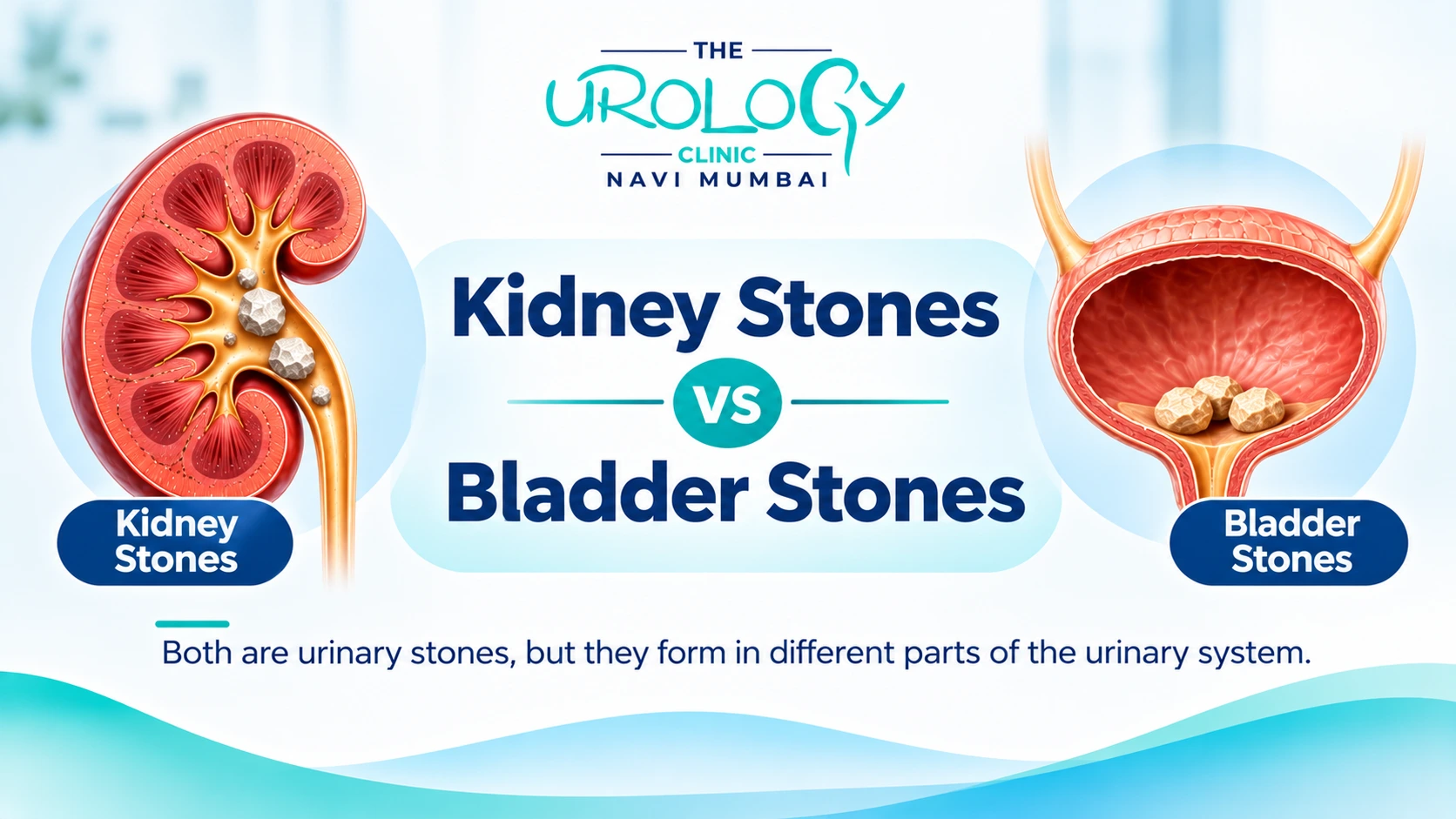


Kidney stones and bladder stones are hard deposits of minerals and salts that develop in different parts of the urinary system. Although both conditions can cause pain, blood in the urine and difficulty urinating, their symptoms and underlying causes may differ. Kidney stones form inside the kidneys and may cause severe pain when they move into the ureters, while bladder stones develop inside the urinary bladder, often when urine is not completely emptied. Understanding these differences can help identify possible symptoms and the need for appropriate medical evaluation.
|
Feature
|
Kidney Stone
|
Bladder Stones
|
|---|---|---|
|
What Are They?
|
A hard deposit formed from minerals and salts in the urine
|
Hard mineral deposits that develop inside the urinary bladder.
|
|
Location
|
Develop in the kidneys and may move through the ureters towards the bladder.
|
Develop inside the bladder, where urine is stored before passing out of the body.
|
|
Common Causes
|
Develop when urine contains high concentrations of crystal-forming substances, such as calcium, oxalate and uric acid. Low urine volume and certain medical or dietary factors may increase the risk.
|
Commonly develop when the bladder does not empty completely, allowing minerals in the remaining urine to form crystals and stones.
|
|
Common Risk Factors
|
Dehydration, previous kidney stones, family history, certain medical conditions, excess body weight and dietary factors may increase the risk.
|
Enlarged prostate, bladder outlet obstruction, urinary retention, neurogenic bladder, recurrent urinary infections and bladder diverticula may increase the risk.
|
|
Common Symptoms
|
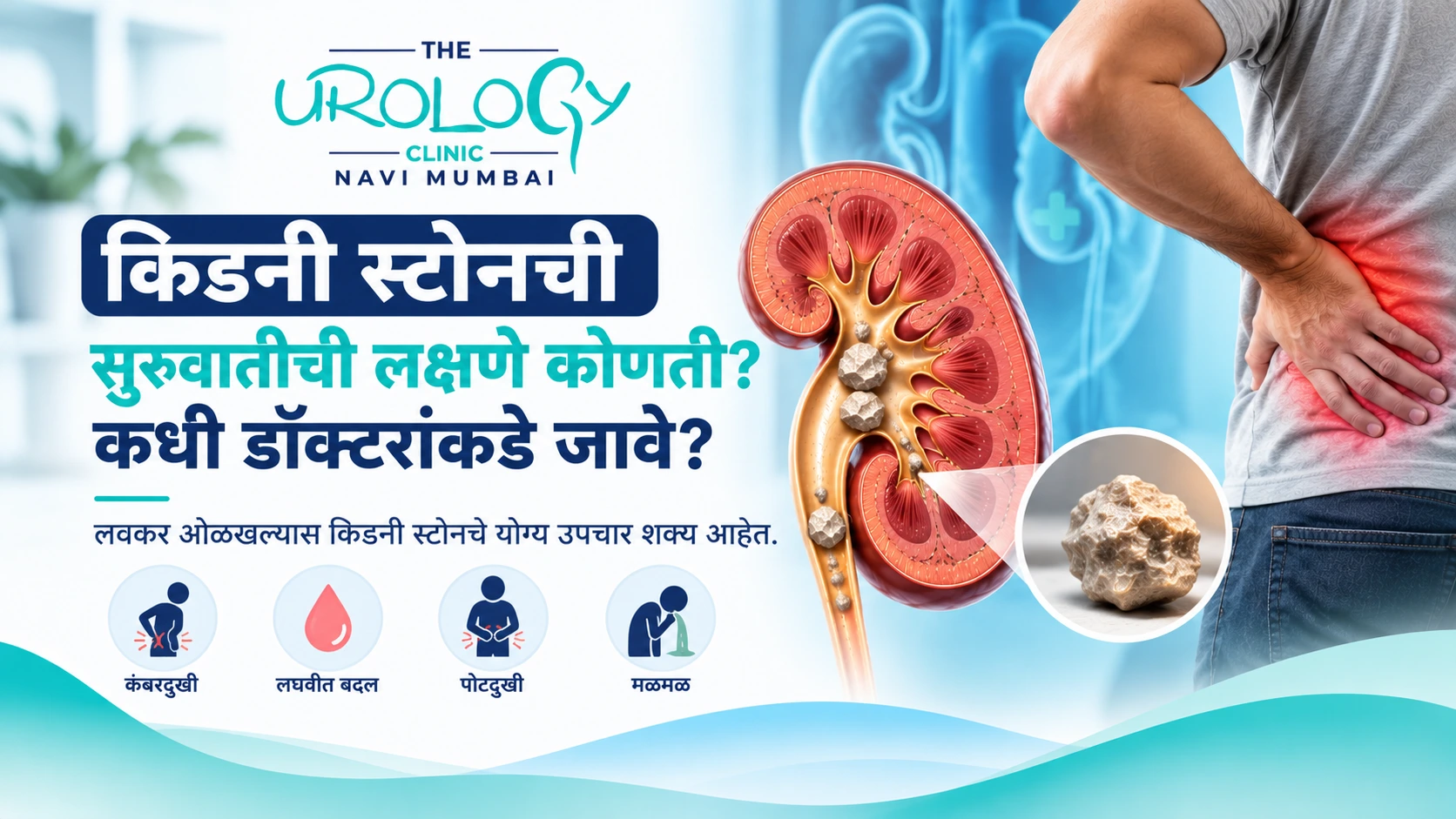
Sharp pain in the back, side, lower abdomen or groin; blood in urine; painful urination; nausea and vomiting may occur.
|
Lower abdominal pain, burning during urination, frequent urination, blood in urine and difficulty passing urine may occur.
|
|
Pain Location
|
Pain is commonly felt in the back or side below the ribs and may spread towards the lower abdomen or groin.
|
Pain is commonly felt in the lower abdomen or pelvic region and may become noticeable during urination.
|
|
Urination Problems
|
May cause painful urination, frequent urges or difficulty passing urine, especially if the stone moves into or blocks the urinary tract.
|
May cause frequent urination, interrupted urine flow, difficulty emptying the bladder or urinary retention.
|
|
Diagnostic Tests
|
Medical history, physical examination, urine and blood tests, ultrasound or CT scans may be used to assess the stone.
|
Urine tests, ultrasound, X-ray, CT scan or cystoscopy may be used to identify the stone and investigate the reason for its formation.
|
|
Treatment Options
|
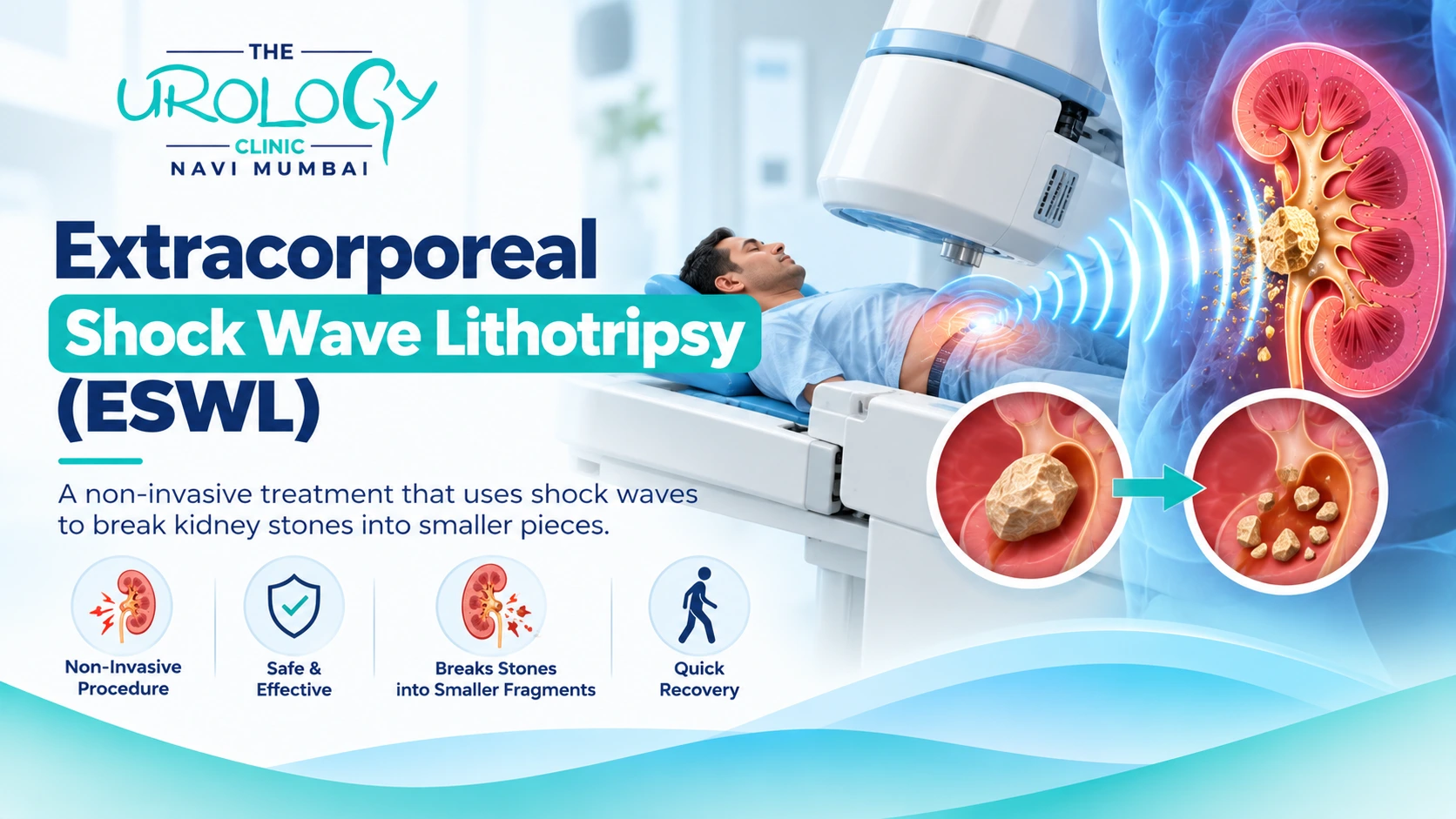
Treatment depends on stone size, location and symptoms. Options may include observation, pain management, medicines, shock wave lithotripsy, ureteroscopy or percutaneous nephrolithotomy.
|
Small stones may sometimes pass naturally. Larger or symptomatic stones may require cystolitholapaxy, in which the stone is broken and removed through a scope. Open surgery may be considered in selected cases.
|
|
Possible Complications
|
May cause urinary obstruction, severe pain, urinary tract infection or kidney swelling due to blocked urine flow.
|
May cause recurrent urinary infections, bladder irritation, urinary retention or obstruction of urine flow.
|
|
Recovery and Follow-Up
|
Recovery depends on stone size, location and treatment method. Follow-up may include imaging, stone analysis and metabolic evaluation to reduce recurrence risk.
|
Recovery depends on the removal procedure and underlying bladder condition. Follow-up may include checking bladder emptying and addressing the cause of stone formation.
|
|
Prevention
|
Adequate fluid intake, dietary changes based on stone type, and medical management of underlying risk factors may help reduce recurrence.
|
Treatment of urinary retention or bladder outlet obstruction, adequate fluid intake and management of underlying urinary conditions may help prevent recurrence.
|
About The Urology Clinic Navi Mumbai
The Urology Clinic Navi Mumbai, led by Dr. Ninad Tamboli, a trusted urologist in Navi Mumbai, is your destination for expert urological care. Specializing in advanced treatments for urinary and reproductive health.
We’re here to assist you! Reach out to us for appointments, inquiries, or detailed information about our services: