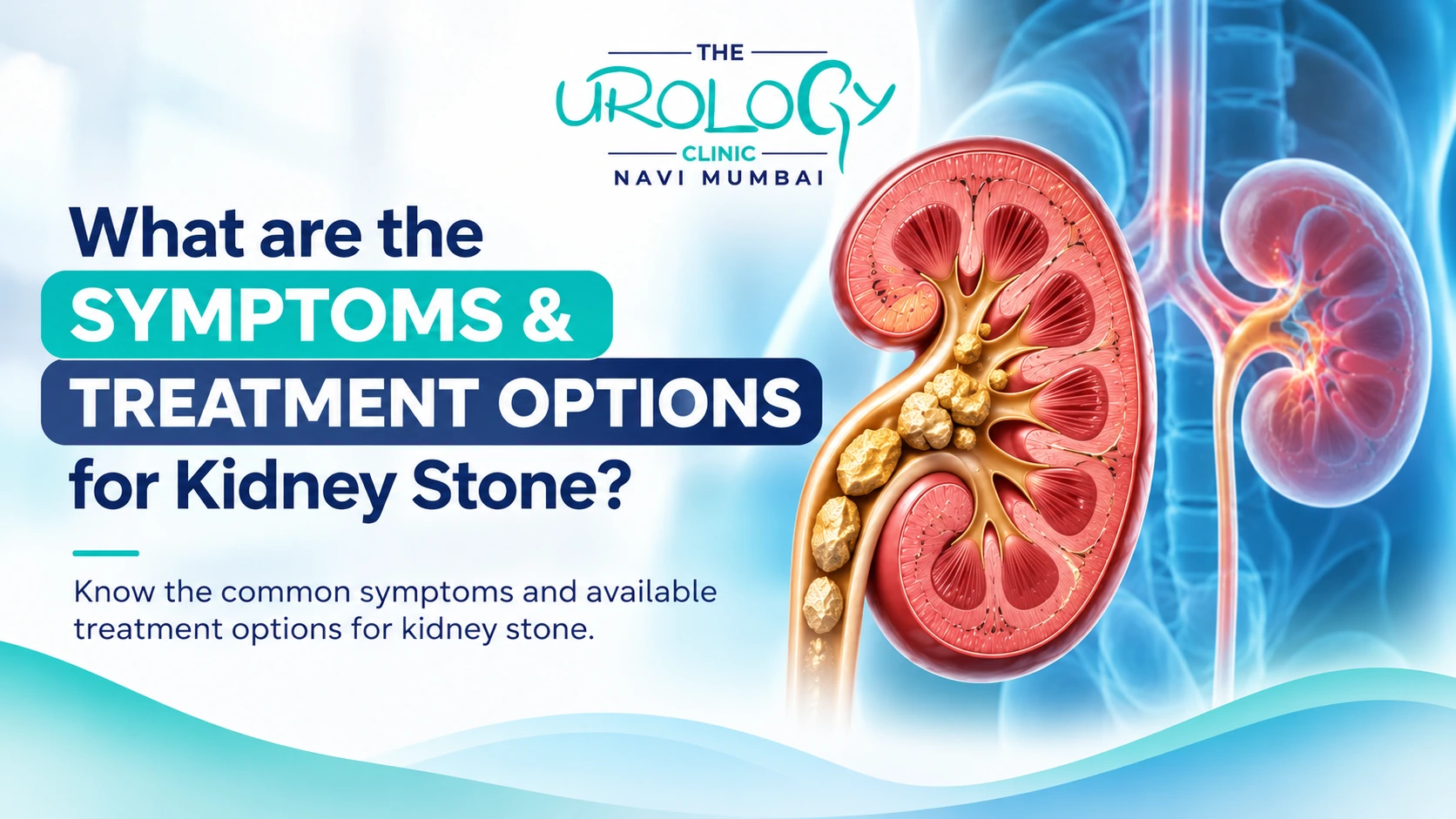
Blogs Book An Apppointment What Are the Symptoms and Treatment Options for Kidney Stones? Kidney stones are hard deposits of minerals and salts that form inside the kidneys. They can vary in size, from tiny crystals that pass unnoticed to larger stones that block the flow of urine and cause severe pain. Some people may not experience symptoms initially, while others develop sudden discomfort that needs medical attention. If you are wondering what are the symptoms & treatment options for kidney stone, the answer depends on the stone’s size, location and whether it is causing a blockage or infection. Early diagnosis can help determine whether the stone may pass naturally or requires a medical procedure. What Are the Common Symptoms of Kidney Stones? Kidney stone symptoms can vary depending on where the stone is located and whether it obstructs the urinary tract. Small stones may pass without noticeable discomfort, but a stone that moves into the ureter the tube connecting the kidney to the bladder—can cause significant pain. One of the most common symptoms is sharp pain in the side or back, which may spread towards the lower abdomen or groin. The pain can come in waves and change in intensity. Some people also experience nausea, vomiting, frequent urination or pain while passing urine. Blood in the urine may make it look pink, red or brown. Urine may also appear cloudy or have an unusual smell, particularly if an infection is present. These symptoms can occur with other urinary conditions, so a medical assessment is important to confirm the cause. What Causes Kidney Stones? Kidney stones develop when certain minerals and substances become concentrated in the urine and form crystals. These crystals can gradually grow into stones. Not drinking enough fluids may increase the concentration of minerals in urine and raise the risk of stone formation. Other contributing factors include a family history of kidney stones, previous stones, certain metabolic conditions, recurrent urinary infections and some medicines. Dietary factors, such as excessive salt intake, may also increase risk in susceptible individuals. The causes differ depending on the type of stone, so identifying its composition can help guide prevention. How Are Kidney Stones Diagnosed? A healthcare professional may review your symptoms, medical history and previous episodes of kidney stones before recommending tests. A urine test can check for blood, signs of infection and substances associated with stone formation. Blood tests may assess kidney function and mineral levels. Imaging tests help identify the stone’s size, location and possible blockage. An ultrasound may be used in selected situations, while a CT scan is often recommended for adults with suspected kidney stones when appropriate. The choice of imaging depends on factors such as age, pregnancy status and clinical findings. Get timely guidance on kidney stone symptoms and treatment options from the team at Urology Navi Mumbai. Learn More What Are the Treatment Options for Kidney Stones? Treatment depends on the stone’s size, location, symptoms and whether it is causing an obstruction or infection. Some small stones can pass through the urinary tract without a procedure, while larger or complicated stones may need active treatment. 1. Medication and Monitoring Small stones may pass naturally with suitable pain relief and medical monitoring. A healthcare professional may recommend medicines to control pain or nausea and, in selected cases, medication that helps a ureteric stone pass. Follow the prescribed dosage and instructions rather than taking medicines on your own. Adequate fluid intake may support stone passage, but forcing large amounts of water will not reliably push a blocked stone out. If you have severe pain, repeated vomiting, reduced urine output or signs of infection, do not rely on home care alone. Follow-up may be needed to confirm that the stone has passed and that urine flow is normal. 2. Extracorporeal Shock Wave Lithotripsy (ESWL) ESWL uses shock waves directed from outside the body to break a kidney stone into smaller pieces. These fragments can then pass through the urinary tract. It may be suitable for selected stones depending on their size, location, hardness and other clinical factors. ESWL does not work equally well for every stone, and some patients may need another procedure if fragments remain or the stone does not break adequately. The urologist will assess the expected benefits, risks and suitability before recommending this option. 3. Ureteroscopy and Laser Treatment Ureteroscopy involves passing a thin instrument through the urinary passage to locate a stone in the ureter or kidney. A laser may be used to break the stone into smaller pieces, which can then be removed or allowed to pass. A temporary ureteric stent may be placed to help urine drain after the procedure. This option may be recommended for stones that are unlikely to pass naturally or when other treatments are unsuitable or unsuccessful. The recovery process and need for follow-up depend on the stone and the procedure performed. When Is Surgery Needed for Kidney Stones? Larger stones, stones causing persistent blockage, and stones associated with infection or impaired kidney function may require a more involved procedure. Percutaneous nephrolithotomy (PCNL) is one option for selected large or complex kidney stones. It involves accessing the kidney through a small incision in the back to remove the stone, sometimes after breaking it into smaller pieces. A blocked urinary system with infection can be a medical emergency. It may require urgent drainage and treatment of the infection before definitive stone removal. The appropriate procedure depends on the clinical situation, imaging findings and overall health of the patient. How Can You Reduce the Risk of Kidney Stones? Drinking enough water throughout the day can help dilute urine and reduce the risk of many types of stones. The amount of fluid needed varies with climate, physical activity and individual health. People with certain heart or kidney conditions may need specific fluid advice from their healthcare provider. Reducing excess salt, maintaining a balanced diet and following personalised dietary advice may also help prevent recurrence. Do not eliminate calcium-rich foods without

