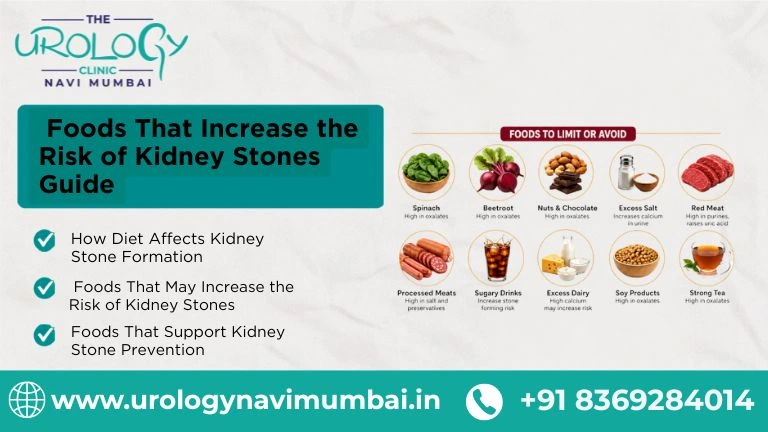
Blogs Book An Apppointment Foods That Increase the Risk of Kidney Stones Kidney stones are a common urinary tract condition that can cause severe pain and discomfort. While genetics and certain medical conditions play a role in stone formation, diet is one of the most important factors you can control. Choosing the right foods and avoiding those that contribute to stone formation can significantly lower your risk of developing kidney stones or prevent them from returning. This Foods That Increase the Risk of Kidney Stones | Kidney Stone Prevention Guide highlights the dietary habits that may increase the risk of kidney stones and offers practical tips to help keep your kidneys healthy. Small changes in everyday eating habits can make a big difference in protecting your urinary health. How Diet Affects Kidney Stone Formation Your kidneys filter waste products and excess minerals from the blood to produce urine. When urine becomes highly concentrated, certain minerals such as calcium, oxalate, and uric acid can combine and form crystals. Over time, these crystals grow into kidney stones. Diet directly affects the concentration of these minerals. Eating excessive amounts of salt, sugar, animal protein, or oxalate-rich foods can increase the likelihood of stone formation, especially if you do not drink enough water throughout the day. Foods That May Increase the Risk of Kidney Stones Although no single food causes kidney stones in everyone, certain foods can contribute to stone formation when consumed frequently or in large quantities. Kidney Stones One of the most common uses of laser treatment is breaking kidney stones into tiny fragments during ureteroscopy. The small pieces are then removed or passed naturally through urine, eliminating the need for large surgical incisions. High-Sodium Foods A diet high in sodium increases the amount of calcium released into the urine, raising the risk of calcium-based kidney stones. Common high-sodium foods include processed snacks, chips, instant noodles, packaged soups, pickles, fast food, frozen meals, processed meats, and salty condiments. Reducing daily salt intake is one of the most effective dietary changes for kidney stone prevention. Oxalate-Rich Foods Oxalate is a naturally occurring substance found in many healthy foods. In some individuals, oxalate combines with calcium in the urine to form calcium oxalate stones, which are the most common type of kidney stone. Foods high in oxalate include spinach, beetroot, rhubarb, almonds, peanuts, chocolate, sweet potatoes, tea, and bran cereals. These foods do not always need to be completely avoided, but portion control is important for people prone to calcium oxalate stones. Excess Animal Protein Eating large amounts of red meat, poultry, seafood, and organ meats may increase uric acid levels while reducing urinary citrate, a natural substance that helps prevent stones. Moderating animal protein intake and including plant-based protein sources can support better kidney health. Excess Vitamin C Supplements Although vitamin C is essential for good health, taking high-dose vitamin C supplements may increase oxalate production in the body. People with a history of kidney stones should consult their doctor before using large doses of supplements. Protect your kidneys with timely evaluation and personalized kidney stone care at Urology Clinic Navi Mumbai. Book An Apppointment Foods That Support Kidney Stone Prevention A healthy diet is not only about avoiding certain foods but also about including foods that help reduce stone formation. Fresh fruits, vegetables, whole grains, citrus fruits, adequate dietary calcium from milk and yogurt, and plenty of water help maintain healthy urine composition. Citrus fruits such as lemons and oranges contain citrate, which naturally helps reduce crystal formation. Balanced nutrition plays an important role in protecting kidney function while lowering the chances of future stones. Importance of Drinking Enough Water Hydration is one of the most effective ways to prevent kidney stones. Drinking enough water dilutes urine and reduces the concentration of stone-forming minerals. Most adults should aim for enough fluids to produce clear or pale yellow urine throughout the day. People living in hot climates or those who sweat heavily may require even more fluids. Water remains the best choice, although coconut water and certain citrus-based drinks may also contribute to healthy hydration. Healthy Lifestyle Habits That Help Prevent Kidney Stones Diet is only one part of kidney stone prevention. Several healthy habits can further reduce the risk. Maintaining a healthy body weight, exercising regularly, limiting processed foods, avoiding excessive salt, eating balanced meals, and following medical advice for existing conditions such as diabetes or gout all contribute to better kidney health. Individuals who have already experienced kidney stones should continue regular follow-up appointments because recurrence is common without preventive measures. Should You Avoid Calcium? Many people mistakenly believe that reducing calcium intake prevents kidney stones. In reality, consuming too little dietary calcium may actually increase the risk of calcium oxalate stones because more oxalate is absorbed from the intestines. Instead of eliminating calcium-rich foods, it is generally recommended to consume appropriate dietary calcium through natural food sources unless advised otherwise by a doctor. Calcium supplements should only be taken under medical supervision, particularly in patients with recurrent kidney stones. Personalized Diet for Different Types of Kidney Stones Not all kidney stones develop for the same reason. Calcium oxalate, uric acid, struvite, and cystine stones each have different contributing factors. Because dietary recommendations vary depending on the type of stone, laboratory analysis of the stone and urine tests can help create a personalized nutrition plan. A urologist or dietitian can recommend dietary changes based on individual risk factors instead of following a one-size-fits-all approach. When Should You Consult a Urologist? If you experience severe back or side pain, blood in the urine, burning during urination, repeated urinary tract infections, nausea, vomiting, or difficulty passing urine, medical evaluation is important. Patients with recurrent kidney stones should also seek specialist care to identify the underlying cause and receive long-term prevention strategies that reduce the chances of future stone formation. Why Choose Urology Clinic Navi Mumbai? At Urology Clinic Navi Mumbai, patients receive comprehensive kidney stone care, from accurate diagnosis to advanced minimally

