


Blogs Book An Apppointment Laser Kidney Stone Removal: What to Expect from the Procedure Kidney stones can be extremely painful and can interfere with your daily routine. When they don’t pass on their own or start causing repeated discomfort, infections, or blockage, medical treatment becomes necessary. One of the most effective options today is laser kidney stone removal, a minimally invasive procedure that helps break stones into smaller pieces for easier removal. At The Urology Clinic, care is focused on accurate diagnosis, advanced treatment methods, and patient comfort. Having a clear understanding of laser kidney stone removal can help you feel more prepared and confident before undergoing the procedure. What Is Laser Kidney Stone Removal? Laser kidney stone removal is a modern technique used to treat stones in the urinary tract, especially those found in the kidney or ureter. Instead of making large cuts, doctors use a thin instrument that passes through the natural urinary pathway to reach the stone. A laser is then used to break the stone into very small fragments. These pieces can either be removed during the procedure or allowed to pass naturally through urine. Because it is minimally invasive, this treatment is often preferred for its precision, reduced discomfort, and quicker recovery. When Is Laser Kidney Stone Removal Recommended? Not all kidney stones need a procedure, as smaller ones may pass naturally with proper hydration and medication. However, laser kidney stone removal is usually recommended when the stone is too large to pass on its own or continues to cause symptoms. It may also be advised if there is severe pain, repeated urinary infections, blood in the urine, or blockage in the urinary tract. In such cases, timely treatment helps prevent complications and provides relief from ongoing discomfort. Laser Kidney Stone Removal Procedure Laser kidney stone removal is commonly performed using a method called ureteroscopy with laser lithotripsy. It is considered a safe and effective approach for treating many types of kidney stones. Accessing the Stone A thin, flexible scope is gently passed through the urethra into the bladder and ureter. This allows the doctor to locate the stone without any external incision. Breaking the Stone with a Laser Once the stone is located, a laser is used to break it into very small fragments. This makes it easier to remove or pass naturally. Stent Placement if Needed In some cases, a temporary stent is placed to help urine flow smoothly and reduce swelling. This is usually removed after a few days or weeks. Recovery After the Procedure Recovery is generally quick. Some patients may feel mild discomfort, burning during urination, or notice slight blood in urine for a short time, but these symptoms usually settle with proper care. Benefits of Laser Kidney Stone Removal Laser kidney stone removal offers several advantages compared to traditional surgery. It is highly precise and can effectively treat stones even in difficult locations. Since there are no large cuts involved, recovery is faster and discomfort is usually less. Many patients are able to return to their normal routine within a few days, depending on their overall health and the size of the stone. Recovery and Aftercare Recovery after the procedure is usually smooth, but following medical advice is important. Drinking enough fluids helps flush out remaining fragments and supports healing. Some people may feel mild discomfort or urgency while passing urine, especially if a stent is placed. Taking prescribed medications and attending follow-up visits ensures proper recovery and reduces the risk of complications. Get expert evaluation for kidney stones and explore treatment options, including laser removal. Understand procedure, recovery, and costs clearly. Book An Apppointment Are There Any Risks? Like any medical procedure, laser kidney stone removal may have some risks, although serious complications are uncommon. Some patients may experience temporary bleeding, discomfort while urinating, or mild infection. In certain cases, additional treatment may be required if all fragments are not cleared. A proper evaluation by a specialist helps determine the most suitable treatment approach. Why Choose Urology Navi Mumbai? At The Urology Clinic, we understand how challenging kidney stones can be. Our approach focuses on accurate diagnosis, advanced treatment options, and personalized care for each patient. Our experienced team ensures that every step, from consultation to recovery, is handled with care and clarity. We aim to provide effective treatment while making the entire process as comfortable and reassuring as possible. Conclusion Laser kidney stone removal is a reliable and minimally invasive option for treating stones that cause pain or complications. With the right care and timely treatment, it can provide effective relief and help prevent further issues. At The Urology Clinic, we are committed to delivering advanced urology care with a focus on safety, precision, and patient comfort. FAQs Is laser kidney stone removal painful? The procedure is performed under anesthesia, so there is no pain during treatment. Mild discomfort afterward is common but manageable. How long does recovery take? Most patients recover within a few days, although this may vary depending on the individual and the complexity of the case. Is laser kidney stone removal safe? It is widely considered a safe and effective procedure when performed by an experienced urologist. Will all kidney stones need laser treatment? No, smaller stones may pass naturally or may be treated using other methods. Laser treatment is usually recommended for larger or problematic stones. Can kidney stones return after treatment? Yes, stones can recur if the underlying causes are not addressed. Proper diet, hydration, and follow-up care are important for prevention. The procedure is performed under anesthesia, so there is no pain during treatment. Mild discomfort afterward is common but manageable. Most patients recover within a few days, although this may vary depending on the individual and the complexity of the case. It is widely considered a safe and effective procedure when performed by an experienced urologist. No, smaller stones may pass naturally or may be treated using other methods. Laser treatment is usually recommended for larger or problematic
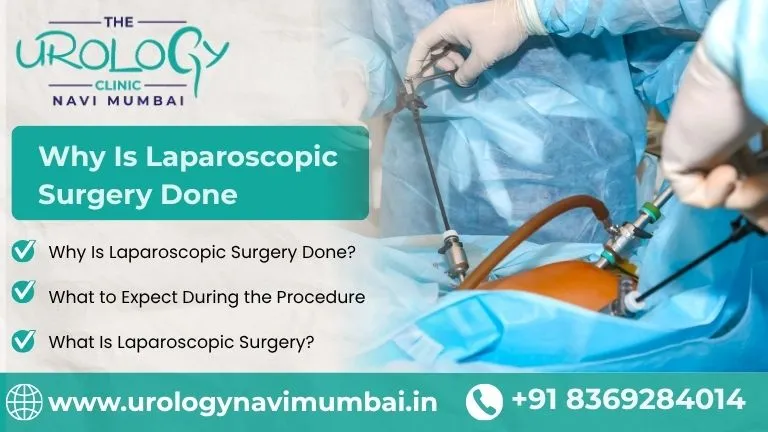
Why Laparoscopic Surgery Is Done: Uses & Benefits
Blogs Book An Apppointment Why Is Laparoscopic Surgery Done? Understanding Its Purpose Laparoscopic surgery is now widely used because it allows doctors to perform procedures with smaller cuts and quicker recovery. Many patients are advised this type of surgery but may not fully understand why it is recommended. Knowing why laparoscopic surgery is done can make the process feel less overwhelming and help you feel more confident about your treatment. At The Urology Clinic, we believe in keeping patients informed so they can make clear and comfortable decisions about their care. What Is Laparoscopic Surgery? Laparoscopic surgery, also known as minimally invasive surgery, is a technique where procedures are done using very small incisions instead of large cuts. A thin tube with a camera, called a laparoscope, is inserted to give the surgeon a clear view of the internal organs. Using this guidance, the doctor performs the procedure with specialized instruments. Because the incisions are smaller, patients usually experience less pain, minimal scarring, and faster healing compared to traditional surgery. Common Procedures Done Using Laparoscopy Laparoscopic surgery is used for a wide range of procedures. In urology, it may be used for kidney removal, tumor removal, prostate-related surgeries, or correcting urinary blockages. It is also commonly used in other areas of medicine, such as gallbladder removal, hernia repair, and certain gynecological procedures. Its flexibility makes it a preferred approach in modern surgical care. Why Is Laparoscopic Surgery Done? Laparoscopic surgery is done for both diagnosing and treating different medical conditions. It is often preferred because it is less invasive and allows for quicker recovery while still being highly effective. To Treat Kidney and Urinary Conditions In urology, this method is commonly used to treat kidney stones, tumors, and urinary blockages. It allows precise treatment while protecting surrounding tissues. For Faster Recovery and Less Discomfort Because the cuts are small, patients usually experience less pain after surgery. This also helps them return to their normal routine more quickly. To Reduce Hospital Stay Many laparoscopic procedures require a shorter hospital stay. In some cases, patients may even go home the same day or within a day or two. For Minimal Scarring Smaller incisions mean less visible scarring. This is often an important factor for patients when choosing a surgical option. To Lower Risk of Complications With smaller wounds, the chances of infection, bleeding, and other complications are generally lower, making it a safer option for many patients. Common Procedures Done Using Laparoscopy Laparoscopic surgery is used for a wide range of procedures. In urology, it may be used for kidney removal, tumor removal, prostate-related surgeries, or correcting urinary blockages. It is also commonly used in other areas of medicine, such as gallbladder removal, hernia repair, and certain gynecological procedures. Its flexibility makes it a preferred approach in modern surgical care. What to Expect During the Procedure The surgery is usually performed under general anesthesia, so you will not feel pain during the procedure. Small incisions are made, and the laparoscope helps the surgeon see clearly and work with precision. After the procedure, patients are observed for a short period before being discharged. Recovery is generally quicker than traditional surgery, and most people can resume daily activities within a few weeks. Get expert advice on laparoscopic surgery and book your consultation today for safe, minimally invasive treatment. Book An Apppointment Recovery and Aftercare Recovery after laparoscopic surgery is usually smooth. Mild discomfort is common in the first few days but improves gradually. Doctors may recommend light movement, proper hydration, and medications to support healing. Avoiding heavy lifting and following follow-up instructions are important for a safe recovery. Taking care during this period helps prevent complications and ensures better results. Why Choose Urology Navi Mumbai? At The Urology Clinic, patient care is focused on precision, safety, and comfort. Our specialists use advanced laparoscopic techniques to provide effective treatment with minimal disruption to your daily life. We ensure clear communication at every stage so patients understand their condition and treatment options. From diagnosis to recovery, our goal is to provide dependable and patient-centered care. Conclusion Understanding why laparoscopic surgery is done can help ease concerns and prepare you better for treatment. With benefits like faster recovery, less pain, and lower risk, it has become a preferred option in many cases. At The Urology Clinic, we are committed to providing advanced care with a focus on safety, accuracy, and patient comfort at every step. FAQs Why is laparoscopic surgery preferred over open surgery? It is preferred because it involves smaller cuts, less pain, quicker recovery, and fewer complications. Is laparoscopic surgery safe? Yes, it is generally safe when performed by experienced surgeons and is widely used in modern medical practice. How long does recovery take after laparoscopic surgery? Recovery varies, but many patients return to normal activities within a few days to a few weeks. Is laparoscopic surgery painful? The surgery itself is not painful due to anesthesia. Some mild discomfort may be felt afterward, but it is usually manageable. Can all surgeries be done laparoscopically? Not all procedures are suitable for laparoscopy. The decision depends on the condition and the doctor’s recommendation. It is preferred because it involves smaller cuts, less pain, quicker recovery, and fewer complications. Yes, it is generally safe when performed by experienced surgeons and is widely used in modern medical practice. Recovery varies, but many patients return to normal activities within a few days to a few weeks. The surgery itself is not painful due to anesthesia. Some mild discomfort may be felt afterward, but it is usually manageable. Not all procedures are suitable for laparoscopy. The decision depends on the condition and the doctor’s recommendation. Free Consultation Book Now Call Now Dr. Ninad Tamboli Author