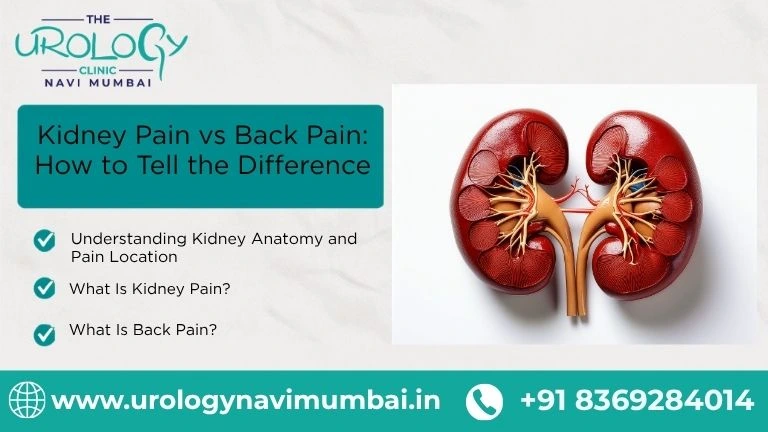
Blogs Book An Apppointment Kidney Pain vs Back Pain: How to Tell the Difference Pain in the back or flank area is a frequent clinical complaint, but not all pain in this region originates from the musculoskeletal system. In some cases, discomfort may reflect an underlying renal issue. Distinguishing kidney pain vs back pain is critical for accurate diagnosis and effective management, especially when care is coordinated by specialists at Urology Navi Mumbai. Because kidney pain and back pain may present with overlapping symptoms, patients often misinterpret the source of their condition. Understanding differences in location, character, associated symptoms, and underlying medical causes helps guide evaluation and treatment decisions. This article offers medically sound, patient-focused insight into differentiating kidney pain from back pain, diagnostic approaches, and practical guidance on when to seek professional care at Urology Navi Mumbai or with your healthcare provider. Understanding Kidney Anatomy and Pain Location The kidneys are bean-shaped organs situated in the posterior abdomen, just below the rib cage on either side of the spine. This anatomical position means kidney pain is typically felt in the flank region the area between the ribs and the pelvis. In contrast, musculoskeletal back pain usually centers in the lower back, along the spine or in the muscles supporting the spinal column. Because the kidneys lie more laterally, pain from renal pathology is typically felt more toward the sides of the back, not centrally over the spine. What Is Kidney Pain? Kidney pain occurs when structures within or around the kidneys are inflamed, infected, obstructed, or injured. Common conditions responsible for kidney pain include: Kidney stones,(h3) which can cause sudden, intense flank pain that often radiates to the groin. Pyelonephritis,(h3) a bacterial infection of the kidneys that produces pain along with fever and urinary symptoms. Urinary obstruction,(h3) which may be due to anatomical narrowing or prostate enlargement. Renal cysts or tumours,(h3) which can create pressure and discomfort as they enlarge. Patients often describe kidney pain as a deep, constant ache or a sharp, severe cramping sensation. Unlike musculoskeletal back pain, kidney pain typically does not improve significantly with changes in posture or rest a key distinguishing feature. Specialists at Urology Navi Mumbai emphasize these clinical patterns when evaluating patients with suspected renal pain to ensure prompt and appropriate management. What Is Back Pain? Back pain encompasses discomfort originating from the bones, muscles, ligaments, discs, or joints of the spine. Common causes include: Muscle strain due to lifting or overuse Disc herniation or degeneration Poor posture Arthritis or age-related changes Spinal injuries or fractures Musculoskeletal back pain often presents as an aching, tightening, or sharp pain that is directly influenced by movement, position, and physical activity. Pain may worsen with bending, lifting, or prolonged standing, and generally improves with rest or targeted therapy. Unlike kidney pain, back pain rarely causes urinary symptoms or fever, making the pattern of associated features an important factor in clinical differentiation. Kidney Pain vs Back Pain: Key Differences Although kidney pain and back pain may feel similar to patients initially, clinicians at Urology Navi Mumbai use several key differences to guide diagnosis: Location: Kidney pain is typically in the flanks (sides) below the ribs, whereas back pain is usually in the lower back or along the spine. Response to Movement: Back pain often changes with posture and movement; kidney pain remains constant regardless of activity. Associated Symptoms: Fever, urinary symptoms (e.g., burning, urgency, blood in urine), and nausea are more characteristic of kidney pathology. Radiation Pattern:Kidney stone pain may travel from the flank toward the groin. Back pain may radiate down the legs if nerves are involved. These distinctions form the initial clinical basis for investigation and are reinforced by diagnostic testing. Common Causes of Kidney Pain Kidney Stones Kidney stones are crystalline deposits that form in the renal collecting system. They may cause severe, intermittent pain known as renal colic. Kidney Infection (Pyelonephritis) Ascending bacterial infections of the urinary tract may reach the kidneys, causing flank pain, fever, chills, and urinary discomfort. Obstruction Blockage of urine flow from prostate issues, strictures, or congenital anomalies can create back pressure and pain. Obstruction Fluid-filled cysts or neoplastic growths can exert pressure on renal tissue and surrounding structures. Each of these conditions requires specific evaluation and management strategies, often involving imaging and laboratory tests performed routinely at Urology Navi Mumbai. Common Causes of Back Pain Musculoskeletal back pain typically originates from: Muscle or ligament strain Herniated discs Degenerative joint disease Scoliosis or spinal deformities Trauma or repetitive stress injuries Back pain may also stem from nerve compression or irritation. Unlike kidney pain, musculoskeletal pain usually responds to rest, physical therapy, activity modification, or pain management. Associated Symptoms That Suggest Kidney Pain Symptoms that support a kidney origin include: Fever and chills Burning or painful urination Frequent urination Cloudy or foul-smelling urine Hematuria (blood in the urine) Nausea or vomiting Such symptoms, especially when paired with flank pain, should prompt timely medical evaluation at centres like Urology Navi Mumbai. When to See a Doctor Immediate medical assessment is recommended if you experience: Severe flank pain with nausea or vomiting Fever with chills Blood in the urine Pain not improving with rest Urinary changes Persistent or worsening symptoms warrant a professional evaluation, including physical examination and diagnostic testing. Diagnostic Methods At Urology Navi Mumbai, diagnosis begins with: Detailed medical history and physical examination Laboratory tests (urinalysis, blood tests) Imaging studies (ultrasound, CT scans, MRI) These investigations help distinguish kidney-related pain from musculoskeletal back pain and identify underlying pathology. Preventive Measures Maintaining healthy hydration, balanced nutrition, regular physical activity, and proper lifting techniques supports both back and kidney health. Regular medical checkups, especially for individuals with risk factors (e.g., diabetes, hypertension), help detect problems early. Book Your Kidney Health Consultation Today in Navi Mumbai. Schedule your consultation with Dr. Ninad Tamboli. Book An Apppointment Why choose Urology Navi Mumbai? Urology Navi Mumbai provides comprehensive evaluation and management of kidney-related conditions. The focus is on early diagnosis, targeted treatment, and long-term monitoring tailored

